

Great End
Good walks are even better shared.
Overview
Great End rises to 909.5 m in the Lake District’s Southern Fells. Its northern cliffs contrast with the walking approach from Esk Hause and Calf Cove. It can be visited on a circuit from Seathwaite or included in a longer traverse with Scafell Pike.
Great End
Overview
Great End rises to 909.5 m in the Lake District’s Southern Fells. Its northern cliffs contrast with the walking approach from Esk Hause and Calf Cove. It can be visited on a circuit from Seathwaite or included in a longer traverse with Scafell Pike.
Summit
Cairn on an outcrop at NY 22672 08385, height 909.5 m. The cairn 160 m west at NY 22532 08465 is approximately 1 m lower.
Grains Gill and the tarns circuit
From Seathwaite in Borrowdale, follow the farm track to Stockley Bridge, then climb beside Grains Gill and Ruddy Gill to Esk Hause. Continue through Calf Cove and take the southern summit path to Great End. Return through Calf Cove to Esk Hause, then pass Sprinkling Tarn and Styhead Tarn, descend beside Styhead Gill to Stockley Bridge and follow the farm track back to Seathwaite. This is a complete mountain circuit on rough paths; navigate carefully at the high junctions. Do not attempt a shortcut through the northern cliffs or gullies.
Scafell Pike and Great End circuit
From Seathwaite, cross Stockley Bridge and climb to Sty Head. Follow the Corridor Route to Lingmell Col and Scafell Pike, then cross the high ground over Broad Crag and Ill Crag and visit Great End. Descend via Calf Cove and Esk Hause, then Ruddy Gill and Grains Gill to Stockley Bridge and Seathwaite. UKHillwalking gives 14.72 km and 1,046 m ascent for this complete multi-summit circuit, with about six hours walking. Rough bouldery ground and confusing junctions demand careful navigation; snow or ice increases the difficulty.
Terrain and safety
Rough mountain paths, rocky slopes and bouldery summit ground; northern cliffs and gullies are not ordinary walking approaches. Steep northern cliffs and gullies lie close to the summit plateau; keep clear of their edges, especially in mist. Do not use Cust’s Gully or Central Gully as walking shortcuts. The north-west face involves scrambling and serious route finding. Rough stones and boulders require care. High path junctions can be confusing in poor visibility; carry a map and compass and know how to use them. Snow and ice can turn the northern face and gullies into winter mountaineering terrain. The high walking routes also need winter skills and suitable equipment in these conditions. Check the mountain forecast and daylight before setting out.
Access and facilities
For the routes described here, start at Seathwaite in Borrowdale. Roadside space is limited: never obstruct farm access or emergency vehicles. The National Trust suggests Seatoller as an alternative; starting there adds the approach to Seathwaite to your walk. Buses from Keswick serve Seatoller, with an onward walk to Seathwaite. Check the operator’s current timetable and plan the return journey; the routes described here start at Seathwaite, not the bus stop. Seatoller has a car park, bus stop and toilets, although the toilets may close in winter. Rosthwaite has a café and toilets, also subject to winter closure. Carry food, water and suitable mountain equipment for the walk. Check current Lake District National Park access notices and signs on the ground before walking.
Views and nearby summits
In clear weather, views include Borrowdale, Great Gable, Scafell Pike, Broad Crag and Ill Crag, with other Lake District fells beyond. Scafell Pike (about 978 m) and Great Gable (about 899 m) are separate neighbouring mountains; neither is the summit of Great End.
Geology
Great End’s summit includes volcaniclastic mudstone and siltstone with sandstone and lapilli-tuff interbeds of the Esk Pike Sandstone Formation, within the Borrowdale Volcanic Group. This formation overlies the Lincomb Tarns Tuff Formation.
Climbing history
The Fell and Rock Climbing Club records a winter ascent of Cust’s Gully on 4 April 1880 by Arthur Cust and more than twenty Alpine Club members. This is climbing history of the gully, not a claim about the first ascent of Great End.
Explore routes near Great End
Walks starting near this hill. Open a route to check its map, distance and full itinerary.
Scafell Pike from Seathwaite via the Corridor Route
View route
Scafell Pike via Brown Tongue and Hollow Stones
View route
Bow Fell from Langdale
View route
Great Carrs Halifax Wreckage from Wrynose Pass
View route
Route planning notes
These notes describe possible approaches. Check a route's map and access information when planning your walk.
Great End via Grains Gill and the tarns (circuit)
From Seathwaite in Borrowdale, follow the farm track to Stockley Bridge, then climb beside Grains Gill and Ruddy Gill to Esk Hause. Continue through Calf Cove and take the southern summit path to Great End. Return through Calf Cove to Esk Hause, then pass Sprinkling Tarn and Styhead Tarn, descend beside Styhead Gill to Stockley Bridge and follow the farm track back to Seathwaite. This is a complete mountain circuit on rough paths; navigate carefully at the high junctions. Do not attempt a shortcut through the northern cliffs or gullies.
Scafell Pike and Great End via the Corridor Route
From Seathwaite, cross Stockley Bridge and climb to Sty Head. Follow the Corridor Route to Lingmell Col and Scafell Pike, then cross the high ground over Broad Crag and Ill Crag and visit Great End. Descend via Calf Cove and Esk Hause, then Ruddy Gill and Grains Gill to Stockley Bridge and Seathwaite. UKHillwalking gives 14.72 km and 1,046 m ascent for this complete multi-summit circuit, with about six hours walking. Rough bouldery ground and confusing junctions demand careful navigation; snow or ice increases the difficulty.
Make a day of it, together
Find someone to share the walk with, or organise a day out along a route you like.
Photo Gallery
View all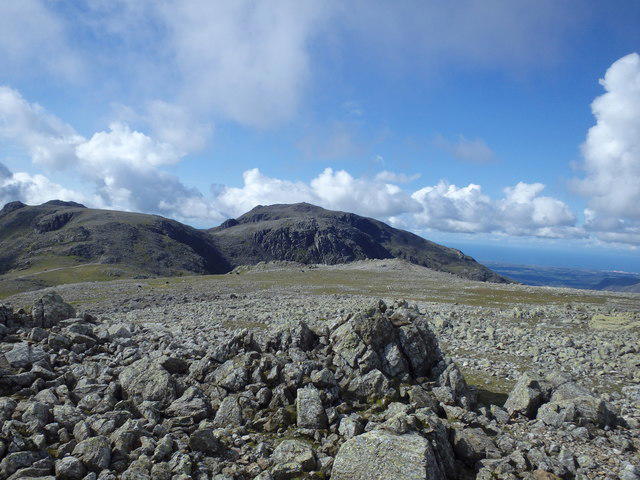 Photo could not load
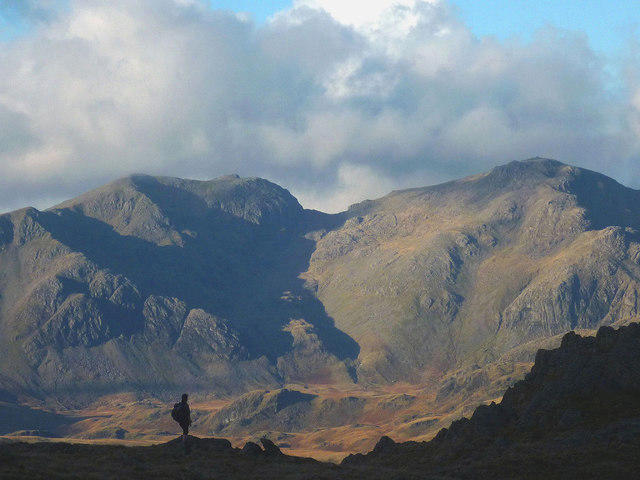
NY2208 : On Great End
Michael Graham
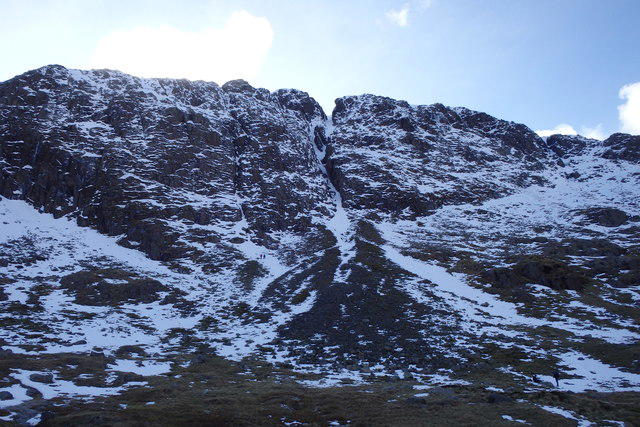 Photo could not load
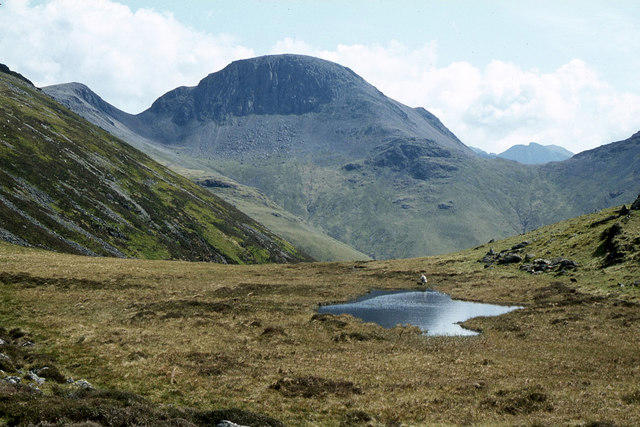
NY2208 : Great End
Michael Graham
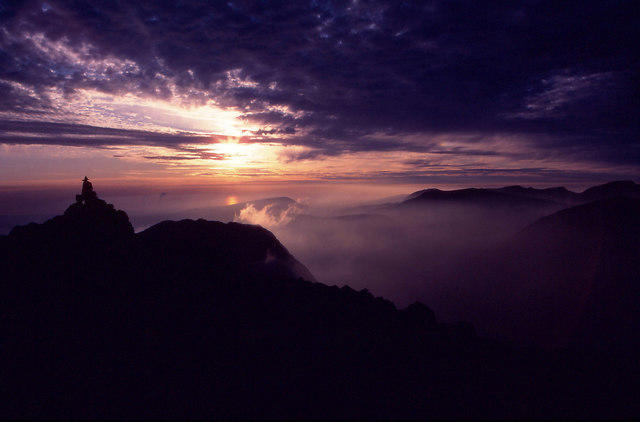 Photo could not load
NY2208 : Great End Sunset
John Bennett
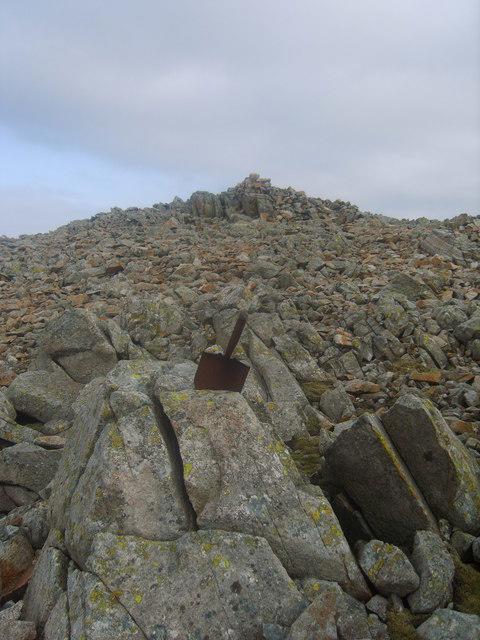 Photo could not load
NY2208 : Call a Spade a Shovel?
Michael Graham
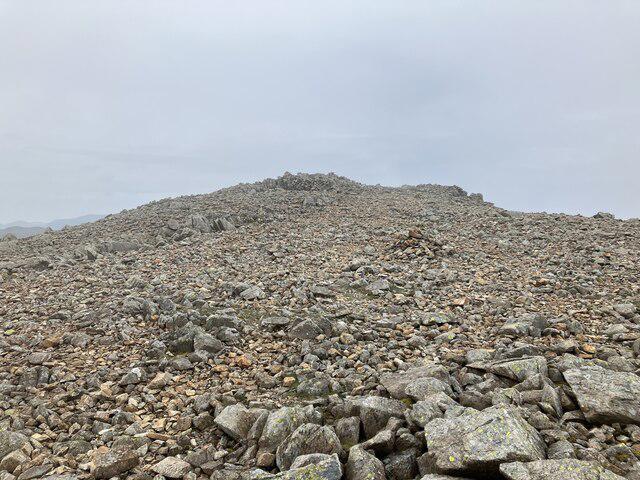 Photo could not load
NY2208 : Approaching the summit of Great End
Anthony Foster
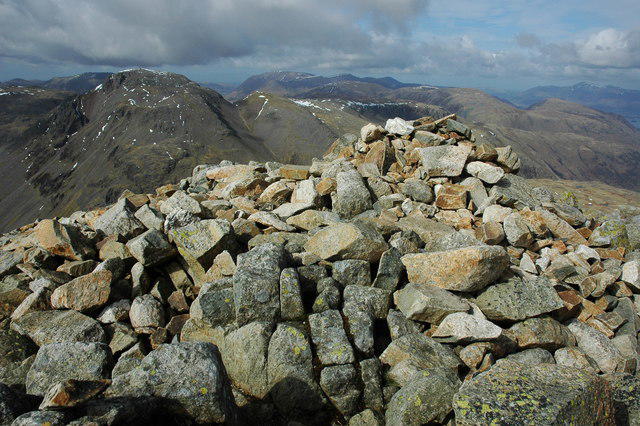 Photo could not load
NY2208 : Summit cairn, Great End
Philip Halling
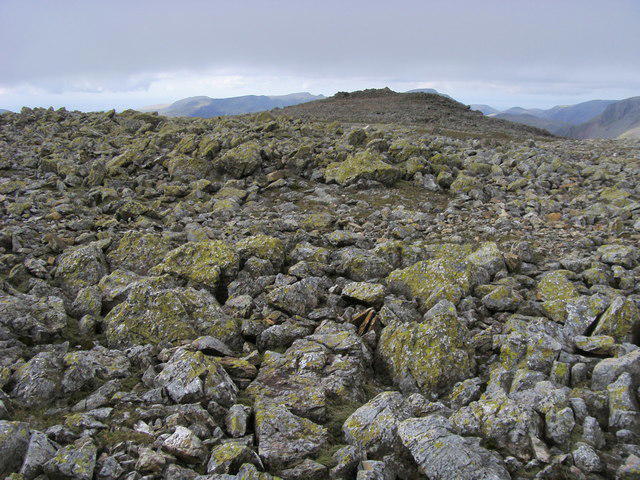 Photo could not load
NY2208 : Summit of Great End
Shaun Ferguson
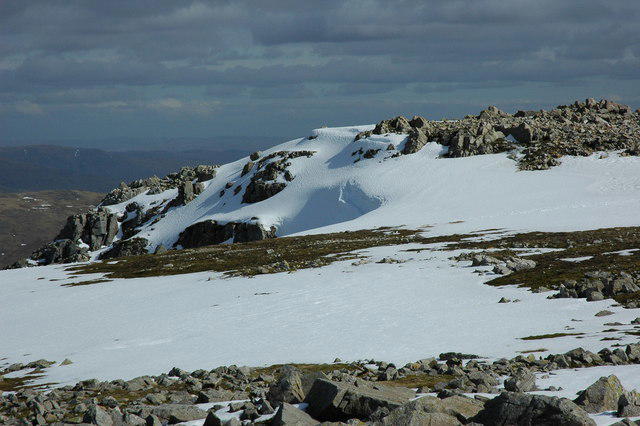 Photo could not load
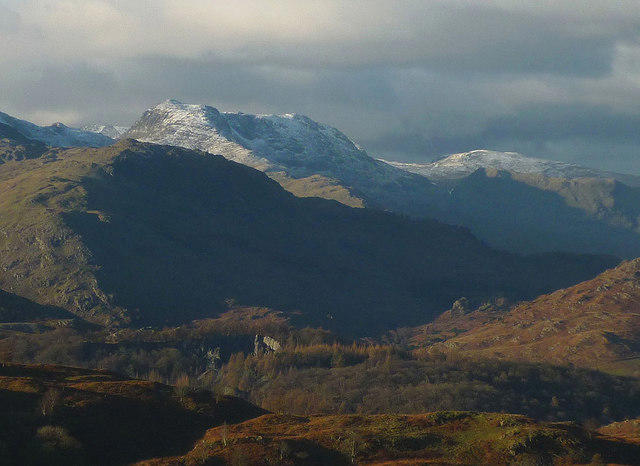
NY2208 : Snow pockets on Great End
Philip Halling
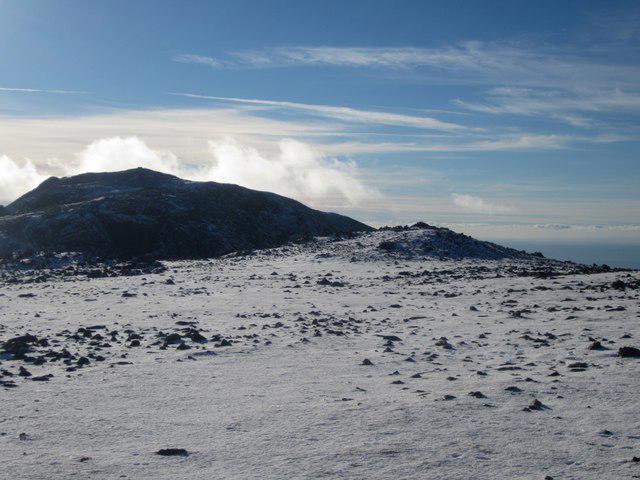 Photo could not load
NY2208 : Great End summit plateau
Graham Robson
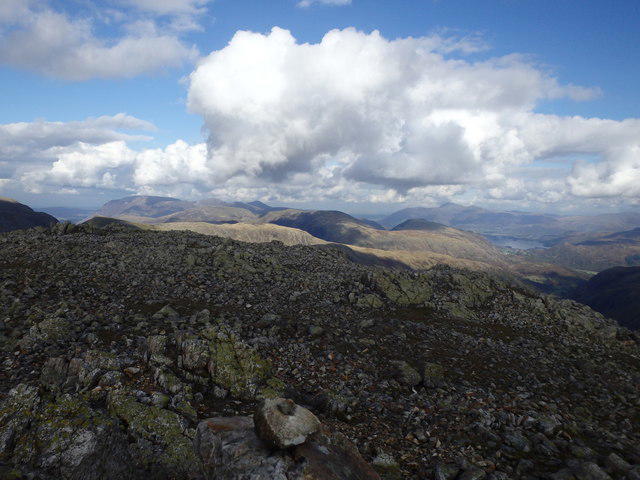
NY2208 : On Great End
Michael Graham
Hill facts and local notes
Classifications
Elevation
910m
2,984 ft
Prominence
56m
Coordinates
54.4649, -3.1946
NY226083
OS Map
89 90
Explorer: OL6N
At the Summit
Cairn on an outcrop at NY 22672 08385, height 909.5 m. The cairn 160 m west at NY 22532 08465 is approximately 1 m lower.
Terrain & Geology
Great End’s summit includes volcaniclastic mudstone and siltstone with sandstone and lapilli-tuff interbeds of the Esk Pike Sandstone Formation, within the Borrowdale Volcanic Group. This formation overlies the Lincomb Tarns Tuff Formation.
Views & Scenery
In clear weather, views include Borrowdale, Great Gable, Scafell Pike, Broad Crag and Ill Crag, with other Lake District fells beyond.
History & Heritage
Historical Significance
The Fell and Rock Climbing Club records a winter ascent of Cust’s Gully on 4 April 1880 by Arthur Cust and more than twenty Alpine Club members. This is climbing history of the gully, not a claim about the first ascent of Great End.
Getting There & Facilities
Parking
For the routes described here, start at Seathwaite in Borrowdale. Roadside space is limited: never obstruct farm access or emergency vehicles. The National Trust suggests Seatoller as an alternative; starting there adds the approach to Seathwaite to your walk.
Public Transport
Buses from Keswick serve Seatoller, with an onward walk to Seathwaite. Check the operator’s current timetable and plan the return journey; the routes described here start at Seathwaite, not the bus stop.
Nearby Facilities
Seatoller has a car park, bus stop and toilets, although the toilets may close in winter. Rosthwaite has a café and toilets, also subject to winter closure. Carry food, water and suitable mountain equipment for the walk.
Safety Information
Known Hazards
- Steep northern cliffs and gullies lie close to the summit plateau; keep clear of their edges, especially in mist.
- Do not use Cust’s Gully or Central Gully as walking shortcuts. The north-west face involves scrambling and serious route finding.
- Rough stones and boulders require care. High path junctions can be confusing in poor visibility; carry a map and compass and know how to use them.
Seasonal Hazards
Snow and ice can turn the northern face and gullies into winter mountaineering terrain. The high walking routes also need winter skills and suitable equipment in these conditions. Check the mountain forecast and daylight before setting out.
General Safety Tips
- Check weather conditions before setting out
- Carry appropriate clothing and equipment
- Let someone know your planned route
- Take a map, compass, and GPS device
- Carry emergency supplies: food, water, first aid kit, torch
Hills
Some common questions about the hills answered
Are there group walks up Great End?
Many walkers use Walkmates to join or organise walks with others. You can check for group walks around Great End through the maps
Are there other walkers around Great End?
Activity varies by location and time, but Walkmates lets you see whether others have shared walks or shown interest in this area. Find other people through the walking friends search walking friends for Great End search or of course create your own walk for Great End
Can I organise a walk to Great End?
Yes. If there aren’t any walks listed already, you can create a walk and make it available for others to join.
If you're signed up to Walkmates, you can create a walk to Great End.
How do I find a walk up this hill?
There are often multiple ways to walk this hill, depending on experience and route preference. Walkmates helps you explore walks and routes that others have shared.
Can I suggest a new route up Great End?
Yes. You can suggest or create routes to share with others. Walkmates focuses on the social side of walking, so routes are used to help people organise walks and explore areas together, rather than as detailed navigation tools or route libraries.
Other uses really appreciate knowledgeable walkers sharing their routes. Share your favourite route to Great End here
The is an error or something incorrect about this hill. How do I let you know?
We always strive to keep the information on Walkmates as accurate as possible. If you find an error, please let us know through the contact form and we'll aim to correct it as quickly as possible
Community Discussion
Comments
Location
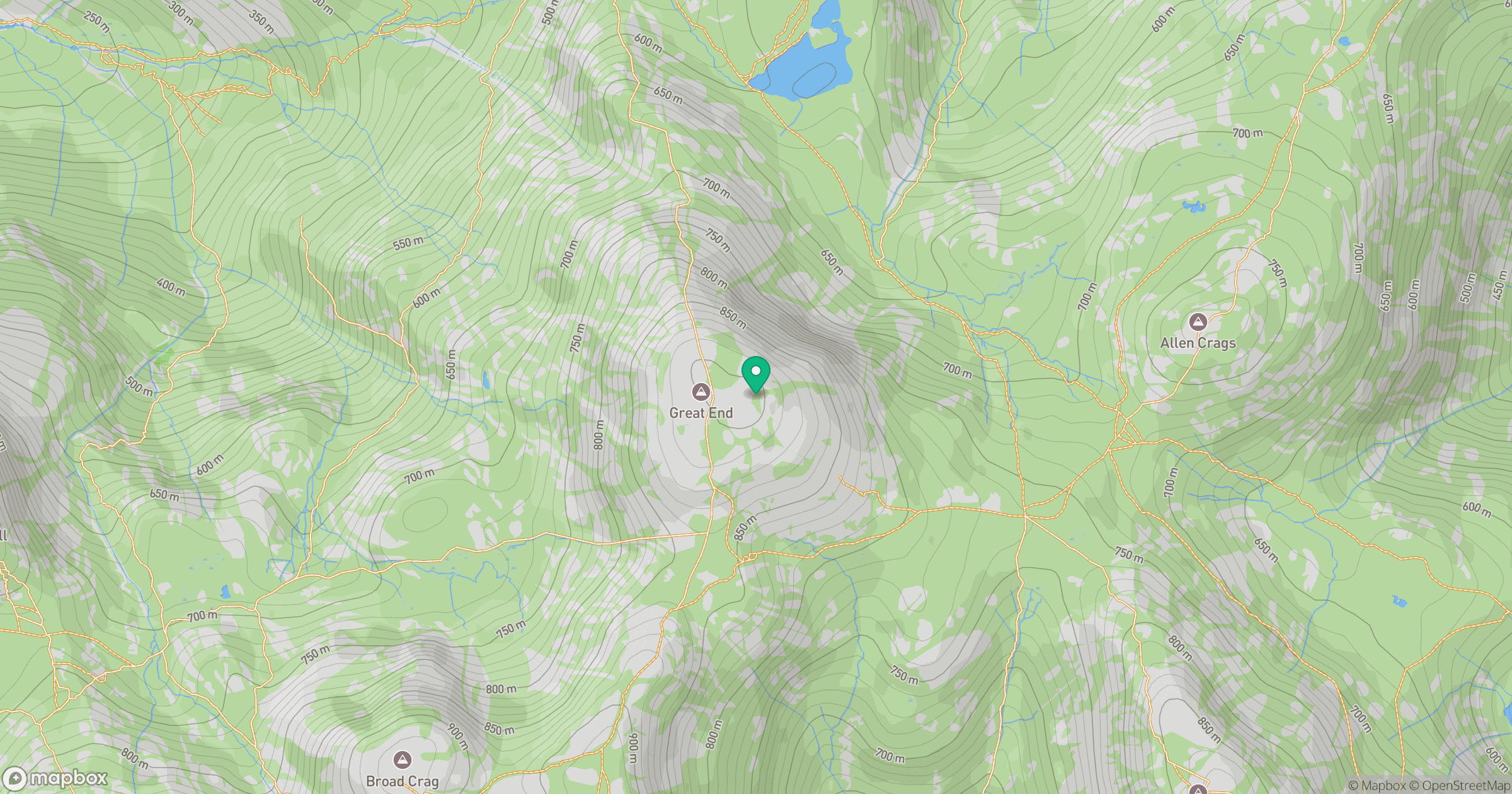
Grid reference: NY226083
View on OpenStreetMapOpens a map in a new tab, centred on the hill.
No comments yet. Be the first.