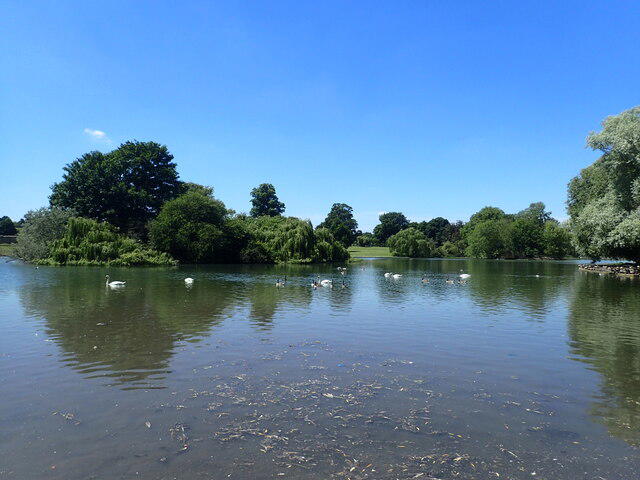
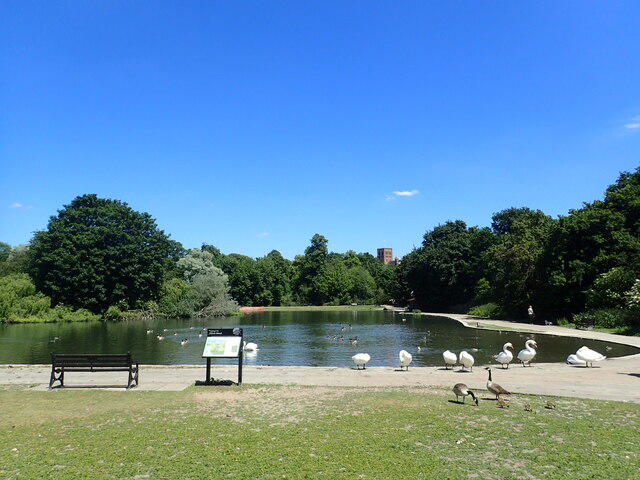
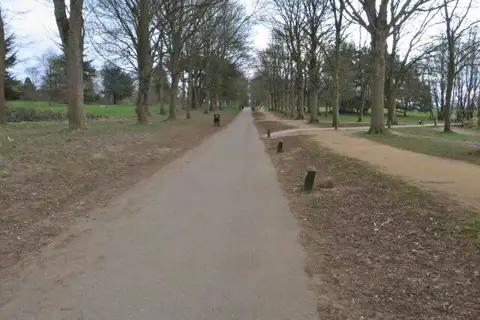
Start in the public Verulamium Museum car park off St Michael’s Street, St Albans. This short park circuit links Roman remains with the lakes and views towards the cathedral. Allow about an hour and a half for a relaxed walk with time to read the interpretation boards; museum visits need extra time.
Walk into the park and follow the paths southwest to the Hypocaust building, making the short approach and returning to the main path. Continue towards the western park boundary, then follow the grass path beside the surviving Roman town wall. A short spur visits the London Gate remains before returning to the junction. Take the Causeway path northeast towards the lake, follow its eastern side beside the River Ver and return across the northern park paths to the museum car park. Keep to the paths around the ruins rather than climbing on the masonry.
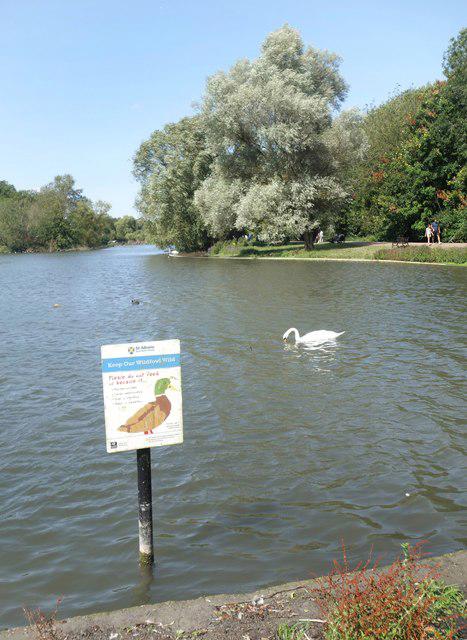
The route mixes surfaced shared paths with grass, and includes gentle slopes. Grass and waterside sections can become muddy or slippery after rain. The lake edges are unguarded, so supervise children and keep dogs under close control. Give cyclists space on shared paths. The circuit stays within the park and does not require crossing Bluehouse Hill or King Harry Lane.
Parking charges apply; follow the car park machines or PayByPhone instructions. Public toilets are by the museum car park, with refreshments available in the park during opening hours. The museum and the inside of the Hypocaust building are optional visits with their own opening arrangements.
St Albans Council’s lake and River Ver improvement programme includes work planned for autumn 2026. Check current notices before setting out, follow signed diversions and turn back if a section is closed or flooded.
Route planning and access information: St Albans City and District Council’s Verulamium Park map in its 2024–29 Greenspace Action Plan, car park information and River Ver project updates: https://www.stalbans.gov.uk/verulamium-park and https://www.stalbans.gov.uk/revitalising-river-ver-verulamium-park-lake-project