
Walking guides
Allen Banks in autumn: five things to know before you walk
Plan an Allen Banks autumn walk: the current Morralee Tarn trail, older geotrail closures, uneven paths, parking and the separate Bardon Mill station approach.
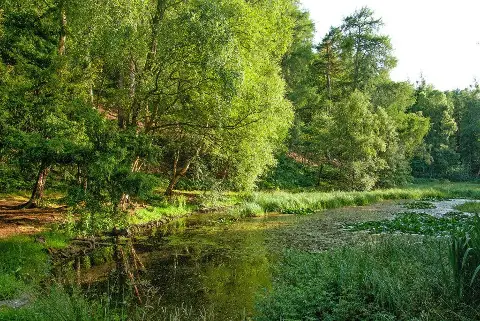
Allen Banks is a good place to spend a few hours among trees, with the River Allen below and Morralee Tarn tucked into the woods above it. In autumn, though, choosing the walk matters more than chasing a photograph of golden leaves.
Start with the National Trust’s current Morralee Tarn route, not an old track you happen to have saved. Some older Allen Banks geotrail directions no longer describe a usable walk in full.
1. Choose the 2.5-mile Morralee Tarn walk
The National Trust’s Morralee Tarn trail is the straightforward starting point for planning this visit.
- Distance: 4km / 2.5 miles.
- Allow: the Trust suggests 60–90 minutes; leave extra time for stops.
- Start and finish: Allen Banks car park, grid reference NY798639.
- Terrain: moderate, with steep climbs, steps, exposed roots and rocks.
- Pushchairs: this route is not suitable.
- Dogs: keep them on a lead.
The walk climbs through Morralee Woods to the tarn and returns to the car park, partly retracing the outward route. It is not a flat riverside stroll, even though the distance is fairly short.
If your group is happy with slopes and uneven footing, this is a useful half-day outing with room for an unhurried stop. If someone needs a step-free walk, choose somewhere else rather than hoping the short distance means easy access.
2. Don’t confuse it with the older geotrail
A saved leaflet can be perfectly readable and still describe paths you cannot use. The North Pennines Allen Banks geotrail page warns that parts of its leaflet route are inaccessible following storm damage. It directs visitors to the information in the car park and waymarks for alternatives.
That does not mean the whole property is closed. It does mean you should not join up an old circuit on the assumption that every path and crossing remains available.
Use the current trail directions when planning, then read the notices when you arrive. If a closure cuts across your intended walk, follow the signed alternative only if it suits your group and the time you have. Otherwise, change the plan. There is no need to find your own way around a blocked riverside section.
3. Give the gorge a bit of respect in wet or windy weather
The combination of woodland, slopes and a river is much of the appeal here. It also makes this a walk where the weather deserves a proper look before leaving home.
Check the Met Office forecasts and warnings, especially after heavy rain or strong winds. The Environment Agency’s flood-check service is useful additional information, but an absence of flood alerts is not a promise that a woodland path is clear or safe.
Wear footwear with a good grip. Wet leaves can hide roots and stones, and the Trust describes steep, uneven ground and significant drops. Keep to the available marked paths and respect closures rather than stepping around them.
Download or print the current directions before setting off. Don’t make being able to load a map at the bottom of the gorge part of the plan.
4. Sort the small practical things before you go
Parking: the National Trust property page currently lists £3 for four hours or £5 for the day, with no charge for National Trust members. There is a 3.3m height restriction. Check the payment and member check-in instructions on arrival.
Facilities: toilets and an accessible toilet are listed at the property. That does not make the walking trails accessible: the route itself has the climbs and steps described above.
Finding it: Allen Banks is near Ridley Hall and Bardon Mill, with postcode NE47 7BP. Use the official directions for the car park rather than treating a general place pin as the start of the trail.
Coming by train: the Trust also publishes a Bardon Mill station-to-Allen Banks walk. It is a separate 1.6-mile / 2.56km approach, taking about 45 minutes one way. Add that distance and the return journey to your day; it is not included in the 2.5-mile tarn route. Check trains separately before committing.
5. Leave enough daylight to enjoy it
A short woodland walk can easily become a longer afternoon once you stop for the water, the trees and something to eat. In autumn, give yourself that time at the start rather than borrowing it from the end.
Check sunset, plan to be back with daylight to spare and take a torch rather than relying only on your phone. Our guide to planning a walk within daylight helps with the timing.
Before leaving the car park, make three quick checks: the route is available, everyone is comfortable with the terrain, and there is enough daylight left. Then put the planning away and enjoy the woods.