

Pen-y-ghent
Good walks are even better shared.
Overview
Pen-y-ghent rises to 694.1 m above Horton-in-Ribblesdale in the Yorkshire Dales National Park. The lowest of the Yorkshire Three Peaks, it has a distinctive stepped profile, steep rocky summit approaches and broad views in clear weather. The classic Horton circuit is 10 km via Brackenbottom and Horton Scar Lane.
Pen-y-ghent
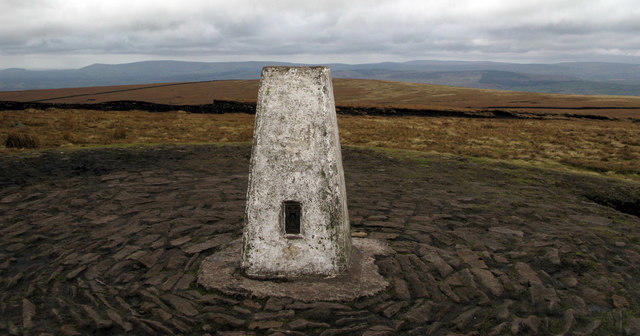
Pen-y-ghent rises above Horton-in-Ribblesdale in the Yorkshire Dales National Park. It is the lowest of the Yorkshire Three Peaks, with a recorded height of 694.1 metres (2,277 feet) and 304.5 metres of prominence. It is a Marilyn, Simm, Hewitt and Nuttall. The summit has a trig point and wind shelter; DoBIH identifies the highest ground as rock 3 metres southeast of the trig point. DoBIH · Summit guide
Walking routes
The classic circuit from Horton-in-Ribblesdale is 10 km. It climbs by Brackenbottom Scar before joining the Pennine Way on the steep south ridge, then descends on the western side and returns down Horton Scar Lane. Hunt Pot and an optional diversion to Hull Pot add interest. The separate Brackenbottom card describes this same basic circuit. The National Park does not give a total time, so no unsupported time is supplied. National Park route · Route leaflet
For a longer circuit, continue from Pen-y-ghent along the ridge to Plover Hill, descend north onto Foxup Moor, then turn west and return to Horton by Horton Scar Lane. Walking Britain describes this Horton-to-Horton route as 14.6 km, approximately 5 hours 50 minutes. The ridge can be boggy and the northern descent is steep. Plover Hill circuit
The Horton Scar out-and-back follows the western Pennine Way approach and returns the same way. Walking Britain gives 11 km and approximately 4 hours 40 minutes, including the option of a Hull Pot visit. This avoids the south-ridge rocky steps but is still a hill walk with substantial ascent. Horton Scar route
The Yorkshire Three Peaks is the complete circuit of Pen-y-ghent, Whernside and Ingleborough, returning to Horton via Sulber Nick. The National Park gives 38.6 km, rounded to 39 km in its leaflet. A 12-hour completion is a challenge target, not a normal walking-time guarantee. Plan for the entire journey, including road sections and the final descent. Official Three Peaks guidance · Full route
Distances and times refer to the named complete itineraries; detours, weather and pace change them. Carry a proper route map rather than relying on these summaries.
Landscape and views
Pen-y-ghent's stepped profile reflects layers of Carboniferous limestone, shale and sandstone, with resistant gritstone on the upper hill. The BGS describes the well-exposed Grassington Grit succession here. Gritstone is a coarse sandstone, and the hill should not be described simply as limestone. British Geological Survey · Geological Society
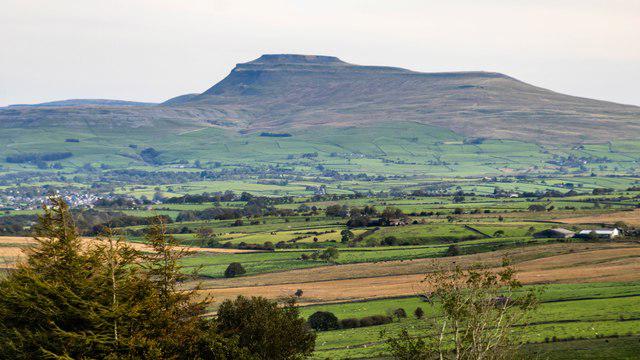
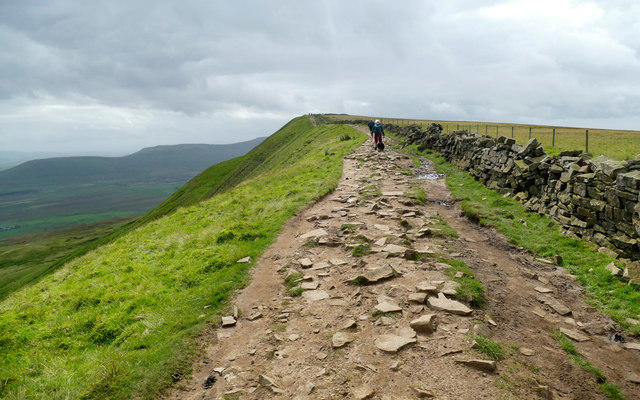
In clear conditions, Ingleborough and Whernside are prominent to the west and northwest, with Fountains Fell to the southeast. The approach and descent pass limestone scenery, grassy slopes and rocky steps. Horton Scar views · Brackenbottom terrain
Nearby summits include Plover Hill (679.9 m), Fountains Fell (667.8 m), Ingleborough (723.3 m) and Whernside (736.6 m). Adding another summit changes the length and demands of the day. DoBIH
Access and facilities
Horton-in-Ribblesdale is the usual base. The National Park pay-and-display car park beside the B6479 has public toilets; the official walk gives postcode BD24 0HF and grid reference SD807724. Parking is limited and can fill early. Keep roads, gateways and access clear. Car park · Visitor guidance
Horton station on the Settle-Carlisle line is a short walk from the village. Check Northern's current outward and last return services and any engineering changes. The station itself has no toilets or refreshments; these facilities are in the village. Pubs provide refreshments subject to opening hours. Carry food and water for the hill. Northern station information · National Park facilities
Name and walking heritage
The name is Cumbric, an old Brittonic language related to Welsh. Pen means head or top; the final element is disputed, with edge or border among the proposed meanings. A single certain translation should not be claimed. Name discussion
The hill is a landmark on the Pennine Way and in Yorkshire's Three Peaks walking tradition. The National Park traces an early recorded Three Peaks walk to Giggleswick schoolmasters in 1887; the first official Three Peaks Race was in 1954. Walking and running history
Safety and seasons
The south ridge has steep rocky steps where hands may be useful. Wet limestone is slippery, and cloud or strong wind can make the upper hill much more demanding. Keep back from cliff and pothole edges, especially Hunt Pot and Hull Pot; visiting a pothole from above is not an invitation to enter it. Snow and ice require appropriate winter judgement and equipment. South-ridge route · Winter route caution
Check a mountain forecast and carry a map and compass you can use, warm waterproof layers, food, water and a torch. Allow daylight for the full return. Mobile reception is not assured. In a hill emergency, call 999, ask for Police, then Mountain/Fell Rescue, and give your location. National Park safety
Explore routes near Pen-y-ghent
Walks starting near this hill. Open a route to check its map, distance and full itinerary.
Pen-y-ghent from Horton in Ribblesdale
View route
Yorkshire Three Peaks Challenge – Gentle Pace
View route
Yorkshire Three Peaks Challenge – Sub-12 Hour
View route
Yorkshire Three Peaks Challenge – Gentle Pace
View route
Route planning notes
These notes describe possible approaches. Check a route's map and access information when planning your walk.
Classic Pen-y-ghent circular from Horton
Start and finish at Horton-in-Ribblesdale National Park car park. Walk through the village to Brackenbottom, climb Brackenbottom Scar, then join the Pennine Way for the steep south-ridge ascent. Cross the summit wall and follow the signed Horton descent past Hunt Pot; an optional short detour visits Hull Pot. Return down Horton Scar Lane. The National Park gives 10 km; allow a full hill-walking outing and extra time for stops.
Pen-y-ghent via Brackenbottom (Horton circuit)
Brackenbottom is the ascent leg of the classic Horton circuit, not a separate shorter route. From Horton National Park car park, use the village lane and signed Brackenbottom Scar path, then join the Pennine Way to the summit. Return on the western Pennine Way descent and Horton Scar Lane to the same car park. This is the same basic 10 km circuit as the classic card. Expect steep rocky steps on the ascent, and allow extra time in poor conditions.
Pen-y-ghent and Plover Hill circular
From Horton National Park car park, ascend via Brackenbottom Scar and the south ridge to Pen-y-ghent. Follow the ridge wall north to Plover Hill, then descend north onto Foxup Moor. Turn west on the bridleway, pass the Hull Pot area and return by Horton Scar Lane to the car park. Walking Britain gives 14.6 km and 5 hours 50 minutes for this circuit. Expect boggy ridge ground and a steep northern descent.
Yorkshire Three Peaks (full Horton circuit)
Start and finish at Horton National Park car park. Climb Pen-y-ghent via Brackenbottom, continue over Whitber Hill and via Nether Lodge to Ribblehead, then cross Whernside. Descend to Bruntscar and the Hill Inn, climb Ingleborough and return via Sulber Nick and Horton station. The National Park gives 38.6 km for the full circuit. Twelve hours is a challenge target, not a guaranteed duration; allow for steep terrain, road sections and fatigue.
Pen-y-ghent via Horton Scar (out and back)
From Horton National Park car park, walk into the village and take Horton Scar Lane. Continue on the Pennine Way up the western flank to Pen-y-ghent, then retrace the same route to the car park. A short Hull Pot diversion is optional. Walking Britain gives 11 km and 4 hours 40 minutes for this outing. It avoids the south-ridge rocky steps but still involves a substantial climb and exposed upland conditions.
Make a day of it, together
Find someone to share the walk with, or organise a day out along a route you like.
Photo Gallery
View all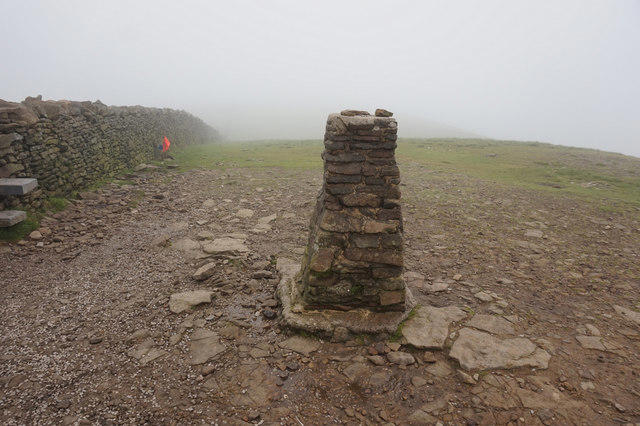 Photo could not load
SD8373 : 2-21pm, Trip point, Pen-y-ghent
Ian S
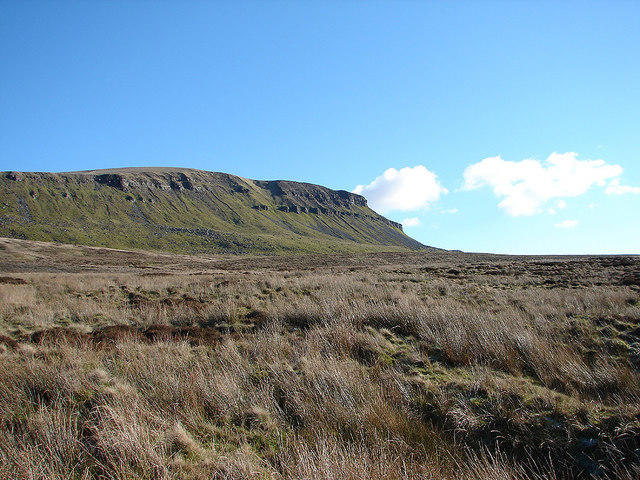 Photo could not load
SD8373 : Pen-y-ghent viewed from Hunt Pot
John Lucas
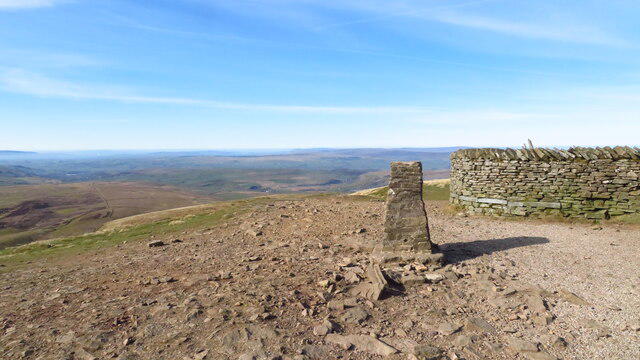 Photo could not load
SD8373 : The summit of Pen-y-ghent
Richard Park
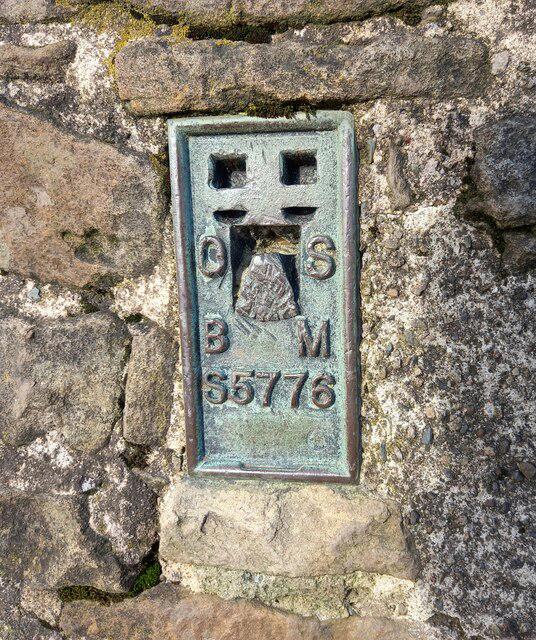 Photo could not load
SD8373 : Penyghent summit
Mel Towler
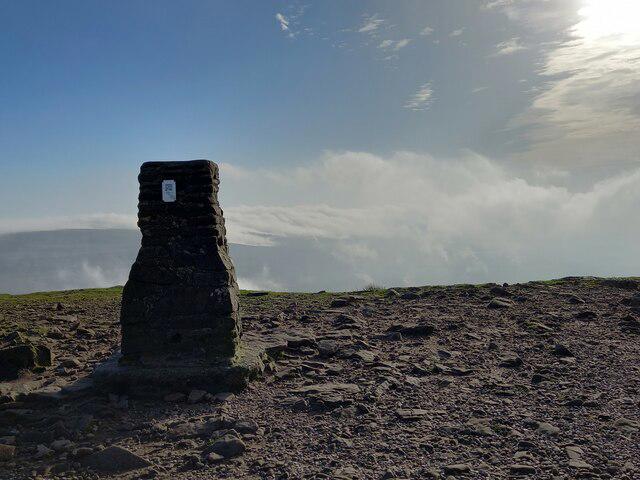 Photo could not load
SD8373 : Penyghent trig point
Mel Towler
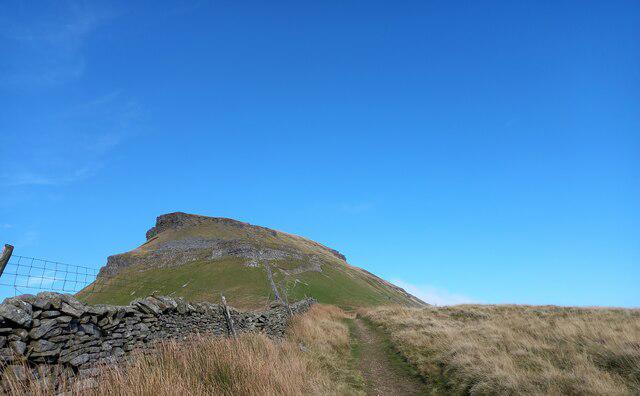 Photo could not load
SD8373 : Approach to Penyghent
Mel Towler
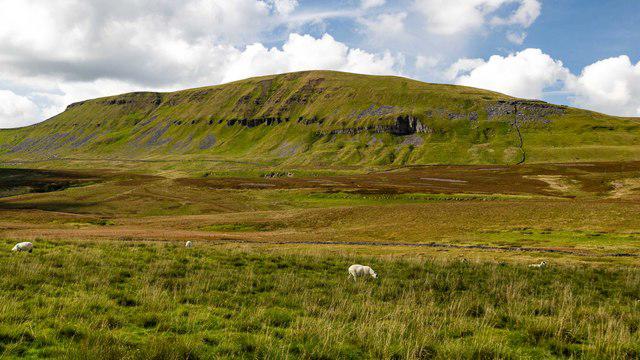 Photo could not load
SD8373 : Pen-y-ghent
Peter McDermott
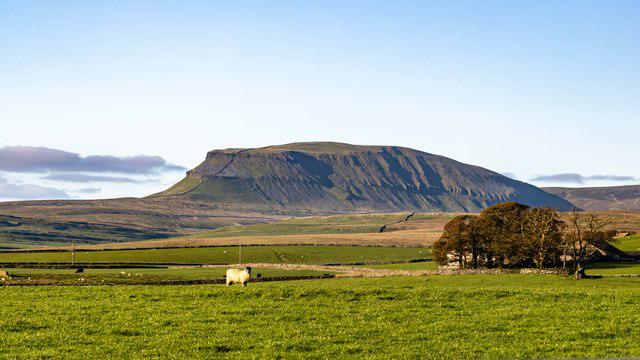 Photo could not load
SD8373 : Pen-y-ghent
Peter McDermott
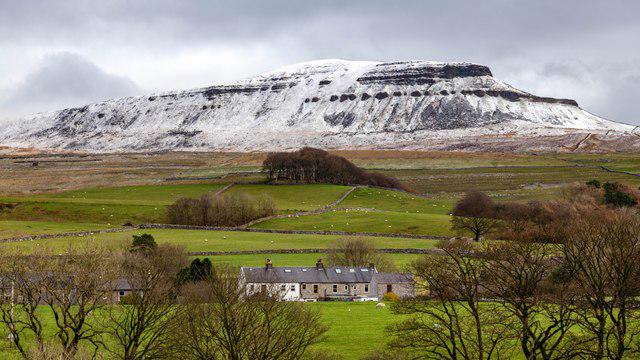 Photo could not load
SD8373 : Pen-y-Ghent
Peter McDermott
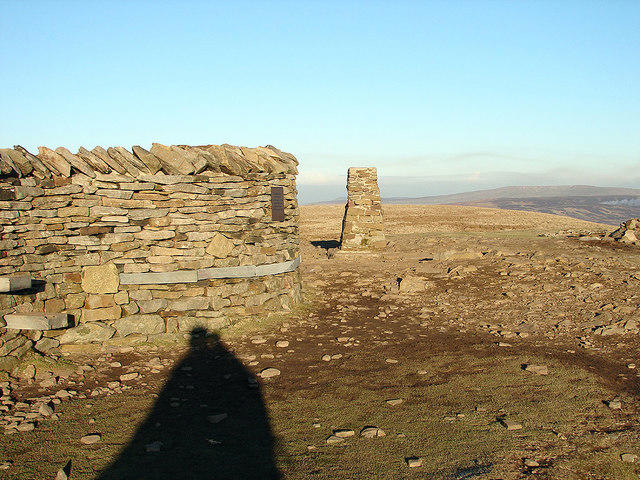
SD8373 : Pen-y-ghent trig and shelter.
John Lucas
Hill facts and local notes
Classifications
Elevation
694m
2,277 ft
Prominence
304m
Coordinates
54.1560, -2.2487
SD838733
OS Map
98
Explorer: OL2W
At the Summit
The summit area has a trig point and a wind shelter beside the wall. DoBIH identifies the highest point as rock 3 m southeast of the trig point. Views depend on visibility; identify your return route carefully in cloud.
Terrain & Geology
Pen-y-ghent exposes a layered Carboniferous succession of limestone, shale and sandstone, with resistant gritstone on the upper hill. These contrasting rocks give it a stepped profile. The British Geological Survey describes the Grassington Grit succession here; gritstone is a coarse sandstone, not limestone.
Views & Scenery
In clear weather, Ingleborough and Whernside stand to the west and northwest, with Fountains Fell to the southeast. Views also take in Ribblesdale and the surrounding limestone country. Cloud can obscure the panorama in any season.
Best Seasons
Spring can bring brief purple-saxifrage flowering on limestone ledges near the summit. Timing varies; visibility and walking conditions depend on the weather rather than a guaranteed best season. Observe plants from paths and leave them undisturbed.
History & Heritage
Name Origin
The name is Cumbric, an old Brittonic language related to Welsh. Pen means head or top. The final element is uncertain; edge or border is one suggested interpretation. The name should not be attributed to Old Norse or given a single certain translation.
Historical Significance
Pen-y-ghent is a landmark on the Pennine Way and one of the Yorkshire Three Peaks. An early recorded Three Peaks walk was made by Giggleswick schoolmasters in 1887; the first official Three Peaks Race took place in 1954. These documented walking traditions replace unsupported claims about local folklore.
Getting There & Facilities
Parking
Horton-in-Ribblesdale National Park pay-and-display car park beside the B6479 is the usual start for the classic circuit (BD24 0HF; official route reference SD807724). Public toilets are provided. Parking is limited and fills early at busy times; check current charges and keep gateways, roads and passing places clear.
Public Transport
Horton-in-Ribblesdale station on the Settle-Carlisle line is a short walk from the village and the usual routes. Northern operates the station and services. Check current outward and last return trains and engineering changes before travelling; allow for the walk between the station and your route start.
Nearby Facilities
Public toilets are at the National Park car park in Horton-in-Ribblesdale, and village pubs offer refreshments subject to opening hours. Horton station has no toilets or refreshments. Check opening hours before relying on refreshments, and carry enough food and water for the walk.
Safety Information
Known Hazards
- Steep rocky steps on the south ridge may require hands; wet limestone and rock can be slippery.
- Cliffs, shakeholes and deep potholes occur nearby; keep well back from Hunt Pot and Hull Pot edges.
- Low cloud and strong winds can make navigation and balance difficult on exposed ground.
- The Plover Hill extension crosses boggy ground and has a steep northern descent.
- Carry a map and compass, suitable clothing, food, water and a torch; plan for the full return.
Seasonal Hazards
Snow and ice can make the steep steps and descents considerably more serious; appropriate winter skills and equipment may be needed. Allow for short daylight, and check the mountain forecast. Heavy rain makes paths and moorland wet or slippery; hot weather requires extra water and sun protection.
General Safety Tips
- Check weather conditions before setting out
- Carry appropriate clothing and equipment
- Let someone know your planned route
- Take a map, compass, and GPS device
- Carry emergency supplies: food, water, first aid kit, torch
Hills
Some common questions about the hills answered
Are there group walks up Pen-y-ghent?
Many walkers use Walkmates to join or organise walks with others. You can check for group walks around Pen-y-ghent through the maps
Are there other walkers around Pen-y-ghent?
Activity varies by location and time, but Walkmates lets you see whether others have shared walks or shown interest in this area. Find other people through the walking friends search walking friends for Pen-y-ghent search or of course create your own walk for Pen-y-ghent
Can I organise a walk to Pen-y-ghent?
Yes. If there aren’t any walks listed already, you can create a walk and make it available for others to join.
If you're signed up to Walkmates, you can create a walk to Pen-y-ghent.
How do I find a walk up this hill?
There are often multiple ways to walk this hill, depending on experience and route preference. Walkmates helps you explore walks and routes that others have shared.
Can I suggest a new route up Pen-y-ghent?
Yes. You can suggest or create routes to share with others. Walkmates focuses on the social side of walking, so routes are used to help people organise walks and explore areas together, rather than as detailed navigation tools or route libraries.
Other uses really appreciate knowledgeable walkers sharing their routes. Share your favourite route to Pen-y-ghent here
The is an error or something incorrect about this hill. How do I let you know?
We always strive to keep the information on Walkmates as accurate as possible. If you find an error, please let us know through the contact form and we'll aim to correct it as quickly as possible
Community Discussion
Comments
Location
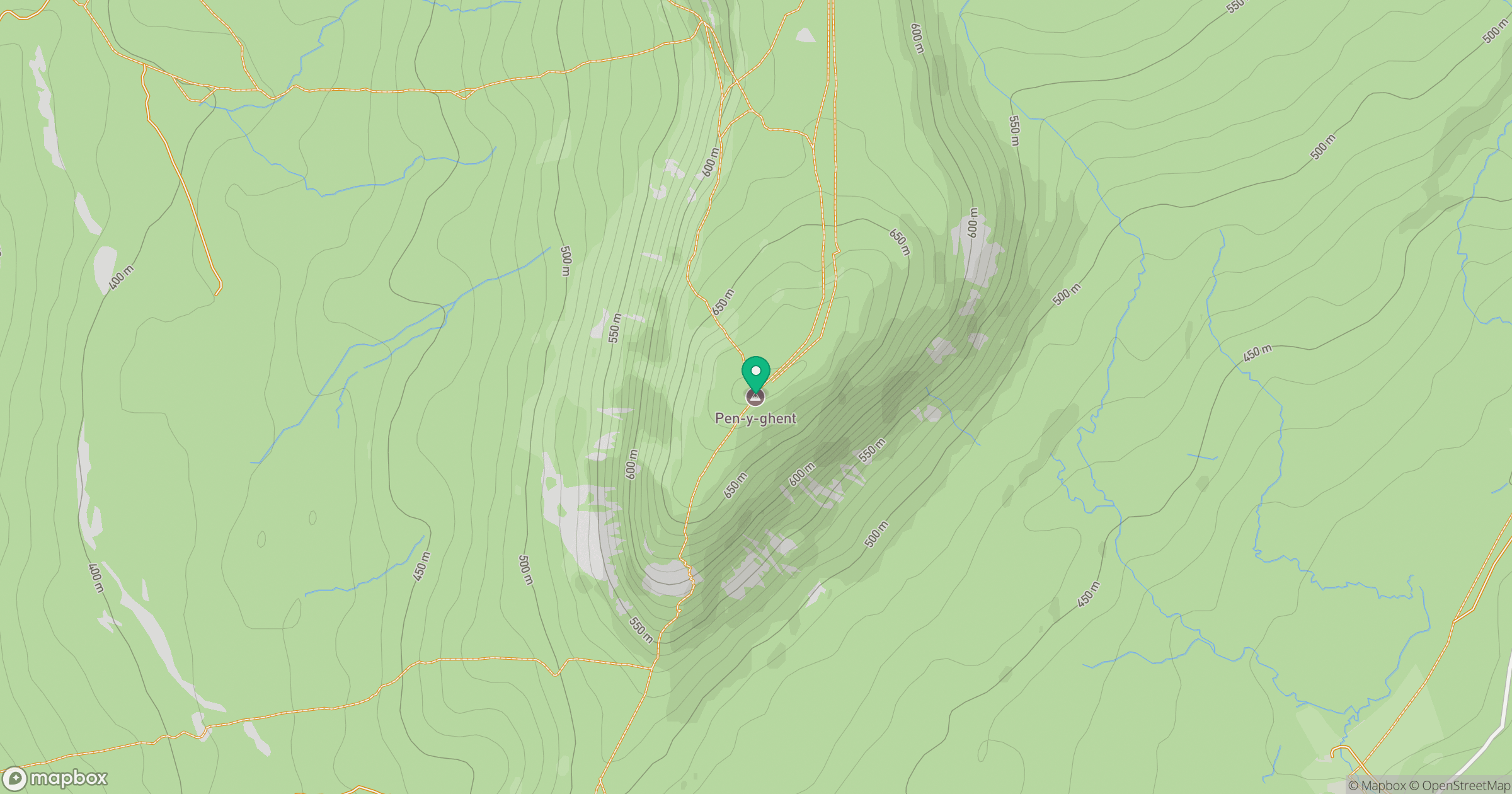
Grid reference: SD838733
View on OpenStreetMapOpens a map in a new tab, centred on the hill.
No comments yet. Be the first.