

Devil's Dyke
Good walks are even better shared.
TQ2510 : The South Downs near Fulking
Mat Fascione Photo source
Overview
Devil’s Dyke is a 216.5 m hillfort high point in the South Downs above Poynings, West Sussex. The listed summit is on a rampart beside the trig, distinct from the famous dry valley and the pub-side viewpoint. Returning landscape walks explore the valley, Saddlescombe and the surrounding downs.
Devil’s Dyke
Devil’s Dyke combines a chalk downland hillfort with a dramatic dry valley above Poynings in West Sussex. The catalogue hill is 216.5 m high. It is distinct from the valley below and the popular viewpoint beside the pub.
The listed high point
DoBIH places the high point on the hillfort rampart 2 m west of the trig, at TQ 25739 10848. Its observations also identify possible natural summits at the woodland edge, TQ 25870 11075, and at TQ 25729 10899. Substantial man-made disturbance within the fort means this is a source-qualified summit description, not a newly established natural highest point. A visit to the car park or valley does not by itself establish a visit to this high point.
Returning landscape walks
These are complete landscape circuits from the pub or its car park. Their published itineraries do not establish a visit to the exact rampart high point. No summit detour is included in their figures, and cumulative ascent is not published in the reviewed guides.
- National Trust histories and mysteries circuit: 4.8 km, about 2 hours, graded Moderate. Descend the dyke, visit Saddlescombe Farm, then return through fields and woods and climb the stepped escarpment path to the starting car park. Expect some steep banks and exposed sections.
- National Trust Fulking archaeology circuit: 6.4 km, 1½–2½ hours, graded Moderate. Cross the downland towards Perching’s remains, regain the South Downs Way, continue to Edburton motte-and-bailey and return east along the ridge to the same car park. The castle is a separate feature from the catalogued nearby hill summits.
- RGS-IBG Devil’s Dyke and Poynings circuit: 2½ miles, approximately 4.0 km, around 90 minutes. Descend the valley, take the paths towards Saddlescombe and Poynings, and return via Dyke Lane, woodland steps and the escarpment to the starting viewpoint markers. The guide supplies no difficulty grade; the steep steps and edges still need care.
Chalk, views and history
The fort occupies a chalk spur. The adjacent dry valley reflects cold-climate erosion, with meltwater and thawed material moving over frozen ground; it was not cut by a glacier passing through this site. Look north over the Weald and south across the downs towards the Channel coast when visibility allows.
The Iron Age hillfort is Scheduled Monument 1014953. Its surviving banks and buried archaeology have been affected by later development and military activity. Victorian attractions included the 1894 aerial cableway and the 1897 steep-grade railway. Folklore tells of the Devil digging through the Downs to flood the churches of the Weald; this is a story rather than the valley’s geological origin, and its beginning is not established as Victorian.
Access and facilities
Use existing footpaths and follow current signs across the hillfort and open-access downland. The main National Trust car park is beside the pub, around TQ258110; its visitor page gives easting 525844 and northing 110977. Check current parking terms and do not assume space is available. The pub and its toilets are independently operated. The Wildflour Café is at Saddlescombe Farm, not the main car park, and facilities depend on opening hours.
Brighton & Hove Buses lists Breeze 77 between Brighton Pier and Devil’s Dyke. Check the timetable for your date and the last return rather than assuming daily service. The bus arrives by the hilltop pub, not at the bottom of the valley or the exact listed high point.
Care on the paths
There are uneven steps, roots, stiles, narrow escarpment paths and steep slopes. Mud after rain can make banks slippery. Take care at road crossings and keep children close near edges. Keep dogs on leads near livestock and wildlife, never feed grazing ponies and take waste home. Carry water, suitable footwear and weather protection; allow for the return climb.
Nearby hills
The verified catalogue identities are Edburton Hill (DoBIH 18421, 193 m, TQ236109), Truleigh Hill (18391, 217.8 m, TQ224107) and Ditchling Beacon (2912, 248 m, TQ331130). These are separate hills, not subsidiary summits of Devil’s Dyke. Their inclusion here does not supply an extension route or imply public access to every exact high point.
Explore routes near Devil's Dyke
Walks starting near this hill. Open a route to check its map, distance and full itinerary.
Littlehampton Walk & Talk
View route
Littlehampton Walk & Talk
View route
Littlehampton Walk & Talk
View route
Ashdown Forest Wellington Crash Site and Airman's Grave
View route
Route planning notes
These notes describe possible approaches. Check a route's map and access information when planning your walk.
Devil’s Dyke histories landscape circuit (National Trust)
Start and finish at Devil’s Dyke pub car park, TQ258110. Follow the National Trust’s histories and mysteries trail past the bus turning circle, down the dry valley and up to Saddlescombe Farm. Return across the road, cross the fields back towards the valley, then climb through the woods and follow the stepped escarpment path to the final gate and original car park. Use the published hairpin alternative to the muddy steep bank in wet conditions. The complete trail is 4.8 km, about 2 hours; cumulative ascent is not published. This landscape circuit visits the hillfort area but does not establish a visit to the exact DoBIH rampart high point 2 m west of the trig.
Fulking and Edburton landscape circuit (National Trust)
Start and finish opposite the Devil’s Dyke pub at the main hilltop car park. Follow the National Trust’s Fulking archaeology route west past the ruined brick building, across downland and down beside the old flint wall towards Perching’s settlement remains. Follow the fence uphill to the South Downs Way, continue west beneath the pylons to Edburton motte-and-bailey, then return east along the South Downs Way to the same car park. The complete circuit is 6.4 km and the publisher allows 1½–2½ hours; cumulative ascent is not published. Expect slopes, gates, stiles and livestock. The castle visit is not a verified visit to either Edburton’s natural summit or Devil’s Dyke’s exact DoBIH rampart high point.
Devil’s Dyke and Poynings landscape circuit (RGS-IBG)
Start and finish at the viewpoint markers outside the Devil’s Dyke pub, TQ25856 11101. Follow the RGS-IBG trail down the dyke, climb towards the roadside opposite Saddlescombe Farm, then take the signed paths through woods to Poynings lake and village. Return by Dyke Lane’s bridleway, the steep wooded steps and the narrow escarpment path to the pub and starting markers. RGS-IBG publishes 2½ miles (approximately 4.0 km) and 90 minutes for the whole circuit; cumulative ascent and a difficulty grade are not supplied. Take care on uneven steps, tree roots, the steep edge and road sections. The viewpoint start/finish is separate from the exact DoBIH rampart high point beside the trig.
Make a day of it, together
Find someone to share the walk with, or organise a day out along a route you like.
Photo Gallery
View all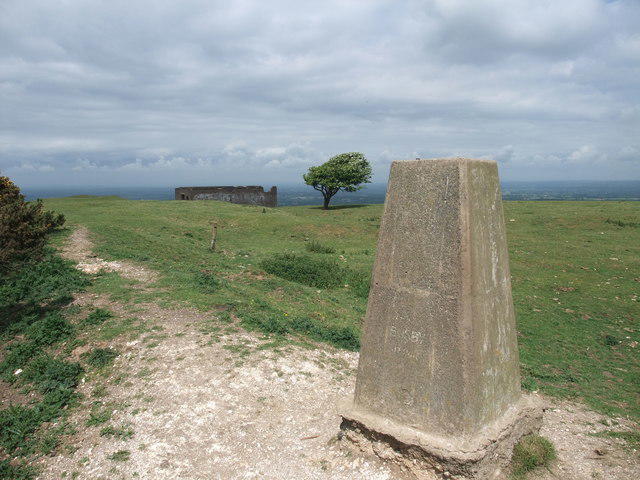 Photo could not load
TQ2510 : Trig point above Devil's Dyke
Tim Heaton
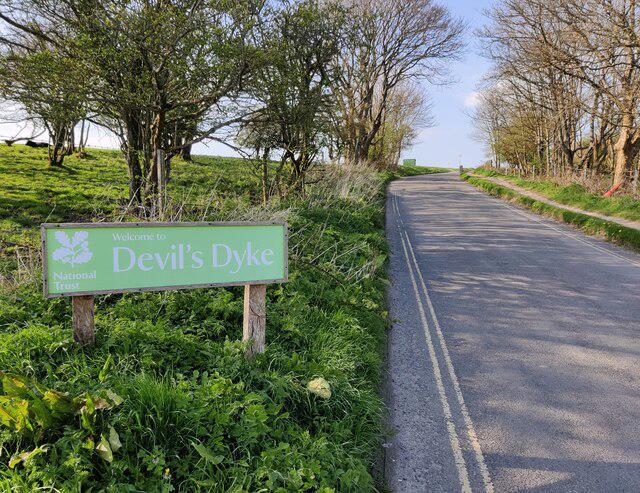 Photo could not load
TQ2510 : Road at Devil's Dyke
Mat Fascione
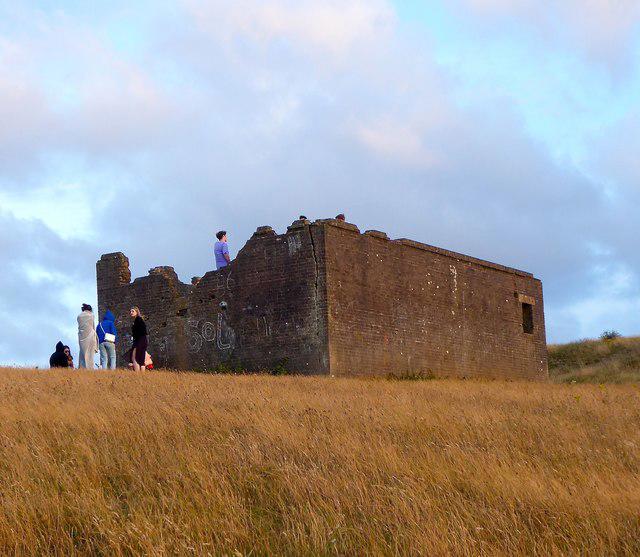 Photo could not load
TQ2510 : Building, Devil's Dyke
Simon Carey
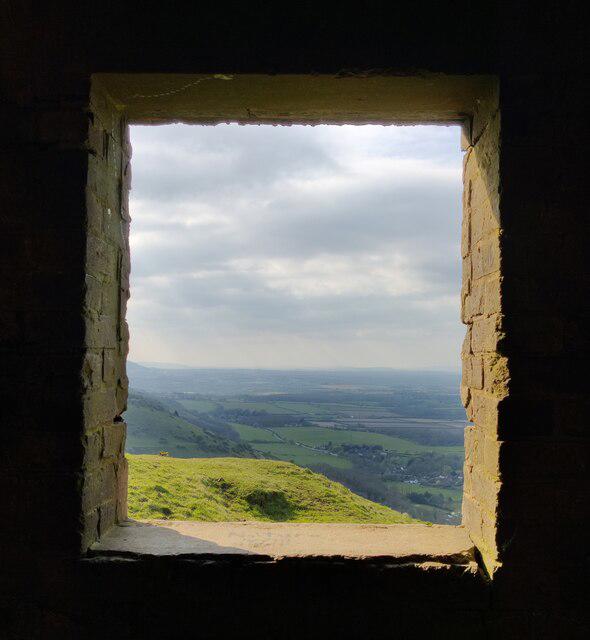 Photo could not load
TQ2510 : View through a window
Mat Fascione
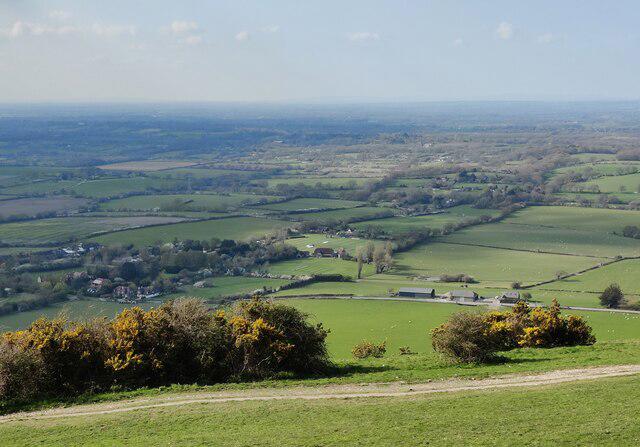 Photo could not load
TQ2510 : View from Devil's Dyke across the Low Weald
Mat Fascione
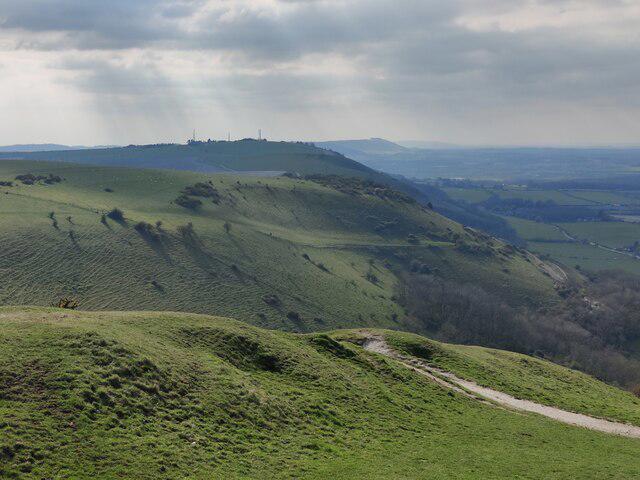 Photo could not load
TQ2510 : The South Downs near Fulking
Mat Fascione
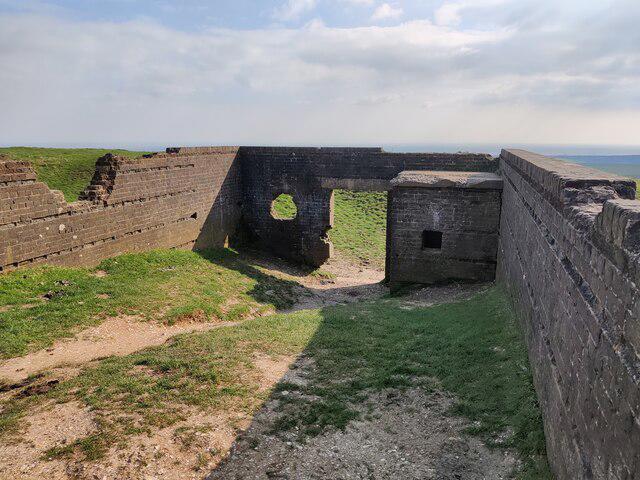 Photo could not load
TQ2510 : Inside a derelict building at Devil's Dyke
Mat Fascione
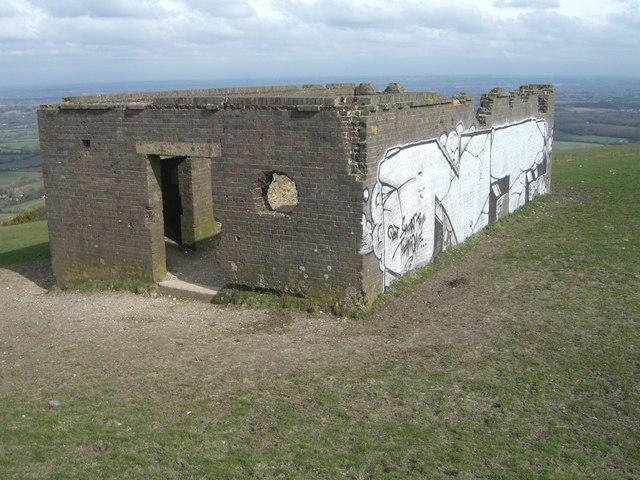 Photo could not load
TQ2510 : Building at Devil's Dyke
Peter Cox
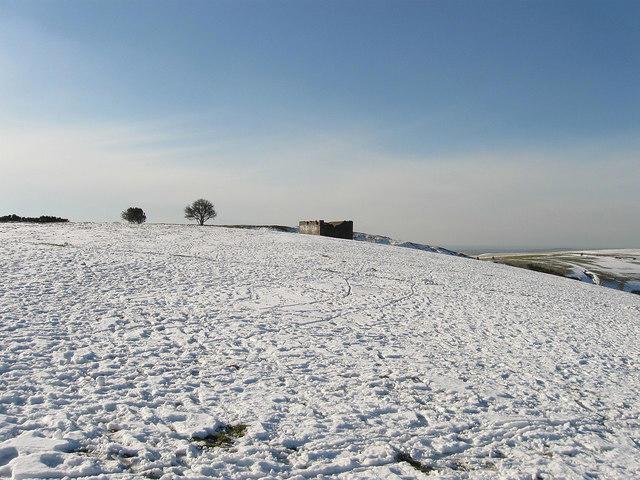 Photo could not load
TQ2510 : Mysterious Building, Devil's Dyke
Simon Carey
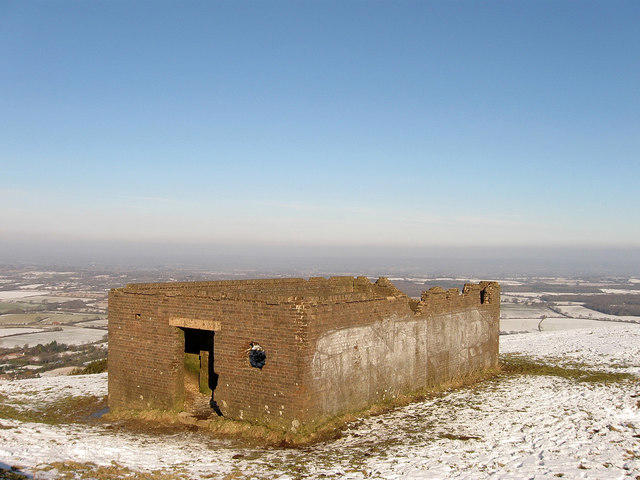
TQ2510 : Mysterious Building, Devil's Dyke
Simon Carey
Hill facts and local notes
Classifications
Elevation
216m
710 ft
Prominence
67m
Coordinates
50.8834, -0.2139
TQ257108
OS Map
198
Explorer: OL11 122
At the Summit
DoBIH records the 216.5 m high point on the hillfort rampart 2 m west of the trig point, at TQ 25739 10848. This is separate from the dry valley and the viewpoint by the pub. The source also identifies the woodland edge at TQ 25870 11075 and ground at TQ 25729 10899 as possible natural summits, noting substantial man-made disturbance within the fort. The natural highest point is therefore not independently settled here.
Terrain & Geology
The hillfort occupies a chalk spur on the South Downs escarpment. The neighbouring dry valley was shaped under cold, periglacial conditions: meltwater and thawed material moved over frozen ground. Chalk now allows rainwater to drain into the ground. The valley is a separate landform from the listed rampart high point.
Views & Scenery
Views from the hillfort and surrounding viewpoints extend north over the Weald and south across the downs towards the Channel coast. Visibility depends on the weather; the car-park viewpoint is separate from the listed high point.
History & Heritage
Name Origin
The name is associated with folklore that the Devil tried to dig through the Downs to let the sea flood the churches of the Weald. This is a legend, not a geological explanation; the reviewed sources do not establish a specifically Victorian origin for the name.
Historical Significance
The Iron Age hillfort is Scheduled Monument 1014953. Its earthworks and buried remains survive despite later building and military disturbance. Victorian leisure attractions included an aerial cableway built in 1894 and a steep-grade railway built in 1897. Historic England records further use during both World Wars. The archaeological hillfort, the visitor attractions and the dry valley should be distinguished.
Getting There & Facilities
Parking
Use the National Trust car park by the Devil’s Dyke pub: TQ258110, with the visitor page giving easting 525844 and northing 110977. Paid parking uses machines or JustPark; check current terms before travelling. National Trust members and Blue Badge holders have free-parking arrangements. Space is not guaranteed. The car park is separate from the trig and listed high point.
Public Transport
Brighton & Hove Buses lists Breeze 77 between Brighton Pier and Devil’s Dyke. Check the operator’s date-specific timetable and the last return before travelling; do not assume it runs daily. Brighton railway station provides a rail connection to the city. The bus terminus is by the hilltop pub, separate from the listed summit.
Nearby Facilities
The Devil’s Dyke pub is independently operated; the National Trust lists toilets there. Check opening hours and access arrangements before relying on them. The Wildflour Café is at Saddlescombe Farm on the histories circuit, rather than at the main Devil’s Dyke car park. Carry water and supplies for your walk.
Safety Information
Known Hazards
- Steep valley sides and narrow, exposed escarpment paths require care; keep children close to you near the edges.
- Uneven steps, roots, stiles and wet muddy banks can be slippery. Wear footwear with grip and allow enough time for the return climb.
- Keep dogs on leads near livestock and wildlife; do not feed the grazing ponies.
- Take care at road crossings and on the roadside sections of the Saddlescombe and Poynings circuits. Check weather and current access notices before setting out.
General Safety Tips
- Check weather conditions before setting out
- Carry appropriate clothing and equipment
- Let someone know your planned route
- Take a map, compass, and GPS device
- Carry emergency supplies: food, water, first aid kit, torch
Hills
Some common questions about the hills answered
Are there group walks up Devil's Dyke?
Many walkers use Walkmates to join or organise walks with others. You can check for group walks around Devil's Dyke through the maps
Are there other walkers around Devil's Dyke?
Activity varies by location and time, but Walkmates lets you see whether others have shared walks or shown interest in this area. Find other people through the walking friends search walking friends for Devil's Dyke search or of course create your own walk for Devil's Dyke
Can I organise a walk to Devil's Dyke?
Yes. If there aren’t any walks listed already, you can create a walk and make it available for others to join.
If you're signed up to Walkmates, you can create a walk to Devil's Dyke.
How do I find a walk up this hill?
There are often multiple ways to walk this hill, depending on experience and route preference. Walkmates helps you explore walks and routes that others have shared.
Can I suggest a new route up Devil's Dyke?
Yes. You can suggest or create routes to share with others. Walkmates focuses on the social side of walking, so routes are used to help people organise walks and explore areas together, rather than as detailed navigation tools or route libraries.
Other uses really appreciate knowledgeable walkers sharing their routes. Share your favourite route to Devil's Dyke here
The is an error or something incorrect about this hill. How do I let you know?
We always strive to keep the information on Walkmates as accurate as possible. If you find an error, please let us know through the contact form and we'll aim to correct it as quickly as possible
Community Discussion
Comments
Location
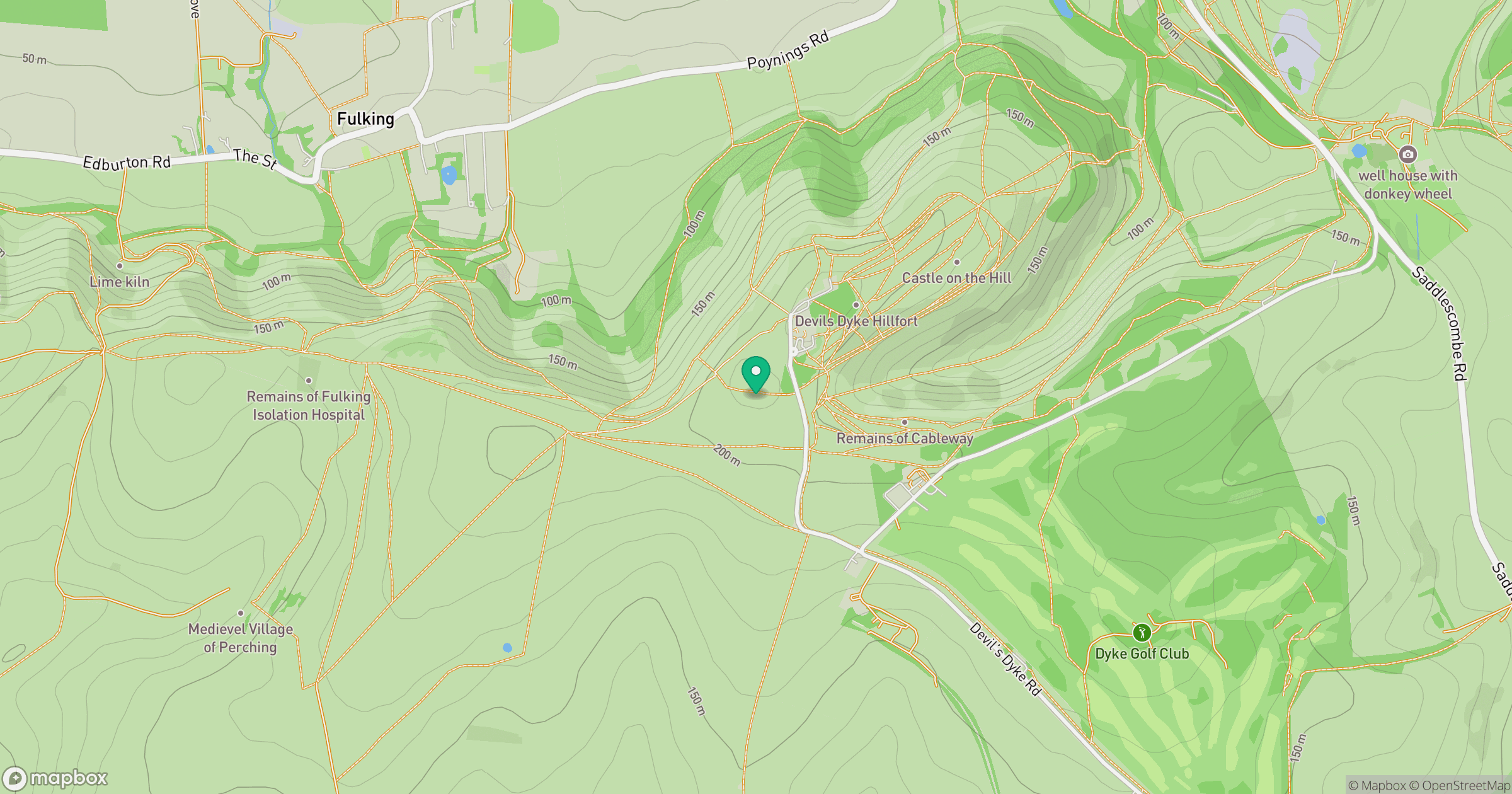
Grid reference: TQ257108
View on OpenStreetMapOpens a map in a new tab, centred on the hill.
Nearby Hills
Ditchling Beacon
248m
Leith Hill
294m
Worcestershire Beacon
425m
Glastonbury Tor
158m
Titterstone Clee Hill
533m
No comments yet. Be the first.