

Blorenge
Good walks are even better shared.
SO2611 : The Blorenge from the B4598 at Ty'r-pwll
Roy Parkhouse Photo source
Overview
Blorenge rises to 561 m above Llanfoist and Abergavenny in the southeastern Bannau Brycheiniog. Its open moorland summit has a trig point and cairn, with views across the Usk valley. High-level approaches from Foxhunter car park are much shorter than the steep climbs from Llanfoist. The wooded Punchbowl lies below the eastern slopes; Keeper’s Pond is a separate former industrial reservoir southwest of the summit.
Blorenge
Blorenge is a 561 m hill above Llanfoist and Abergavenny in the southeastern Bannau Brycheiniog. Its 134 m prominence places it in the Hump, Dodd and Dewey lists. Open moorland contrasts with the steep wooded slopes below the plateau.
Summit and landscape
The recorded high point is embedded rock about 20 m south-southwest of the trig point, with an ancient cairn nearby. The Punchbowl is a separate glacial cwm containing a man-made lake on the eastern flank. Keeper’s Pond is a former forge-water reservoir southwest of the summit beside the B4246.
The hill’s rocks are sedimentary. The National Park’s landscape assessment describes sandstone and mudstone slopes, with Carboniferous limestone and sandstones on the plateau. Views across the Usk valley include Abergavenny, Sugar Loaf, Skirrid Fawr and the Black Mountains to the north.
Choosing a walk
Foxhunter car park, opposite the communications masts at SO263107, gives a high start. Follow the summit path past Foxhunter’s memorial and return by the same path for a short upland outing.
The National Park’s mapped circuit from Keeper’s Pond at SO254107 is 4.9 km. It crosses the western moorland to the summit and returns southwest via Foxhunter and the masts. The Park grades it 3, challenging, for rough surfaces and steeper sections.
For a longer circuit, the Brecon Beacons Park Society’s Cordell Country walk combines the summit, Punchbowl, Hill’s Tramroad and Garn Ddyrys before returning to Keeper’s Pond: 10.5 km, with a published guide time of 3 hours.
Walking from Abergavenny or Llanfoist involves a much larger climb. Saturday Walkers Club’s original station-to-station itinerary is 19.6 km, with 723 m ascent and 6 hours’ walking. Current bridge works affect its Castle Meadows approach, so those are the original itinerary’s figures rather than verified totals for the diversion.
Access and practicalities
The plateau includes open-access moorland; the lower routes use paths, former tramroads and lanes. Public transport reaches Abergavenny and some services reach Llanfoist. Check current connections before committing to a valley start. Toilets and refreshments are available in Abergavenny; carry provisions for the hill.
Rocky paths, wet peat, steep escarpments and the Punchbowl descent require care. The plateau is exposed in wind and low cloud. Longer routes include road crossings.
The National Park’s 28 August 2026 notice bars activities on or in Keeper’s Pond until further notice because low water exposes hazards; it explicitly leaves the car park open. Visit Monmouthshire still displays the water restriction at the 16 October 2026 check. At Castle Meadows, follow the signed bridge-works diversion: the council lists the temporary Footpath 2 order through 18 November 2026.
Heritage
Tramroads, inclines and forge remains link Blorenge with the Blaenavon industrial landscape. The summit cairn may be a Bronze Age burial monument. Foxhunter’s memorial recalls the horse’s part in Britain’s 1952 Olympic showjumping team gold.
Explore routes near Blorenge
Walks starting near this hill. Open a route to check its map, distance and full itinerary.
Goytre Wharf to Pentre Bridge: Mon and Brec Canal Walk
View route
Clytha Estate: River Usk, Chapel Ruins and Castle Woods
View route
A Very Merry Winter Walk ending with Cake & a Hot Drink!
View route
Merthyr Tydfil with Men Walking & Talking
View route
Route planning notes
These notes describe possible approaches. Check a route's map and access information when planning your walk.
The Blorenge Loop from Abergavenny
Start and finish at Abergavenny railway station (SO305136). The Saturday Walkers Club circuit passes through town and Castle Meadows, crosses the Usk road bridge to Llanfoist, then climbs through Glebe Wood on the old inclines towards Cwm Craf. Follow Hill’s Tramroad by Garn Ddyrys, climb to Keeper’s Pond and cross the plateau to the summit. Descend towards the Punchbowl, continue through the eastern pastures to the canal, and return via Llanfoist Wharf and the outward town route to the station. The publisher’s original itinerary is 19.6 km with 723 m ascent and 6 hours’ walking. Pont Llanfoist bridge works currently divert Footpath 2 at Castle Meadows: follow the signed diversion. The diversion changes the original itinerary.
Summit from Foxhunter car park
Start at Foxhunter car park (SO263107), opposite the communications masts. Pass Foxhunter’s memorial and follow the path north across the moorland to the summit rocks, trig point and cairn. Return along the same path to the same car park. This uses the summit approach described by the Ramblers and the Park Society, without their longer escarpment or Punchbowl circuits. The high starting point limits the climb, but the stony path and exposed plateau still require suitable footwear and navigation.
Keeper’s Pond summit circuit
Start and finish at Keeper’s Pond car park (SO254107). Follow the National Park’s mapped loop northeast along the western side of Blorenge, then turn across the moorland to the summit. Continue southwest towards Foxhunter car park and the communications masts, then follow the road and adjoining path west back to Keeper’s Pond. The full loop is 4.9 km. It stays above Garn Ddyrys and does not descend into the Punchbowl. The water-entry restriction at Keeper’s Pond does not close the car park under the Park notice.
Cordell Country and the Punchbowl
Start and finish at Keeper’s Pond car park (SO254107). The Park Society circuit heads through the moorland towards the masts, joins the road to Foxhunter car park, then climbs the broad summit path. Continue towards the brick hut near the northern edge and descend east to the lane and the steep wooded path into the Punchbowl. Cross the lake’s dam and follow the track out, climbing back to the contouring Hill’s Tramroad. Continue towards the old tunnel and inn remains, cross the road carefully and pass Garn Ddyrys forge. Follow the tramroad to the head of the valley, then climb the stony path and cross the B4246 to return to Keeper’s Pond. The published 10.5 km and 3-hour guide time cover this complete circuit, including the return climb; they do not describe a walk down to Llanfoist Wharf.
Make a day of it, together
Find someone to share the walk with, or organise a day out along a route you like.
Photo Gallery
View all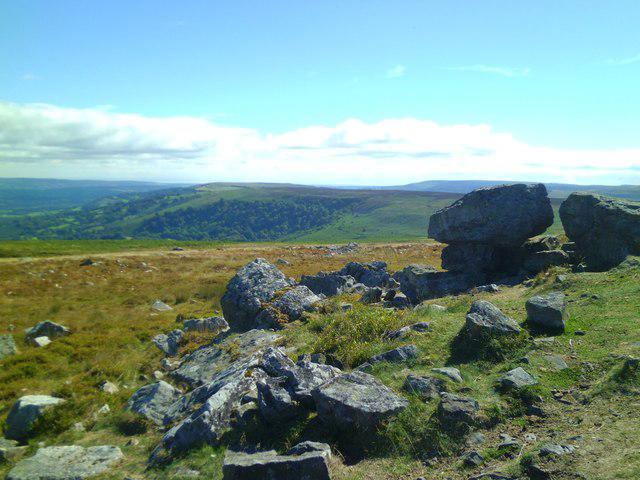 Photo could not load
SO2711 : View south from Blorenge
Gordon Hatton
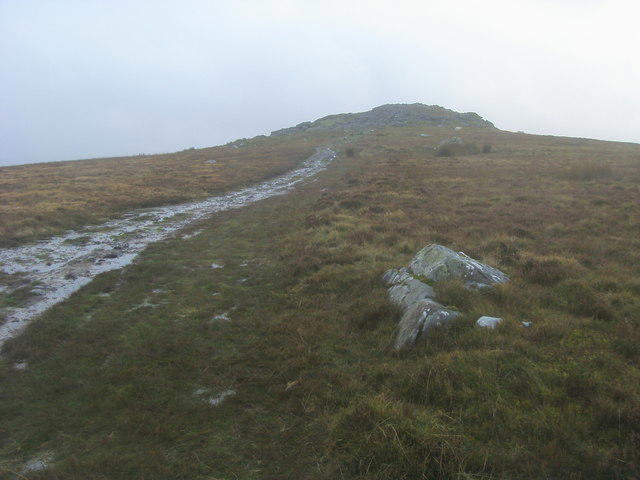 Photo could not load
SO2711 : Nearing Blorenge summit
Shaun Ferguson
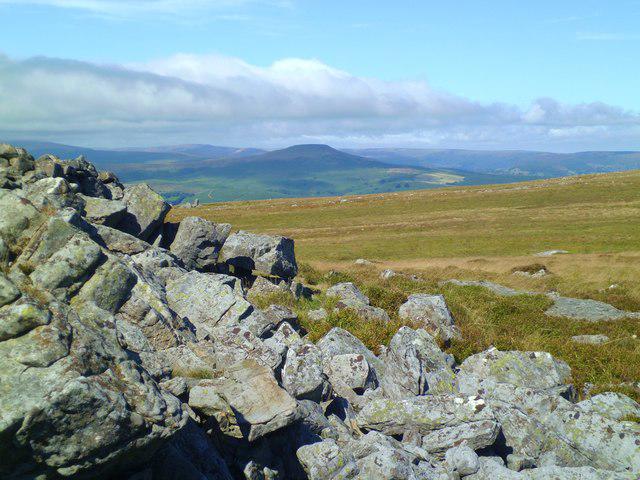 Photo could not load
SO2711 : View north from Blorenge
Gordon Hatton
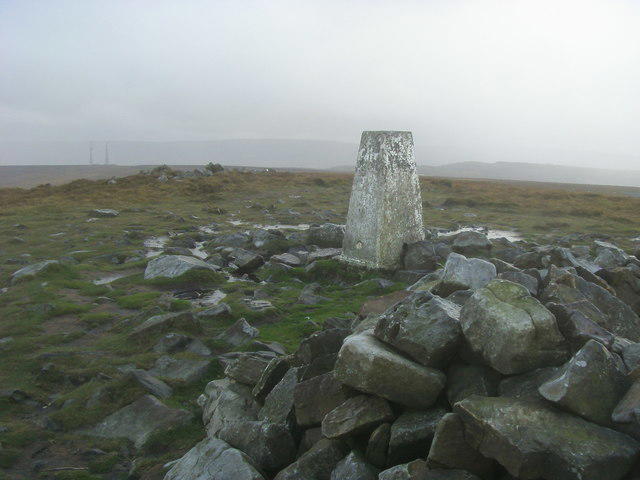 Photo could not load
SO2611 : Blorenge Summit
Shaun Ferguson
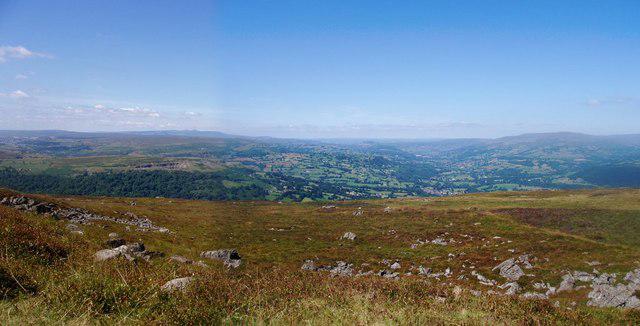 Photo could not load
SO2611 : Blorenge - view west
Rudi Winter
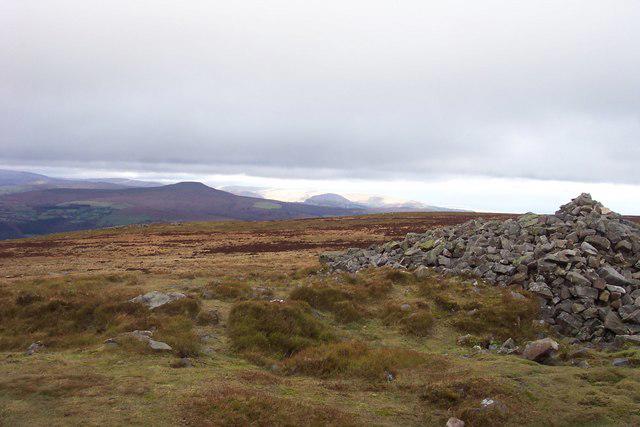 Photo could not load
SO2611 : Summit cairn on Blorenge
Jonathan Billinger
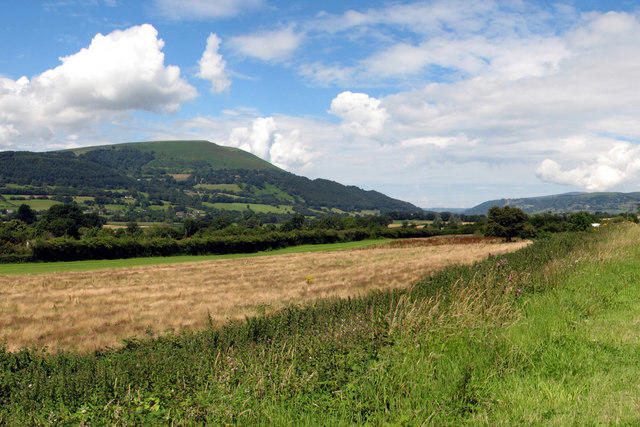 Photo could not load
SO2611 : The Blorenge from the B4598 at Ty'r-pwll
Roy Parkhouse
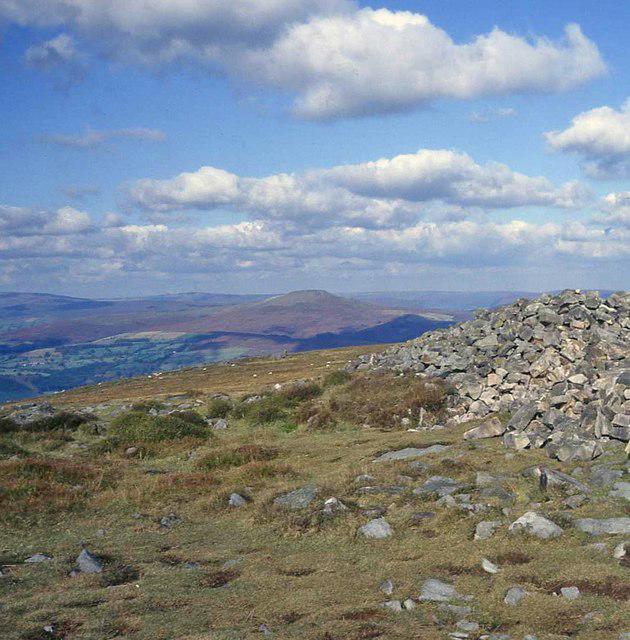 Photo could not load
SO2611 : Summit of Blorenge
Trevor Rickard
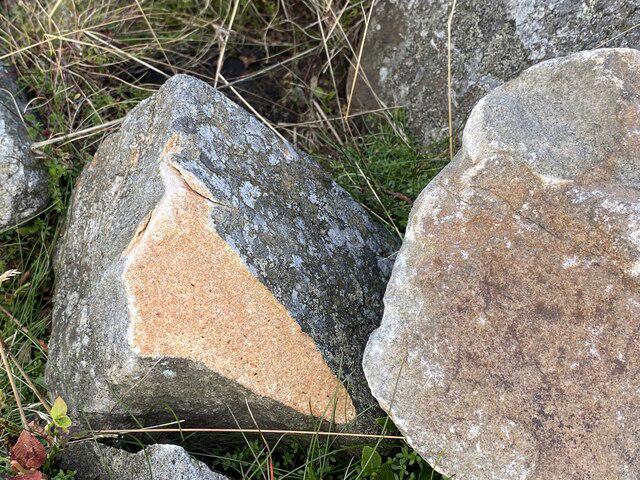 Photo could not load
SO2611 : Carboniferous sandstone
Alan Hughes
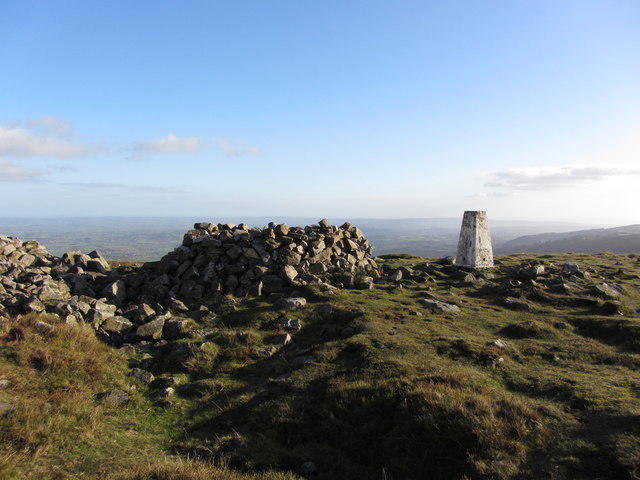
SO2611 : Summit cairn and trig point on the Blorenge
Gareth James
Hill facts and local notes
Classifications
Elevation
561m
1,841 ft
Prominence
134m
Coordinates
51.8003, -3.0604
SO269118
OS Map
161
Explorer: OL13S
At the Summit
The recorded high point is embedded rock about 20 m south-southwest of the trig point. An ancient cairn stands about 35 m north-northeast of the rocks. The trig point is at SO2698911854; the cairn is at SO2699111867.
Terrain & Geology
Blorenge is formed from sedimentary rocks. The National Park’s landscape assessment describes Old Red Sandstone and mudstones across the surrounding slopes, with Carboniferous limestone and sandstones of the Marros Group and Lower Coal Measures on the plateau. Glacial erosion formed the Punchbowl cwm on the eastern flank.
Views & Scenery
Views across the Usk valley take in Abergavenny, Sugar Loaf, Skirrid Fawr and the Black Mountains to the north. The open plateau also gives longer views towards the Bristol Channel in clear weather.
History & Heritage
Historical Significance
Old tramroads, inclines and the remains of Garn Ddyrys forge connect Blorenge with the Blaenavon industrial landscape and the Monmouthshire and Brecon Canal. Keeper’s Pond supplied the forge. The summit cairn is interpreted as a possible Bronze Age burial monument. Near Foxhunter car park, a memorial commemorates the horse ridden by Harry Llewellyn in Britain’s 1952 Olympic showjumping team victory.
Getting There & Facilities
Parking
Foxhunter car park at SO263107, opposite the communications masts, provides a high start for the short summit approach. Keeper’s Pond car park at SO254107, beside the B4246, starts longer upland circuits. Llanfoist Crossing is a lower starting option for a much steeper climb.
Public Transport
Abergavenny railway station is the start of a substantial full-day circuit. Some local buses serve Llanfoist from Abergavenny; check current services with Traveline Cymru. Do not assume a bus connection to the high Foxhunter or Keeper’s Pond car parks.
Nearby Facilities
Public toilets and refreshments are available in Abergavenny, with cafés and pubs also in Blaenavon. The published Keeper’s Pond circuit has no toilets on the route; carry food and water for the moorland section.
Safety Information
Known Hazards
- Wet peat, loose stones and uneven rocky paths can be slippery.
- The northern and eastern escarpments, Llanfoist inclines and descent into the Punchbowl include steep ground.
- The open plateau is exposed to wind and low cloud; poor visibility makes path junctions harder to identify.
- Longer circuits cross or briefly follow the B4246 and other narrow roads; watch for traffic.
- Keeper’s Pond: the National Park notice of 28 August 2026 prohibits all activity on or in the water until further notice because low levels expose hidden hazards. The car park remains open under that notice. Visit Monmouthshire still displays the water restriction at the 16 October 2026 check.
- Abergavenny approaches through Castle Meadows are affected by Pont Llanfoist bridge works. Follow the signed Footpath 2 diversion; the council register lists the temporary order through 18 November 2026.
General Safety Tips
- Check weather conditions before setting out
- Carry appropriate clothing and equipment
- Let someone know your planned route
- Take a map, compass, and GPS device
- Carry emergency supplies: food, water, first aid kit, torch
Hills
Some common questions about the hills answered
Are there group walks up Blorenge?
Many walkers use Walkmates to join or organise walks with others. You can check for group walks around Blorenge through the maps
Are there other walkers around Blorenge?
Activity varies by location and time, but Walkmates lets you see whether others have shared walks or shown interest in this area. Find other people through the walking friends search walking friends for Blorenge search or of course create your own walk for Blorenge
Can I organise a walk to Blorenge?
Yes. If there aren’t any walks listed already, you can create a walk and make it available for others to join.
If you're signed up to Walkmates, you can create a walk to Blorenge.
How do I find a walk up this hill?
There are often multiple ways to walk this hill, depending on experience and route preference. Walkmates helps you explore walks and routes that others have shared.
Can I suggest a new route up Blorenge?
Yes. You can suggest or create routes to share with others. Walkmates focuses on the social side of walking, so routes are used to help people organise walks and explore areas together, rather than as detailed navigation tools or route libraries.
Other uses really appreciate knowledgeable walkers sharing their routes. Share your favourite route to Blorenge here
The is an error or something incorrect about this hill. How do I let you know?
We always strive to keep the information on Walkmates as accurate as possible. If you find an error, please let us know through the contact form and we'll aim to correct it as quickly as possible
Community Discussion
Comments
Location
View the hill's mapped position and surrounding paths.
Grid reference: SO269118
View on OpenStreetMapOpens a map in a new tab, centred on the hill.
No comments yet. Be the first.