

Cave Hill
Good walks are even better shared.
J3279 : Cave Hill Country Park
Gareth James Photo source
Overview
Cave Hill rises to 368 m above north Belfast, Northern Ireland, with basalt cliffs, five caves and the cliff-edge viewpoint at McArt's Fort. Belfast City Council's notice, checked on 16 October 2026, reports a partial closure between Devil's Punchbowl and McArt's Fort; check the current park notice before planning a walk.
Cave Hill, Belfast
Cave Hill rises to 368 m above north Belfast in Northern Ireland. Woodland gives way to open grassland and basalt cliffs, with wide views over the city and Belfast Lough. The hill is a Subhump (sHu), with 94 m of prominence.
Current trail restriction
Belfast City Council's notice dated 10 September 2026, checked on 16 October 2026, reports an erosion-related closure between Devil's Punchbowl and McArt's Fort. The council advises approaching the fort through the limestone quarry. Follow current barriers and signs; the normal circuit described below is not available in full while this restriction remains.
Walking routes
The normal green-waymarked Cavehill Trail begins and ends at the second car park on the main drive to Belfast Castle. It visits McArt's Fort and returns on the southern side of the hill. The council gives 7.2 km for the complete circuit and 256 m of total ascent; its older park leaflet suggests about 2.5 hours. These are normal-route figures, not measurements of the current alternative approach.
This is a strenuous hill walk with steep, unsurfaced sections. The shorter Estate Trail (3.9 km) and Castle Trail (1.3 km) explore lower ground and do not reach the hill summit. Select a route that fits the group's fitness and the day's conditions.
Summit and views
A cairn stands on the upper ground, while McArt's Fort occupies the distinctive cliff-edge promontory. The fort is a viewpoint and historic earthwork, rather than a reason to approach the cliff edge. On a clear day, the outlook extends beyond Belfast Lough towards the Mourne Mountains and the Scottish coast.
Access and facilities
The Belfast Castle approach is through Innisfayle Park off Antrim Road. Other entrances include Upper Hightown Road, Upper Cavehill Road and Hazelwood beside Belfast Zoo. Check car-park closing times on arrival. Metro buses serve the Antrim Road corridor; plan the journey for the entrance you intend to use.
Belfast Castle provides toilets, refreshments and the Cave Hill Visitor Centre during opening hours. Picnic areas and gardens are on the lower slopes. Castle and garden access may change for private events.
Terrain and safety
Keep clear of cliff edges and do not climb to the caves. Rough paths and steps become slippery when wet, and the upper slopes are exposed to wind and poor visibility. Wear suitable walking footwear and take waterproof layers. Give grazing cattle plenty of room and follow the park's dog guidance.
Geology and history
Successive basalt lava flows overlie older white limestone (chalk). The five caves that give the hill its name are cut into the basalt; their original purpose is uncertain, though early iron mining is one suggestion. McArt's Fort has also attracted different interpretations of its age and use, so neither a precise construction date nor a particular ancient function is certain. The hill's archaeology and former limestone quarry add context to a walk above the city.
Explore routes near Cave Hill
Walks starting near this hill. Open a route to check its map, distance and full itinerary.
Belfast street-art walk
View route
Belfast street-art walk
View route
Lagan Towpath: Shaw's Bridge to Drumbeg Footbridge
View route
Drumbeg to Hilden Bridge: Lagan Towpath, Lambeg and Canal Locks
View route
Route planning notes
These notes describe possible approaches. Check a route's map and access information when planning your walk.
Cavehill Trail circuit (partial closure)
Partial closure: the council notice checked on 16 October 2026 closes the Devil's Punchbowl–McArt's Fort section for erosion and advises the limestone-quarry approach. Do not enter the closed section. The normal full circuit starts and finishes at Belfast Castle's trailhead car park, via McArt's Fort and the southern slopes. Its 7.2 km and about 2.5 hours describe that normal circuit, not the current alternative. Check local signs before setting out.
Make a day of it, together
Find someone to share the walk with, or organise a day out along a route you like.
Photo Gallery
View all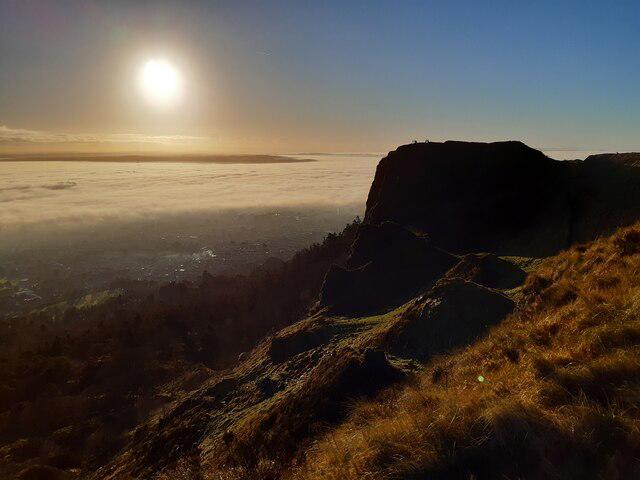 Photo could not load
J3279 : McArt's Fort, Cave Hill Country Park
Gareth James
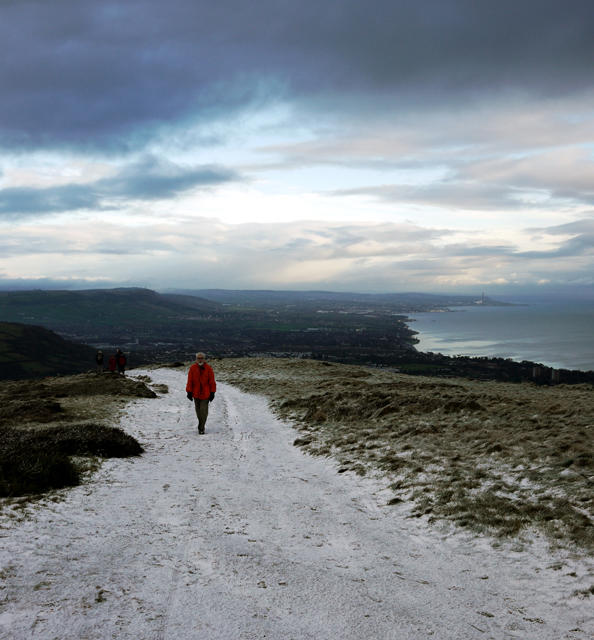 Photo could not load
J3279 : Wintry path on Cave Hill
Rossographer
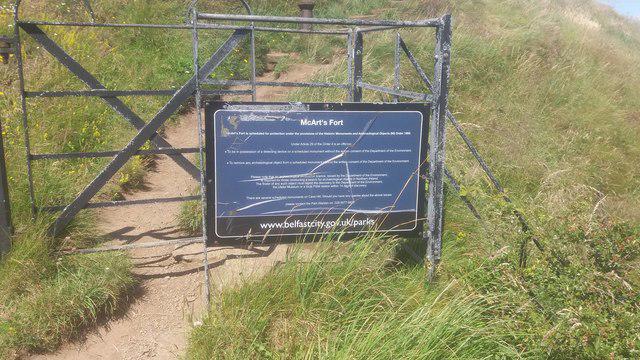 Photo could not load
J3279 : Info plaque on McArt's Fort
Raymond Bell
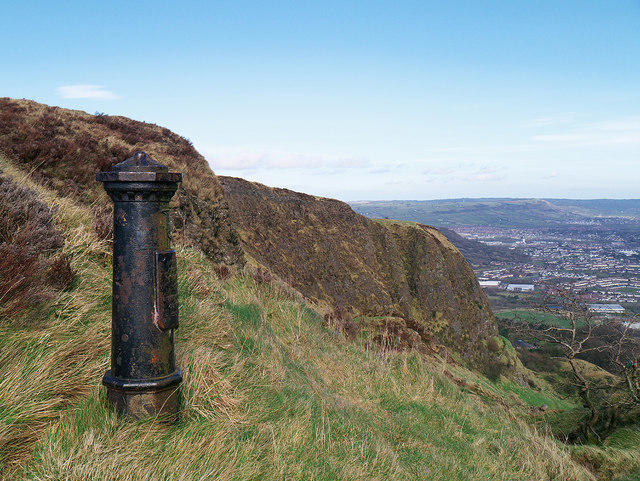 Photo could not load
J3279 : Old boundary post, Belfast
Rossographer
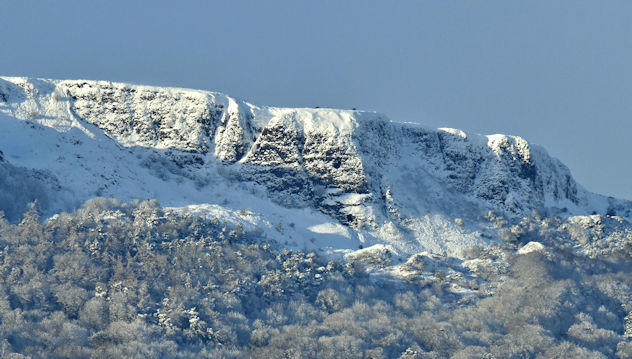 Photo could not load
J3279 : Snow on the Cave Hill, Belfast - December 2017(1)
Albert Bridge
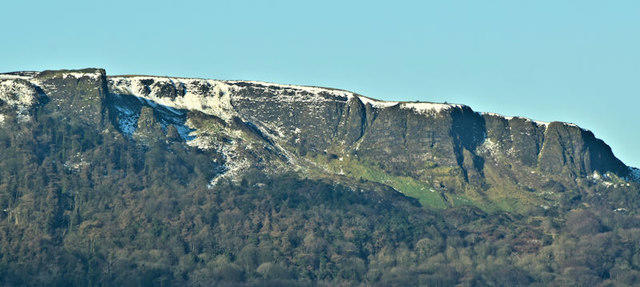 Photo could not load
J3279 : Snow on the Cave Hill, Belfast - December 2017(2)
Albert Bridge
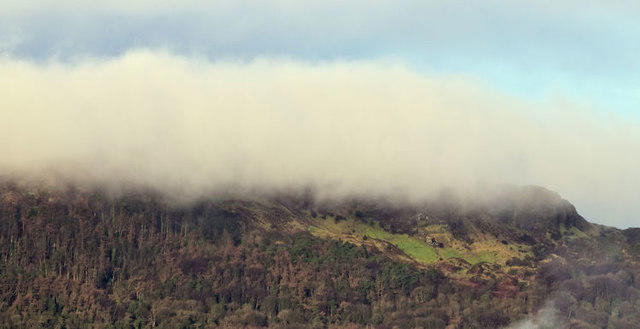 Photo could not load
J3279 : Low cloud on the Cave Hill, Belfast (December 2017)
Albert Bridge
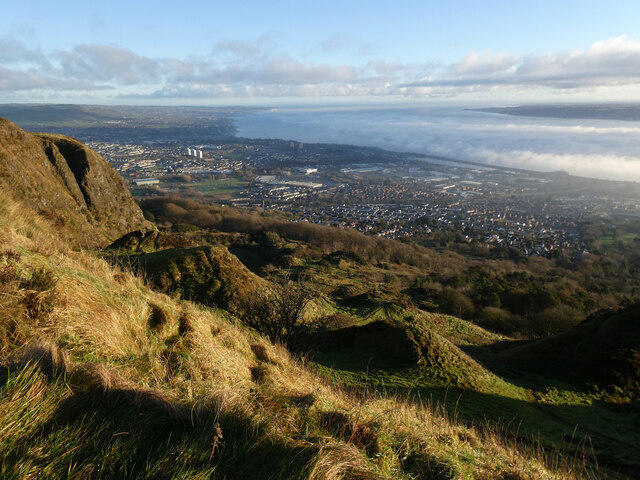 Photo could not load
J3279 : Cave Hill Country Park
Gareth James
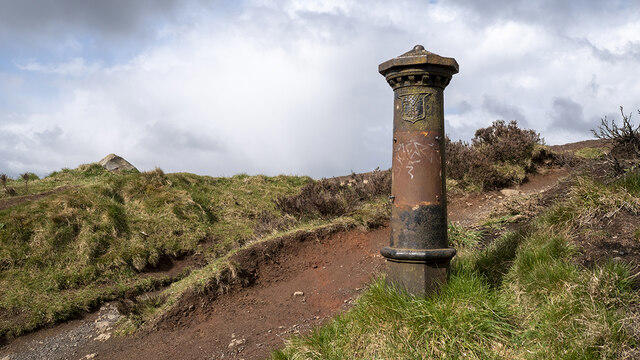 Photo could not load
J3279 : Old Boundary Post, McArt's Fort
Rossographer
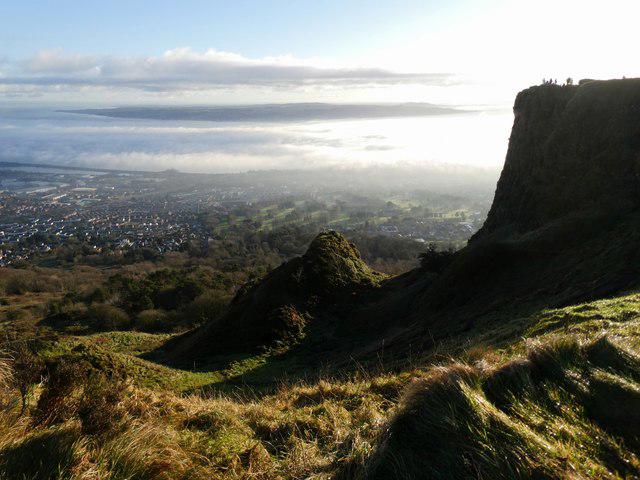 Photo could not load
J3279 : McArt's Fort, Cave Hill Country Park
Gareth James
Hill facts and local notes
Classifications
Elevation
368m
1,207 ft
Prominence
94m
Coordinates
54.6481, -5.9512
J323797
OS Map
15
At the Summit
The upper hill has a summit cairn and the prominent cliff-edge earthworks of McArt's Fort. These are distinct features: Belfast Hills Partnership describes the cairn on higher ground with the fort ahead. The hill's profile is associated with the name Napoleon's Nose. Keep well back from the cliff edges around the fort.
Terrain & Geology
Cave Hill has layers of Palaeogene basalt formed by successive lava flows, overlying older white limestone (chalk). Basalt forms the prominent cliffs; limestone was quarried on the lower slopes. The named caves are cut into the basalt, rather than natural limestone caves.
Views & Scenery
From the summit, one can see Belfast Lough, the Mourne Mountains, and on clear days, Scotland's coast.
Best Seasons
Woodland spring flowers, late-summer heather and autumn foliage add seasonal colour to the park. Distant views depend on visibility.
History & Heritage
Name Origin
Cave Hill is named for five caves in its basalt cliffs. Their original purpose is uncertain; Belfast City Council suggests they may have been early iron mines. The hill was also known as Ben Madigan.
Historical Significance
Cave Hill preserves a summit cairn, earthworks and other evidence of early settlement. McArt's Fort is an ancient promontory fort; its precise date and original use are uncertain, so an Iron Age date should not be stated as established fact. Limestone quarrying later altered parts of the slopes. Belfast Castle was built in the nineteenth century and donated to the city in 1934.
Getting There & Facilities
Parking
For the Belfast Castle trailhead, use the second car park on the main drive from Innisfayle Park, Antrim Road, BT15 5GR. The council also lists parking at Grays Lane (BT15 4EP) and Upper Hightown Road (BT14 8RR); Belfast Hills Partnership identifies Belfast Zoo parking for the Hazelwood entrance (BT36 7PN). Check entrance signs for closing times. Castle parking is free and first come, first served.
Public Transport
Metro services on the Antrim Road corridor serve approaches to Belfast Castle and Belfast Zoo. Use the Translink journey planner for the chosen entrance and current timetable, allowing for the uphill walk from the road to the trailhead.
Nearby Facilities
Belfast Castle has toilets, including accessible toilets, a coffee shop and the Cave Hill Visitor Centre during opening hours. There are gardens, picnic areas and an adventure playground nearby. Castle and garden access can be restricted for private events. Facilities at the castle do not imply accessible terrain on the hill trails.
Safety Information
Known Hazards
- Partial closure: the council notice checked on 16 October 2026 closes the Devil's Punchbowl to McArt's Fort section because of erosion. The council advises the limestone-quarry approach; obey barriers and current on-site signs.
- Cliff edges and steep drops around McArt's Fort and the caves present a serious fall risk. Stay on established paths, keep children closely supervised and do not climb to the caves.
- Steep, rough paths and steps can be slippery when wet. Upper ground is exposed to wind and poor visibility; wear suitable footwear and carry waterproof layers.
- Cattle graze in the park. Give them space, avoid separating adults from young and keep dogs on a short lead. Follow council advice to release the dog if cattle approach.
Seasonal Hazards
Wet or wintry conditions increase the risk of slipping on steep ground. Short winter days and seasonally earlier gate-closing times need to be allowed for when planning the return.
General Safety Tips
- Check weather conditions before setting out
- Carry appropriate clothing and equipment
- Let someone know your planned route
- Take a map, compass, and GPS device
- Carry emergency supplies: food, water, first aid kit, torch
Hills
Some common questions about the hills answered
Are there group walks up Cave Hill?
Many walkers use Walkmates to join or organise walks with others. You can check for group walks around Cave Hill through the maps
Are there other walkers around Cave Hill?
Activity varies by location and time, but Walkmates lets you see whether others have shared walks or shown interest in this area. Find other people through the walking friends search walking friends for Cave Hill search or of course create your own walk for Cave Hill
Can I organise a walk to Cave Hill?
Yes. If there aren’t any walks listed already, you can create a walk and make it available for others to join.
If you're signed up to Walkmates, you can create a walk to Cave Hill.
How do I find a walk up this hill?
There are often multiple ways to walk this hill, depending on experience and route preference. Walkmates helps you explore walks and routes that others have shared.
Can I suggest a new route up Cave Hill?
Yes. You can suggest or create routes to share with others. Walkmates focuses on the social side of walking, so routes are used to help people organise walks and explore areas together, rather than as detailed navigation tools or route libraries.
Other uses really appreciate knowledgeable walkers sharing their routes. Share your favourite route to Cave Hill here
The is an error or something incorrect about this hill. How do I let you know?
We always strive to keep the information on Walkmates as accurate as possible. If you find an error, please let us know through the contact form and we'll aim to correct it as quickly as possible
Community Discussion
Comments
Location
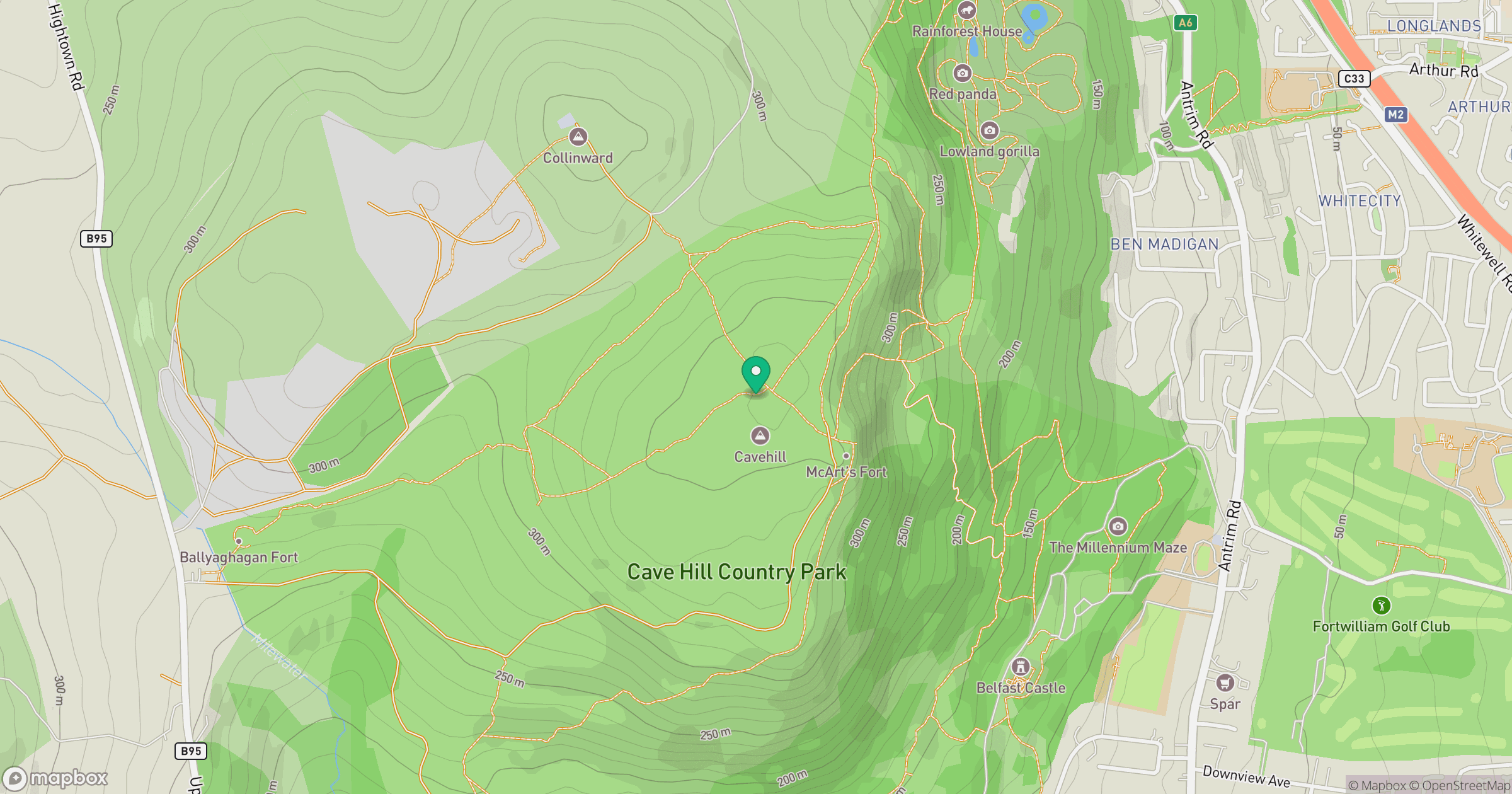
Grid reference: J323797
View on OpenStreetMapOpens a map in a new tab, centred on the hill.
No comments yet. Be the first.