

Sgurr nan Gillean
Good walks are even better shared.
NG4725 : Sgùrr nan Gillean's southeast ridge
Alan Reid Photo source
Overview
Sgùrr nan Gillean is a 966.1 m Munro in Skye’s Black Cuillin, reached from Sligachan. Its Southeast Ridge, misleadingly called the Tourist Route, requires serious exposed Grade 2–3 scrambling and the same ridge must be downclimbed on the standard return. The West and Pinnacle ridges are technical rock climbs.
Sgùrr nan Gillean
Sgùrr nan Gillean is a 966.1 m Munro at the northern end of Skye’s Black Cuillin. Its pointed profile is a landmark from Sligachan, but even its easiest summit route involves serious exposed scrambling. The historic name “Tourist Route” is misleading: this is a mountain for experienced scramblers and climbers, or parties with a qualified guide.
Summit and ridges
The DoBIH high point is rock by a cairn at NG 47162 25284, on a small, exposed summit. The Southeast, West and Pinnacle ridges converge here. A narrow slab and an exposed step across lie on the southeast approach. The summit is separate from Knight’s Peak, 914.24 m, and Third Pinnacle, 884.4 m, on Pinnacle Ridge. It is also distinct from the 764 m mountain of the same name on Rùm.
Southeast Ridge: the standard return
Start at the A863 lay-by near Sligachan, keeping the Mountain Rescue entrance unobstructed. Cross the Allt Dearg Mòr and Allt Dearg Beag bridges, then follow the approach into Coire Riabhach. Rough boulder and scree terrain leads through the corries to the southeast ridge. Steep rock steps and the narrow summit approach require deliberate scrambling.
Return by reversing the same ridge and corrie approach to the starting point. Walkhighlands gives 12 km, 985 m ascent and 5–7 hours for this complete out-and-back. Mountaineering Scotland describes the upper ridge as exposed Grade 2–3 scrambling. Downclimbing can be more demanding than ascending. Some parties need rope protection, with the skills to use it or a qualified guide. Do not descend onto the West Ridge unless equipped and competent for technical climbing and abseiling.
West Ridge and Pinnacle Ridge
The West Ridge is a UK Moderate rock climb, approached from Sligachan through Coire a’ Bhasteir and Bealach a’ Bhasteir. Its chimney or groove and exposed pinnacles require technical climbing judgment. A circuit can descend the Southeast Ridge and return through Coire Riabhach; UK Scrambles gives 10.1 km, about 1,050 m ascent and 7–9 hours for that complete itinerary. Returning down the West Ridge instead normally involves an abseil and a different route through Coire a’ Bhasteir.
Pinnacle Ridge, the northern ridge, is Difficult rock climbing, also described as Grade 3/Difficult by Skye Guides. Its towers include Knight’s Peak, and the full ridge includes an exposed abseil from Third Pinnacle. A return via the West Ridge adds further technical descent and an abseil before walking out through Coire a’ Bhasteir. These routes need competent climbing, ropework, abseiling and route-finding skills, or a qualified guide. Moderate and Difficult are technical climbing grades, not ordinary walking ratings.
Combining summits
Am Basteir can be combined with Gillean from Bealach a’ Bhasteir. The Gillean West Ridge ascent and return remain technical, and Am Basteir’s east ridge adds the exposed Bad Step, graded Difficult by UKHillwalking. Returning over Am Basteir’s east ridge requires negotiating that step again before descending the corrie to Sligachan. Basteir Tooth and Bruach na Frithe are separate objectives; wider Cuillin combinations require their own route and descent planning.
Terrain, weather and safety
Expect rough approaches, loose scree, boulders, steep rock and exposed ridges. Helmets are important where loose rock or other climbers create rockfall risk. Skye Mountain Rescue warns that fine-grained basalt can be very slippery even when damp with dew, while rock away from familiar lines may be fragile. Test holds and avoid dislodging stones onto others.
Mist makes the corries and ridge route-finding much harder. Local magnetic effects can disturb compass readings, so detailed mapping, navigation skills and independent position checks are important. Carry backup power and do not rely on one phone or navigation method. Strong winds, rain and poor visibility increase the seriousness of the exposed ground; choose conditions suited to the party’s ability and be prepared to turn back.
Snow and ice require winter mountaineering skills, suitable equipment including ice axe and crampons, and weather and avalanche judgment. Summer route grades and times do not apply in winter conditions. Leave a route and expected return time with someone. For an emergency, call 999, ask for Police, then Mountain Rescue.
Access and facilities
Sligachan is the route-start settlement at the A87/A863 junction. The usual lay-by is on the Dunvegan road near the hotel. Park considerately, obey current restrictions and keep the rescue base and other entrances clear. Glen Sligachan Campsite explicitly does not offer parking to non-residents, even for a fee.
Stagecoach’s published service 52 timetable links Portree and Broadford via Sligachan Hotel, with limited weekday journeys and calendar restrictions. Check date-specific outbound and return services before relying on the bus for a long mountain day. Follow the Scottish Outdoor Access Code and current local access or stalking notices.
Sligachan Hotel and Seumas’ Bar provide accommodation and refreshments. The campsite has guest facilities and a small shop, but non-resident showers and waste-disposal services are not available. Check opening hours and access with the operators rather than assuming public toilet or campsite use. Carry the food and water needed for the mountain day.
Geology, views and history
The mountain belongs to the Cuillin’s intrusive igneous complex. Gabbroic rocks are cut by basalt and dolerite sheets and dykes; this is not simply a stack of lava flows. The mix of rocks contributes to the contrasting textures encountered underfoot.
In clear weather, the summit overlooks Am Basteir and Bruach na Frithe, the complex Cuillin ridges, Glen Sligachan and the surrounding sea. The first recorded ascent was in 1836, when local forester Duncan MacIntyre guided Professor James David Forbes to the summit. The name is usually translated as “peak of the young men”; Mountaineering Scotland also gives “peak of the gullies” as an alternative interpretation.
Explore routes near Sgurr nan Gillean
Walks starting near this hill. Open a route to check its map, distance and full itinerary.
Fairy Lochs Liberator Wreckage Circuit
View route
Beinn Eighe Lancaster Wreckage at Coire Mhic Fhearchair
View route
Loch Affric full circuit from River Affric
View route
Dun Mhulan Broch Quick Walk
View route
Route planning notes
These notes describe possible approaches. Check a route's map and access information when planning your walk.
Southeast Ridge (Tourist Route) from Sligachan, out and back
Start and finish at the A863 lay-by near Sligachan (Walkhighlands start grid NG484296), keeping the Mountain Rescue entrance clear. Cross the Allt Dearg Mòr and Allt Dearg Beag bridges, then follow the Coire Riabhach approach through rough scree and boulder corries to the southeast ridge. The upper ridge has steep rock steps, a very narrow slab and an exposed step across to the summit. Return by carefully downclimbing the same ridge and retracing the corrie approach to Sligachan. Walkhighlands gives 12 km, 985 m ascent and 5–7 hours for the complete return. Mountaineering Scotland grades the upper ground as exposed Grade 2–3 scrambling. The historic Tourist Route name is misleading: this is serious scrambling requiring confident movement, route-finding and downclimbing. Rope protection may be needed, with competent ropework or a qualified guide. The West Ridge is a technical climbing descent, not a walking escape.
Pinnacle Ridge ascent with West Ridge descent, Sligachan circuit
Start and finish at Sligachan. Approach the northern Pinnacle Ridge above the Basteir Gorge and climb its sequence of towers, including Knight’s Peak, to Sgùrr nan Gillean. The full ridge includes the exposed abseil from Third Pinnacle, intricate route-finding and loose rock. Descend the West Ridge using its technical climbing line and abseil, then return through Coire a’ Bhasteir to Sligachan. Pinnacle Ridge is a Difficult rock climb, also described by Skye Guides as Grade 3/Difficult; the West Ridge is Moderate rock climbing. These are technical climbing grades. This is a full mountaineering day for properly equipped climbers with competent ropework, abseiling and route-finding skills, or a qualified guide. Helmets are important and descent anchors and conditions must be assessed on the day.
West Ridge ascent and Southeast Ridge descent from Sligachan
Start and finish at Sligachan Hotel, using lawful nearby parking and keeping rescue access clear. Approach through Coire a’ Bhasteir to Bealach a’ Bhasteir, then climb the West Ridge to Sgùrr nan Gillean. Its chimney or groove, exposed pinnacles and rock window lead to the summit. Descend by the Southeast Ridge, downclimbing its exposed steps and narrow summit approach, then return through Coire Riabhach to Sligachan. UK Scrambles publishes 10.1 km, approximately 1,050 m ascent and 7–9 hours for this complete circuit. The West Ridge is UK Moderate rock climbing; the Southeast Ridge descent is serious Grade 2–3 scrambling. Use a helmet, appropriate climbing equipment and competent ropework or a qualified guide. Do not confuse the technical grade Moderate with an easy or moderate walk.
Sgùrr nan Gillean and Am Basteir via Coire a’ Bhasteir, return to Sligachan
Start and finish at Sligachan. Ascend through Coire a’ Bhasteir to Bealach a’ Bhasteir. Climb Sgùrr nan Gillean’s West Ridge, graded Moderate rock climbing, and return down the same ridge, normally using an abseil on its lower technical section. From the bealach, ascend Am Basteir’s east ridge, negotiating the exposed Bad Step, which UKHillwalking grades Difficult. Return over the same ridge and Bad Step to the bealach, then descend Coire a’ Bhasteir to Sligachan. Both summits require exposed technical movement; the Bad Step must be negotiated in both directions. This is a mountaineering outing requiring suitable climbing equipment, helmet, reliable ropework, abseiling and route-finding skills, or a qualified guide. It does not include Basteir Tooth or Bruach na Frithe.
Make a day of it, together
Find someone to share the walk with, or organise a day out along a route you like.
Photo Gallery
View all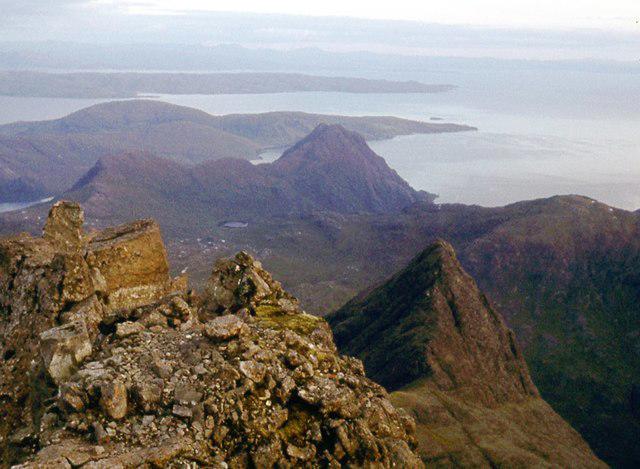 Photo could not load
NG4725 : Sgùrr nan Gillean's southeast ridge
Alan Reid
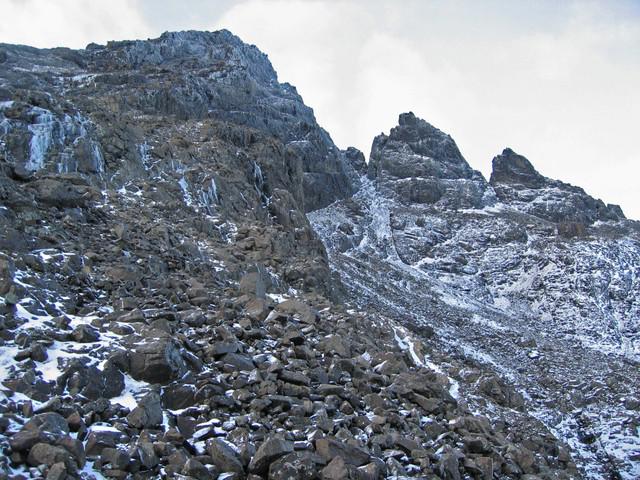 Photo could not load
NG4725 : Sgurr nan Gillean
John Allan
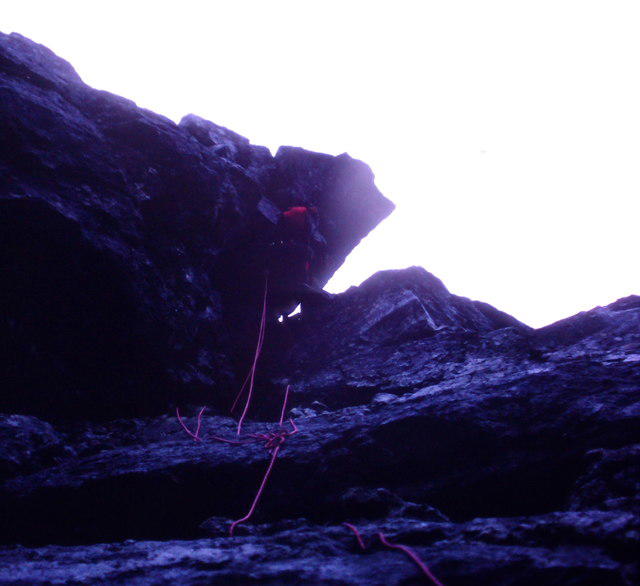 Photo could not load
NG4725 : Abseiling from the 3rd Pinnacle on Knight's Peak
Richard Law
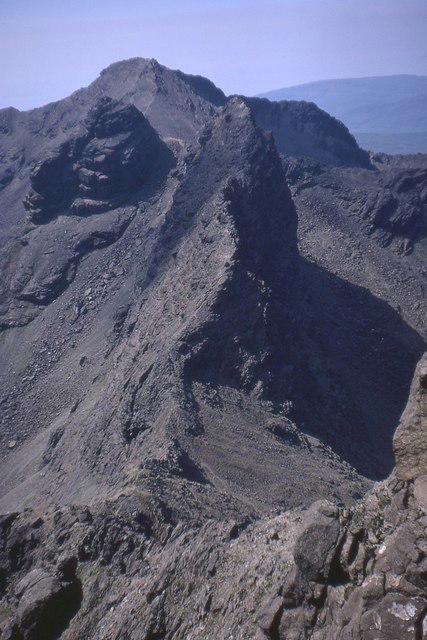 Photo could not load
NG4725 : West ridge of Sgurr nan Gillean
Jim Barton
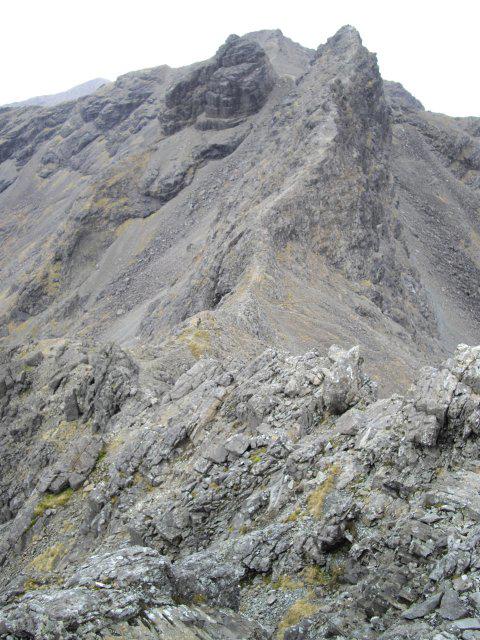 Photo could not load
NG4725 : On Sgùrr nan Gillean's west ridge
Callum Black
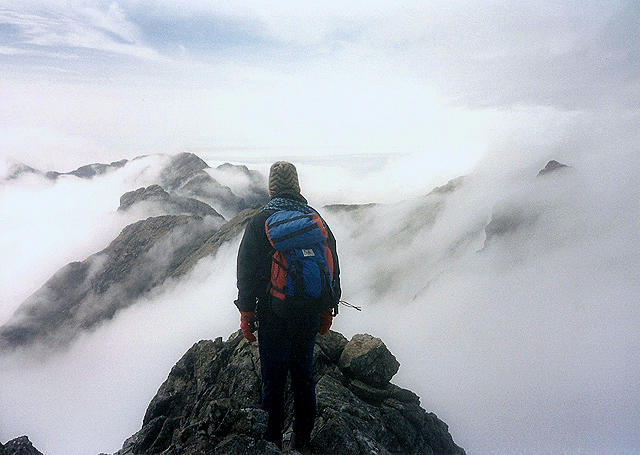 Photo could not load
NG4725 : On the west ridge of Sgurr nan Gillean
Walter Baxter
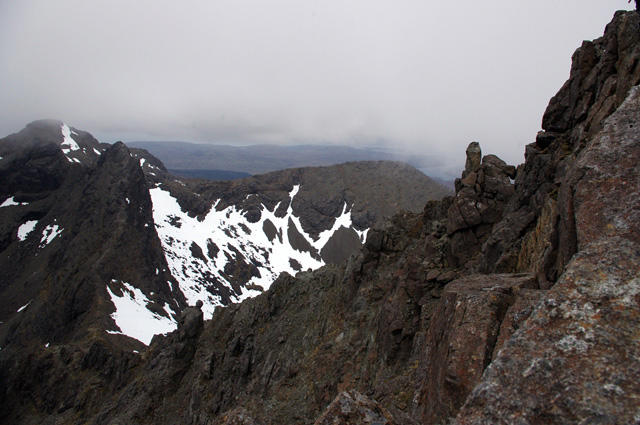 Photo could not load
NG4725 : West ridge, Sgurr nan Gillean
Ian Taylor
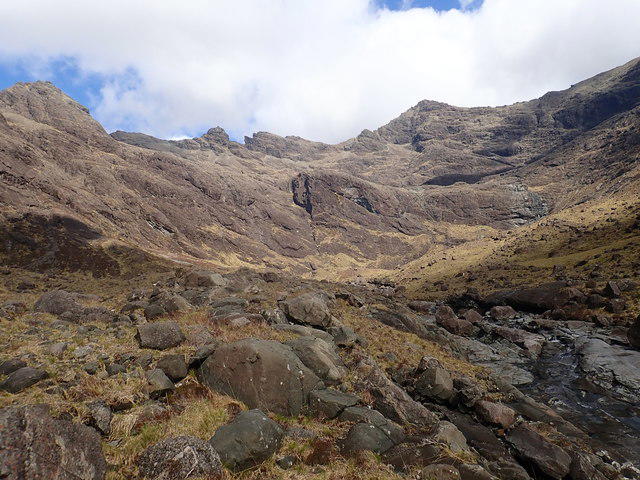 Photo could not load
NG4725 : Section of the Cuillin from Harta Corrie
Didier Silberstein
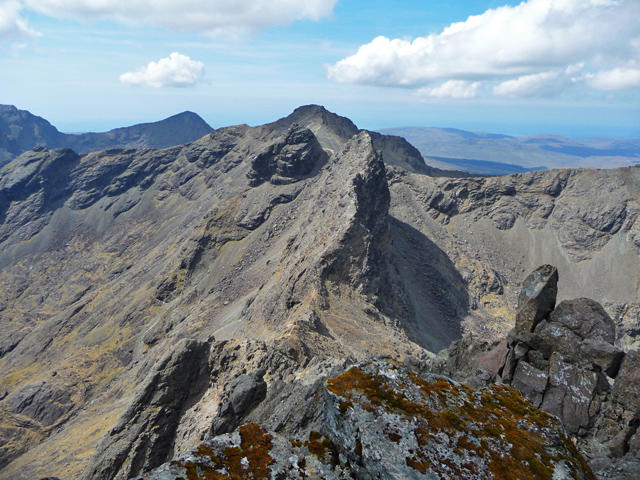 Photo could not load
NG4725 : West from Sgùrr nan Gillean
John Allan
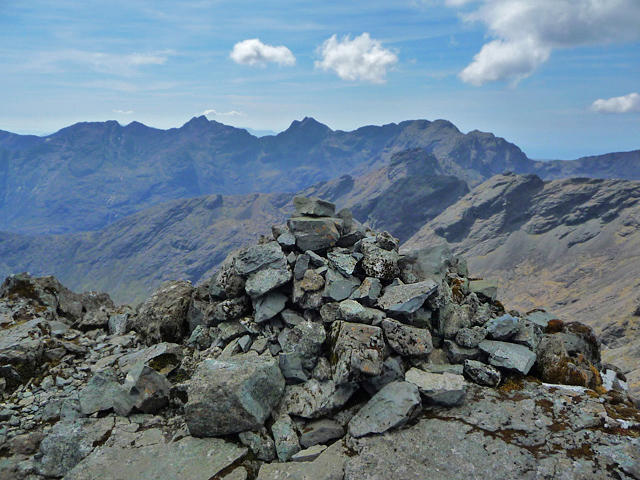
NG4725 : Summit cairn - Sgùrr nan Gillean
John Allan
Hill facts and local notes
Classifications
Elevation
966m
3,170 ft
Prominence
205m
Coordinates
57.2482, -6.1932
NG471252
OS Map
32
Explorer: 411
At the Summit
A small, very exposed rock summit with a cairn; the DoBIH high point is rock by cairn at NG 47162 25284, 966.1 m. The Southeast Ridge reaches it across a narrow slab and an exposed step. Knight’s Peak and Third Pinnacle are separate tops on the northern ridge.
Terrain & Geology
Sgùrr nan Gillean belongs to the Cuillin intrusive igneous complex. Gabbroic rocks are cut by basalt and dolerite sheets and dykes. The mountain is not simply built from layers of basalt lava flows; the varied rocks also differ markedly in grip when wet.
Views & Scenery
In clear weather, views take in Am Basteir and Bruach na Frithe, the Cuillin ridges, Glen Sligachan and the surrounding sea.
History & Heritage
Name Origin
Usually translated from Gaelic as “peak of the young men”; Mountaineering Scotland also gives “peak of the gullies” as an alternative interpretation. The precise derivation is uncertain.
Historical Significance
The first recorded ascent was in 1836, when local forester Duncan MacIntyre guided Professor James David Forbes, a physicist and Alpine pioneer, to the summit. It was an early landmark in recorded Cuillin mountaineering.
Getting There & Facilities
Parking
The usual start is the A863 lay-by/old-road parking near Sligachan, on the Dunvegan road about 150 m west of the hotel (Walkhighlands start grid NG484296). Keep the Mountain Rescue base entrance and other access clear, and follow current parking signs. Glen Sligachan Campsite does not provide non-resident parking, even for a fee.
Public Transport
Buses stop at Sligachan Hotel. Stagecoach’s service 52 links Portree and Broadford via Sligachan, with limited weekday journeys and calendar restrictions in the timetable effective 14 September 2026. Check date-specific outbound and return services before committing to a long technical mountain day.
Nearby Facilities
Sligachan Hotel and Seumas’ Bar offer accommodation and refreshments; check current opening hours. Glen Sligachan Campsite has guest facilities and a small shop, but does not offer parking, showers or waste-disposal services to non-residents. Do not assume public toilet access or year-round campsite facilities. Bring food and water for the mountain day.
Safety Information
Known Hazards
- The Southeast Ridge is serious exposed Grade 2–3 scrambling, including steep steps and a very narrow summit approach. The standard return requires downclimbing the same ground.
- Loose rock and scree create rockfall hazards; use a climbing helmet and take care not to dislodge stones. Wet basalt can be very slippery, even with dew.
- Mist, strong winds and rain make exposed movement and complex route-finding more serious. Local magnetic effects can affect compass readings; use detailed mapping and independent position checks.
- The West Ridge is Moderate rock climbing and Pinnacle Ridge is Difficult climbing. Their descents may require abseiling; use appropriate equipment and competent ropework or a qualified guide.
Seasonal Hazards
Snow and ice require winter mountaineering skills, appropriate boots, ice axe and crampons, and weather and avalanche judgment. Summer scrambling grades and timings do not apply. Wet rock, high winds and poor visibility can make the ridges serious in any season.
General Safety Tips
- Check weather conditions before setting out
- Carry appropriate clothing and equipment
- Let someone know your planned route
- Take a map, compass, and GPS device
- Carry emergency supplies: food, water, first aid kit, torch
Hills
Some common questions about the hills answered
Are there group walks up Sgurr nan Gillean?
Many walkers use Walkmates to join or organise walks with others. You can check for group walks around Sgurr nan Gillean through the maps
Are there other walkers around Sgurr nan Gillean?
Activity varies by location and time, but Walkmates lets you see whether others have shared walks or shown interest in this area. Find other people through the walking friends search walking friends for Sgurr nan Gillean search or of course create your own walk for Sgurr nan Gillean
Can I organise a walk to Sgurr nan Gillean?
Yes. If there aren’t any walks listed already, you can create a walk and make it available for others to join.
If you're signed up to Walkmates, you can create a walk to Sgurr nan Gillean.
How do I find a walk up this hill?
There are often multiple ways to walk this hill, depending on experience and route preference. Walkmates helps you explore walks and routes that others have shared.
Can I suggest a new route up Sgurr nan Gillean?
Yes. You can suggest or create routes to share with others. Walkmates focuses on the social side of walking, so routes are used to help people organise walks and explore areas together, rather than as detailed navigation tools or route libraries.
Other uses really appreciate knowledgeable walkers sharing their routes. Share your favourite route to Sgurr nan Gillean here
The is an error or something incorrect about this hill. How do I let you know?
We always strive to keep the information on Walkmates as accurate as possible. If you find an error, please let us know through the contact form and we'll aim to correct it as quickly as possible
Community Discussion
Comments
Location
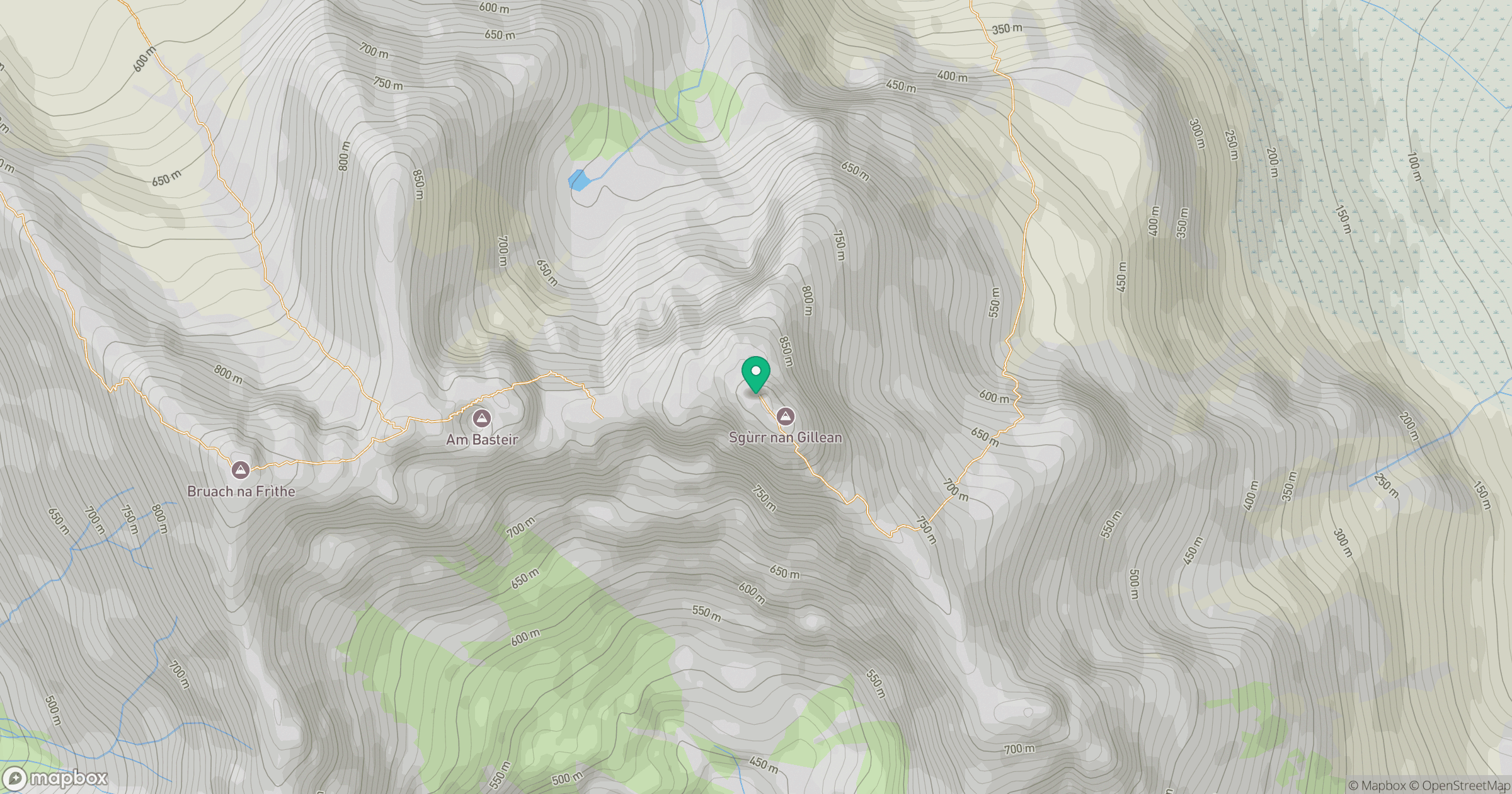
Grid reference: NG471252
View on OpenStreetMapOpens a map in a new tab, centred on the hill.
No comments yet. Be the first.