

Dunstable Downs
Good walks are even better shared.
TL0019 : On the Dunstable Downs
Dave Thompson Photo source
Overview
Dunstable Downs is a 243 m chalk hill on the Chilterns escarpment in Central Bedfordshire, overlooking the Vale of Aylesbury. Its summit trig point is close to the Chilterns Gateway Centre. Walks range from a short summit visit to the surfaced Five Knolls out-and-back and longer countryside circuits with steep sections and road crossings.
Dunstable Downs
Summit and landscape
Dunstable Downs is a 243 m chalk hill on the Chilterns escarpment in Central Bedfordshire. The recorded summit is the trig point at TL 00881 19426, close to the visitor-centre parking. Ground 30 m east-southeast at the field edge is lower. The summit has 105 m of prominence and is the county high point of Bedfordshire.
The Five Knolls burial mounds are a separate feature farther north along the ridge. A visit to the visitor centre or the wider estate does not necessarily visit the exact summit.
Chalk grassland, steep scarp slopes, woodland and dry valleys give the Downs their character. In clear weather the ridge overlooks the Vale of Aylesbury and Ivinghoe Beacon. Spring and summer bring wildflowers, orchids and butterflies; skylarks nest in the grass and red kites may be seen overhead. Keep to appropriate paths and respect protected wildlife areas.
Choosing a walk
- Summit visit: from the Chilterns Gateway Centre car park, take the short uphill approach to the trig point and retrace your steps. Expect grass rather than a guaranteed step-free summit approach.
- Five Knolls: follow the surfaced ridge path from the centre via the windcatcher and Pascombe Hill to the burial mounds, then return the same way. The National Trust's 3.04 km and 45 minutes cover the whole out-and-back.
- Whipsnade circuit: the National Trust's 7.2 km, 2.5-hour loop runs towards Bison Hill, through the Tree Cathedral and Whipsnade Heath, and returns via Green End Farm, Codling Bank, the quarry-side path and Isle of Wight Lane.
- Countryside circuit: the National Trust's 10.4 km, 3.5-hour loop visits Five Knolls, Drovers Way and Totternhoe, then returns via Well Head, the lower Downs and the ridge. Its shorter hollow-way option is a different itinerary.
The published trail figures exclude a separate trig-point detour. Longer walks towards Ivinghoe Beacon need their own route and return plan. These summaries are an overview; use the full route directions and a current map.
Access and facilities
Use the signed National Trust parking off the B4541, postcode LU6 2GY. Sallowsprings is a private road with no through access to the Downs. The published parking tariff is £2.50 for up to two hours, £4.50 for up to four hours and £6 for the day. National Trust members and Blue Badge holders park free under the site's registration and display arrangements. Check signs for parking hours and current payment instructions.
The Chilterns Gateway Centre has a café, shop, toilets and accessible facilities. Mobility equipment can be booked in advance through the visitor centre. Check opening hours and equipment availability before travelling. The surfaced ridge path is undulating and exposed; its accessibility does not extend to every slope or the grass summit approach.
Luton station provides a rail connection. Centrebus's seasonal ZOO service links Luton, Dunstable and the Chilterns Gateway Centre. Its 2026 season ends on 1 November, with weekends and bank holidays in term time and daily service in the published school-holiday periods. Check the date-specific timetable and last return before relying on it.
Safety and local notices
Wet chalk, mud, uneven grass and loose flints can be slippery. Paths below the ridge include steep slopes, gates and stiles, and some routes involve road crossings or short road sections. The open Downs offer little shelter from strong winds or harsh weather. Wear suitable footwear, take layers and water, and allow daylight for your return. Mobile reception is poor in some parts of the estate.
The ridge is shared with kite flyers, paragliders and hang-gliders, with gliding operations on the airfield below. Keep clear of take-off and landing activity, follow signs and staff directions, and do not use the airfield as a shortcut. Aviation equipment and towlines are hazards, not route features to approach.
Keep dogs on leads around livestock, the visitor centre and car parks. Dogs are excluded from the clearly marked kite-flying and ground-nesting-bird areas. Give grazing animals space and follow local signs.
Check current National Trust notices and on-site diversions, especially near the windcatcher and Chute Wood. An undated notice on the Trust's website describes path-extension works with occasional closures; another published access guide describes the woodland route. Confirm the available route with staff rather than assuming every path is open.
Heritage and nearby places
Historic England records Five Knolls as a scheduled cemetery with three bell barrows, two bowl barrows and two pond barrows. Medieval rabbit-warren earthworks and the former rifle-range site at Pascombe Pit are other historic features of the Downs. The old Good Friday orange-rolling tradition ended in 1968, with isolated later attempts at revival.
The town-name Dunstable has several proposed origins. Albion Archaeology discusses an interpretation involving downs and a standing post, alongside other theories and a robber legend; a single literal translation is uncertain.
Nearby separate hills include Blow's Down, 212 m, and Clipper Down, 249 m. Whipsnade Tree Cathedral and Ivinghoe Beacon are other walking destinations, each requiring an appropriate route plan.
Explore routes near Dunstable Downs
Walks starting near this hill. Open a route to check its map, distance and full itinerary.
Dunstable Downs: ridge views and Five Knolls
View route
Ashridge Duncombe Terrace and Clipper Down Walk
View route
People’s Park guided walk
View route
Bradgers Hill guided walk
View route
Route planning notes
These notes describe possible approaches. Check a route's map and access information when planning your walk.
Chilterns Gateway Centre summit out-and-back
From the Chilterns Gateway Centre visitor car park off the B4541, follow the short uphill approach across the open grass to the summit trig point at TL008194. Return by the same approach to the car park. The highest point is the trig, not the Five Knolls burial mounds farther north. Take care around moving vehicles, uneven grass and the exposed hilltop.
Five Knolls wildlife and heritage out-and-back
Start and finish at the Chilterns Gateway Centre car park, TL008195. Go to the windcatcher, turn right onto the surfaced path and follow the waymarkers north along the Downs, past Pascombe Hill, to the Five Knolls burial mounds. Turn around and retrace the same path to the centre. The National Trust gives 3.04 km and 45 minutes for this complete out-and-back. The surfaced route is intended for wheeled access but is undulating and wind-exposed; check that its gradients suit your equipment and ability. A separate visit to the nearby summit trig is outside these trail figures.
Whipsnade and Dunstable Downs circuit
Start and finish at the Chilterns Gateway Centre car park, TL008195. Follow the Icknield Way bridleway towards Bison Hill, then turn towards Whipsnade Tree Cathedral. Continue through Whipsnade village and Whipsnade Heath, passing Green End Farm and crossing Codling Bank. Return beside the quarry and along Isle of Wight Lane, crossing the B4541 at Robertson Corner to regain the centre. The National Trust gives 7.2 km and 2.5 hours for the whole loop. Expect gates, stiles, muddy ground, steep sections and several road crossings. A separate summit-trig visit is outside these circuit figures.
Dunstable Downs countryside circuit via Totternhoe
Start and finish at the Chilterns Gateway Centre car park, TL008195. Follow the ridge to Five Knolls, descend to West Street and use the traffic-light crossing. Continue by Green Lane/Drovers Way to Totternhoe, then via Furlong Lane, Church Road and Well Head to the foot of the Downs. Follow the full lower-slope and sunken-way route, climb near Bison Hill and return along the ridge to the centre. The National Trust gives 10.4 km and 3.5 hours for this complete circuit. These figures exclude the shorter hollow-way return offered part-way round and any separate summit-trig visit. Expect muddy paths, gates, stiles, livestock and road crossings.
Make a day of it, together
Find someone to share the walk with, or organise a day out along a route you like.
Photo Gallery
View all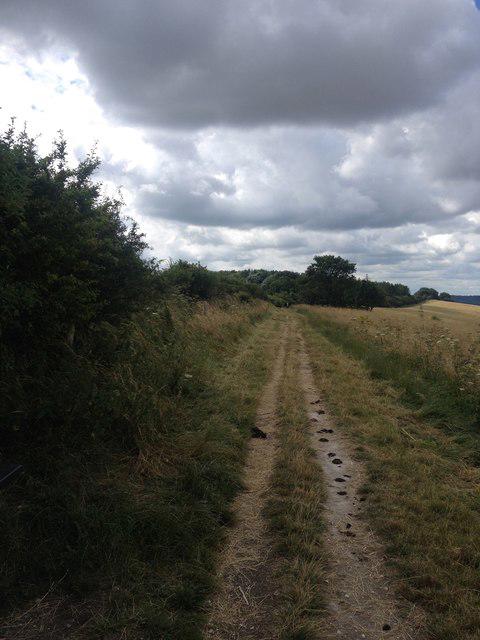 Photo could not load
TL0019 : On the Dunstable Downs
Dave Thompson
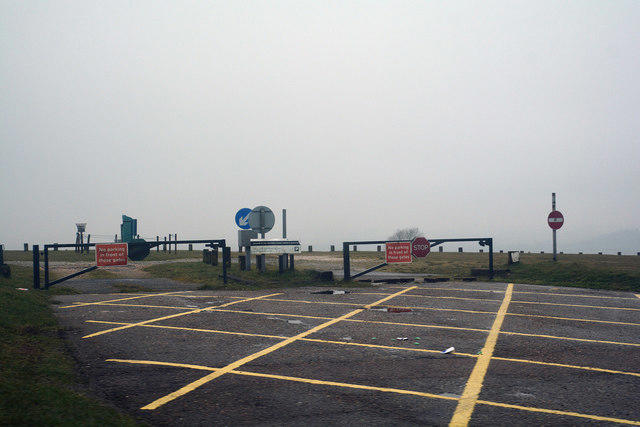 Photo could not load
TL0019 : Central Bedfordshire : Dunstable Downs
Lewis Clarke
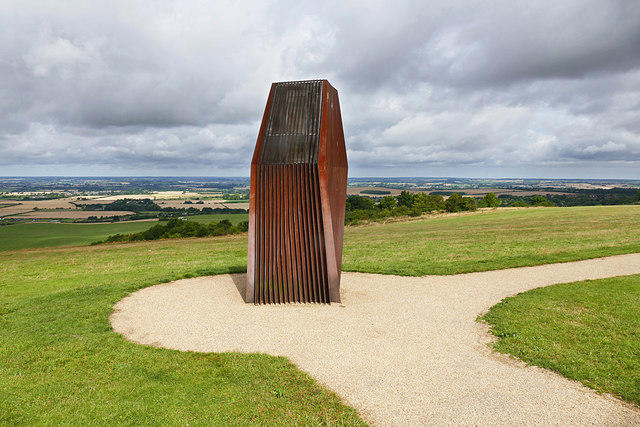 Photo could not load
TL0019 : Ornamental air vent, Dunstable Downs
Alan Hunt
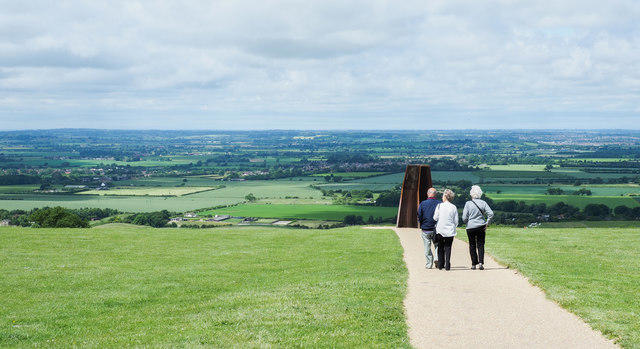 Photo could not load
TL0019 : Walking towards The Windcatcher
Trevor Littlewood
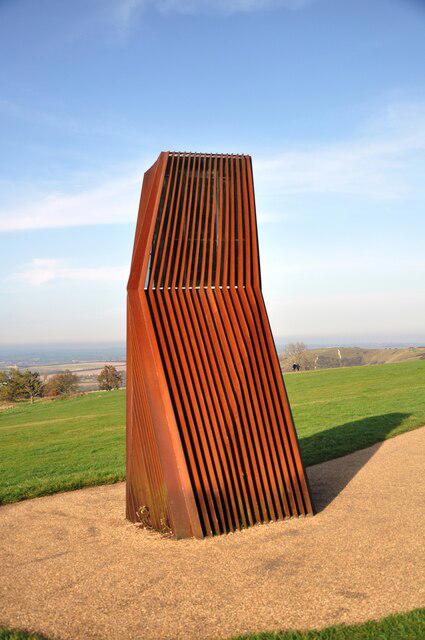 Photo could not load
TL0019 : The Dunstable Downs Windcatcher
Bob Walters
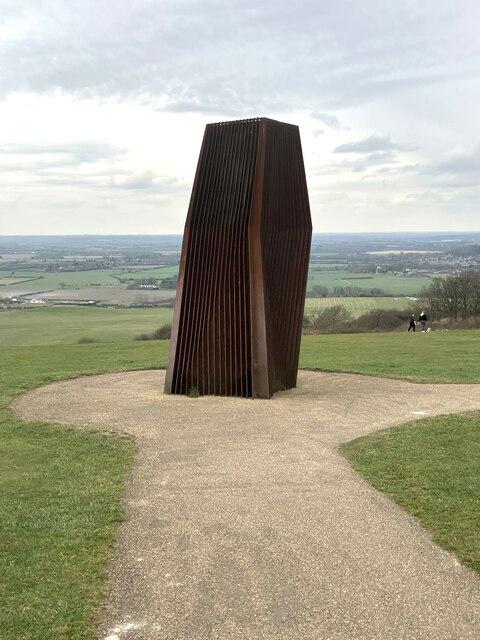 Photo could not load
TL0019 : Windcatcher on Dunstable Downs
Barbara Richardson
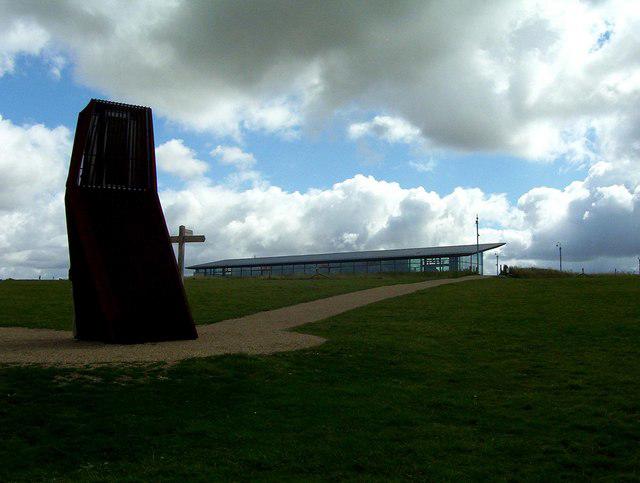 Photo could not load
TL0019 : Chilterns Gateway Centre
Mike Goodwin
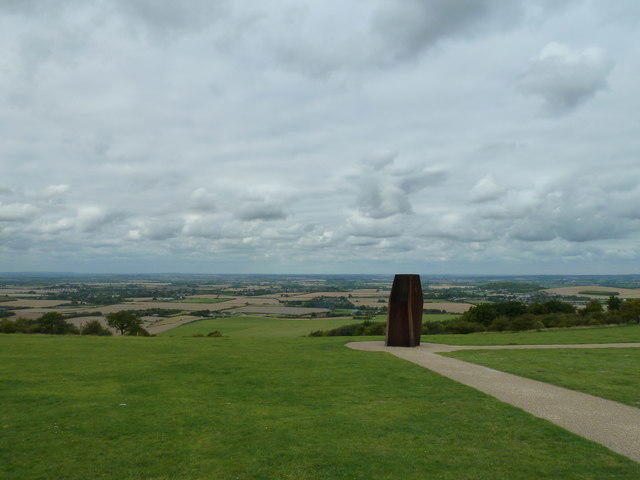 Photo could not load
TL0019 : Sculpture or air vent?
Malcolm Campbell
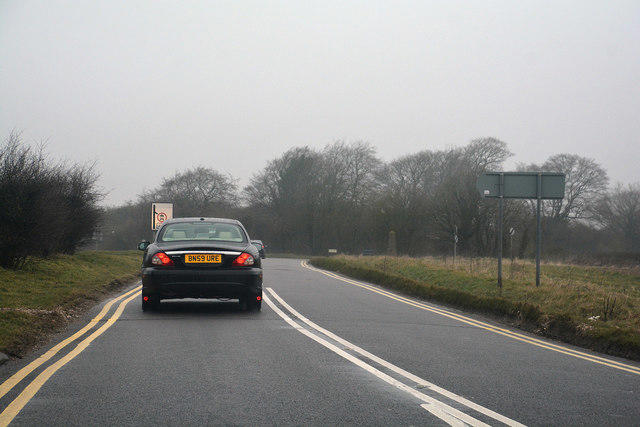 Photo could not load
TL0019 : Central Bedfordshire : Whipsnade Road B4541
Lewis Clarke
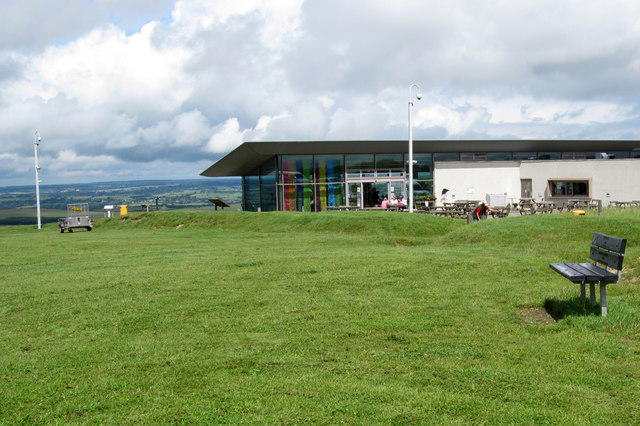
TL0019 : Visitor's centre at Dunstable Downs
Philip Jeffrey
Hill facts and local notes
Classifications
Elevation
243m
797 ft
Prominence
105m
Coordinates
51.8643, -0.5363
TL008194
OS Map
166
Explorer: 181 182
At the Summit
The recorded highest point is the trig point at TL 00881 19426, 243 m above sea level, near the visitor-centre parking. Ground 30 m east-southeast at the field edge is lower. The Five Knolls burial mounds lie farther north and are separate from the summit.
Terrain & Geology
Dunstable Downs forms part of the Chilterns chalk escarpment. The steep scarp, combes and dry valleys support chalk grassland, scrub and woodland. Chalk and loose flints can be exposed on paths; leave geological and archaeological features undisturbed.
Views & Scenery
In clear weather, the open ridge looks across the Vale of Aylesbury towards Ivinghoe Beacon and the surrounding Chilterns. Gliders may be seen above the airfield below the Downs.
Best Seasons
Spring and summer bring chalk-grassland flowers, orchids and butterflies. Skylarks nest in the grass, and red kites may be seen overhead. Follow marked routes and avoid disturbing wildlife or trampling flowers.
History & Heritage
Name Origin
The town-name Dunstable has several proposed origins. Albion Archaeology discusses an interpretation linking downs and a standing post, alongside other theories and a robber legend. A single literal translation is uncertain.
Historical Significance
Five Knolls is a scheduled prehistoric cemetery with three bell barrows, two bowl barrows and two pond barrows. The Downs also preserve medieval rabbit-warren earthworks and the former rifle-range site at Pascombe Pit. Good Friday orange rolling was a local tradition until 1968, with isolated later attempts at revival.
Getting There & Facilities
Parking
National Trust visitor parking beside the Chilterns Gateway Centre, off the B4541, postcode LU6 2GY; overflow parking is available nearby. Published tariff: £2.50 for up to 2 hours, £4.50 for up to 4 hours, £6 all day. National Trust members and Blue Badge holders park free under the site’s registration and display arrangements. Card machines and JustPark are available; cash is accepted at the machine nearest the Visitor Hub. Check on-site hours and payment instructions. Sallowsprings is a private road with no through access to the Downs.
Public Transport
Luton station has onward bus links via Dunstable. Centrebus’s seasonal ZOO service stops at the Chilterns Gateway Centre; its 2026 season runs until 1 November, on weekends/bank holidays in term time and daily during published school holidays. Check current operating dates and the last return before travelling.
Nearby Facilities
The Chilterns Gateway Centre has the View Café, a shop, toilets, accessible toilets and seating. The café and shop have level access. Mobility equipment is available by advance booking through the centre on 01582 500920. Opening hours and availability vary; check before travelling and carry supplies for longer walks.
Safety Information
Known Hazards
- Wet chalk, mud, loose flints and uneven grass can be slippery. Some paths and steps on the scarp are steep; choose a route suited to the whole party.
- The open ridge is exposed to strong winds and changing weather. Carry suitable layers, water and navigation equipment; mobile reception is poor in parts of the estate.
- Longer circuits cross roads and include short road sections, gates and stiles. Use marked crossings and take particular care on Isle of Wight Lane and the B4541.
- Kites, paragliders, hang-gliders and gliders share the area. Keep clear of take-off and landing activity, obey signs and do not enter the airfield as a walking shortcut.
- Give livestock space and keep dogs on short leads near animals. Dogs are excluded from marked kite-flying and ground-nesting-bird areas, and must be on leads around the centre and car parks.
Seasonal Hazards
Rain can make earth and chalk paths muddy or slippery; frost and ice add difficulty. Strong winds can make the surfaced ridge path uncomfortable or unsuitable for some visitors. Short winter days require an earlier return. Check current path-work notices and follow diversions around Chute Wood and the windcatcher.
General Safety Tips
- Check weather conditions before setting out
- Carry appropriate clothing and equipment
- Let someone know your planned route
- Take a map, compass, and GPS device
- Carry emergency supplies: food, water, first aid kit, torch
Hills
Some common questions about the hills answered
Are there group walks up Dunstable Downs?
Many walkers use Walkmates to join or organise walks with others. You can check for group walks around Dunstable Downs through the maps
Are there other walkers around Dunstable Downs?
Activity varies by location and time, but Walkmates lets you see whether others have shared walks or shown interest in this area. Find other people through the walking friends search walking friends for Dunstable Downs search or of course create your own walk for Dunstable Downs
Can I organise a walk to Dunstable Downs?
Yes. If there aren’t any walks listed already, you can create a walk and make it available for others to join.
If you're signed up to Walkmates, you can create a walk to Dunstable Downs.
How do I find a walk up this hill?
There are often multiple ways to walk this hill, depending on experience and route preference. Walkmates helps you explore walks and routes that others have shared.
Can I suggest a new route up Dunstable Downs?
Yes. You can suggest or create routes to share with others. Walkmates focuses on the social side of walking, so routes are used to help people organise walks and explore areas together, rather than as detailed navigation tools or route libraries.
Other uses really appreciate knowledgeable walkers sharing their routes. Share your favourite route to Dunstable Downs here
The is an error or something incorrect about this hill. How do I let you know?
We always strive to keep the information on Walkmates as accurate as possible. If you find an error, please let us know through the contact form and we'll aim to correct it as quickly as possible
Community Discussion
Comments
Location
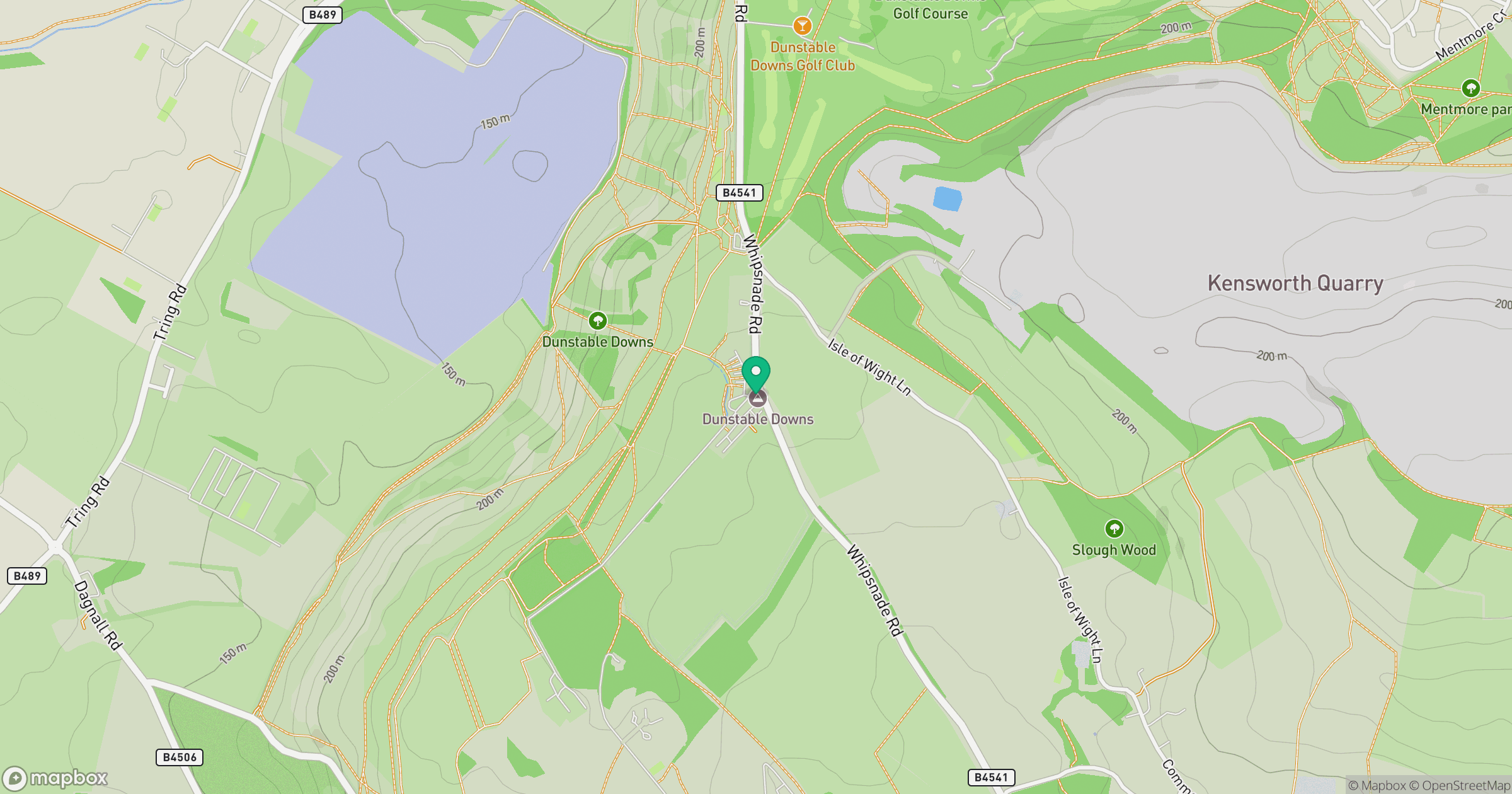
Grid reference: TL008194
View on OpenStreetMapOpens a map in a new tab, centred on the hill.
No comments yet. Be the first.