

Carrauntoohil
Good walks are even better shared.
V8084 : On The Pinnacles
Adam Ward Photo source
Overview
Carrauntoohil (Corrán Tuathail), 1,038.6 m, is Ireland’s highest mountain in County Kerry’s MacGillycuddy’s Reeks. Steep gullies, rocky ridges and glacial valleys surround its summit cross. Routes from Hag’s Glen and from the Hydro track have different demands and return points; mountain-navigation skills and a route suited to the conditions are essential.
Carrauntoohil
Overview
Carrauntoohil (Corrán Tuathail), 1,038.6 m, is Ireland’s highest mountain in County Kerry’s MacGillycuddy’s Reeks. Steep gullies, rocky ridges and glacial valleys surround its summit cross. Routes from Hag’s Glen and from the Hydro track have different demands and return points; mountain-navigation skills and a route suited to the conditions are essential.
Summit and views
A large cross stands at the summit. The recorded highest point is an outcrop 4 m west of the cross at V803844 (detailed grid V 80364 84424), with an elevation of 1,038.6 m. In clear weather, the summit looks over the surrounding Reeks, rocky ridges, glacial valleys and lakes, with the Gap of Dunloe to the east and Glencar to the west.
Geology
The Reeks are an Old Red Sandstone mountain landscape. Glaciation shaped the steep ridges, corries and valleys around Carrauntoohil.
Routes and returns
Devil’s Ladder from Cronin’s Yard and back
From Cronin’s Yard, follow the Hag’s Glen approach between Lough Gouragh and Lough Callee, climb the Devil’s Ladder gully and continue to Carrauntoohil. Return down the same gully and through Hag’s Glen to Cronin’s Yard. ActiveME gives 12 km for the complete return; Kerry Mountain Rescue advises allowing six hours. The gully is steep and loose, with rockfall risk, and care is needed at river crossings after rain.
Brother O’Shea’s Gully with Zig-Zags return
Start at Cronin’s Yard and approach through Hag’s Glen, then climb the rocky steps above Lough Gouragh towards Lough Cummeenoughter and Brother O’Shea’s Gully before reaching Carrauntoohil. Descend towards the Devil’s Ladder saddle, continue up towards Cnoc na Toinne and descend the Zig-Zags into Hag’s Glen, returning to Cronin’s Yard. Dingle Hillwalking Club’s specified alternative is 12.5 km. It includes exposed scrambling and extra climbing on the return. The Zig-Zags are loose and slippery in places; route-finding and conditions determine whether this descent is appropriate.
Caher from the Hydro track and back
Start at Breanlee (Hydro), ascend the Hydro track to Lough Eighter, then cross Caher and follow the ridge to Carrauntoohil. Retrace over Caher and descend to Lough Eighter and the same Hydro access point. Kerry Mountain Rescue allows six hours. Cliff-edge ground and navigation in cloud require care. A descent into Hag’s Glen does not return to this starting point.
Coomloughra Horseshoe from the Hydro track
A clockwise circuit from Breanlee (Hydro), climbing by Cnoc Iochtair and the Skregmore tops to Beenkeragh, then traversing the Beenkeragh Ridge to Carrauntoohil. Continue over Caher and Caher West Top, descend to Lough Eighter and return down the Hydro track to the starting point. Get Lost Mountaineering describes this circuit as 12 km; Kerry Mountain Rescue advises eight hours for the full horseshoe. The narrow ridge involves hands-on scrambling and serious exposure, requiring experienced parties and suitable conditions. Do not attempt it in windy conditions or treat it as an ordinary walking alternative.
The Heavenly Gates is a separate steep, exposed route requiring careful route-finding; it is not an automatic escape or interchangeable descent.
Terrain and hazards
Hag’s Glen approaches include tracks and river crossings. Higher routes cross steep loose gullies, broken rock and exposed slopes; the Coomloughra Horseshoe includes the narrow, scrambling Beenkeragh Ridge.
The Devil’s Ladder contains unstable scree and boulders; people above can dislodge rocks. River crossings become hazardous after heavy rain.
Plan the summit departure carefully: steep cliffs surround the top, particularly on its northern and eastern sides. Carry a map and compass and have the skills to use them in cloud.
The Zig-Zags on Cnoc na Toinne also have eroded, loose and slippery sections, with particular danger in wet or icy conditions. They involve extra ascent and are not a universally safe descent.
Brother O’Shea’s Gully involves exposed scrambling. The Beenkeragh Ridge is a more serious, narrow ridge traverse for experienced scramblers; strong wind and ice make it especially hazardous.
Snow and ice can make the gullies, summit slopes and Zig-Zags hazardous. Strong winds are especially serious on exposed ridges. Check the mountain forecast and allow sufficient daylight for the whole return; summer conditions still require food, water and suitable equipment.
Access and parking
The Reeks are privately owned, actively farmed land. Dogs are not permitted. Use recognised access points, keep to established tracks, leave gates as found and avoid obstructing farm or rescue access. Groups of ten or more must register with the Mountain Access Forum and have appropriate insurance.
Use the recognised access car parks at Cronin’s Yard or Lisleibane for Hag’s Glen routes, or Breanlee (Hydro) for Caher and the Coomloughra Horseshoe. Choose the car park for the intended complete route and keep gates, roads and emergency access clear. The Reeks are privately owned and actively farmed. Dogs are not permitted. Groups of 10 or more must register with the MacGillycuddy Reeks Mountain Access Forum and have appropriate insurance.
Facilities
Cronin’s Yard at the Hag’s Glen entrance has a tea room, toilets and showers. Check opening arrangements before relying on them and carry food and water for the full mountain day.
Name and history
The Irish name is Corrán Tuathail, usually interpreted as “Tuathal’s sickle”. Placename researcher Paul Tempan notes uncertainty over the derivation. Paul Tempan records that Isaac Weld mentioned the mountain in an 1812 account, using a spelling suggesting a possible older form of its name. The name’s early history remains uncertain.
Nearby
Hag’s Glen, Lough Gouragh and Lough Callee lie on the eastern approach. Lough Cummeenoughter is reached on the Brother O’Shea’s Gully route, while Coomloughra lies on the Hydro-track side.
Explore routes near Carrauntoohil
Walks starting near this hill. Open a route to check its map, distance and full itinerary.
Route planning notes
These notes describe possible approaches. Check a route's map and access information when planning your walk.
Devil’s Ladder from Cronin’s Yard and back
From Cronin’s Yard, follow the Hag’s Glen approach between Lough Gouragh and Lough Callee, climb the Devil’s Ladder gully and continue to Carrauntoohil. Return down the same gully and through Hag’s Glen to Cronin’s Yard. ActiveME gives 12 km for the complete return; Kerry Mountain Rescue advises allowing six hours. The gully is steep and loose, with rockfall risk, and care is needed at river crossings after rain.
Brother O’Shea’s Gully with Zig-Zags return
Start at Cronin’s Yard and approach through Hag’s Glen, then climb the rocky steps above Lough Gouragh towards Lough Cummeenoughter and Brother O’Shea’s Gully before reaching Carrauntoohil. Descend towards the Devil’s Ladder saddle, continue up towards Cnoc na Toinne and descend the Zig-Zags into Hag’s Glen, returning to Cronin’s Yard. Dingle Hillwalking Club’s specified alternative is 12.5 km. It includes exposed scrambling and extra climbing on the return. The Zig-Zags are loose and slippery in places; route-finding and conditions determine whether this descent is appropriate.
Caher from the Hydro track and back
Start at Breanlee (Hydro), ascend the Hydro track to Lough Eighter, then cross Caher and follow the ridge to Carrauntoohil. Retrace over Caher and descend to Lough Eighter and the same Hydro access point. Kerry Mountain Rescue allows six hours. Cliff-edge ground and navigation in cloud require care. A descent into Hag’s Glen does not return to this starting point.
Coomloughra Horseshoe from the Hydro track
A clockwise circuit from Breanlee (Hydro), climbing by Cnoc Iochtair and the Skregmore tops to Beenkeragh, then traversing the Beenkeragh Ridge to Carrauntoohil. Continue over Caher and Caher West Top, descend to Lough Eighter and return down the Hydro track to the starting point. Get Lost Mountaineering describes this circuit as 12 km; Kerry Mountain Rescue advises eight hours for the full horseshoe. The narrow ridge involves hands-on scrambling and serious exposure, requiring experienced parties and suitable conditions. Do not attempt it in windy conditions or treat it as an ordinary walking alternative.
Make a day of it, together
Find someone to share the walk with, or organise a day out along a route you like.
Photo Gallery
View all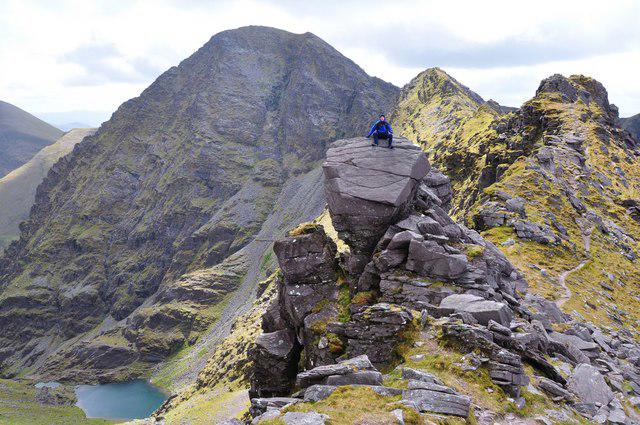 Photo could not load
V8084 : On The Pinnacles
Adam Ward
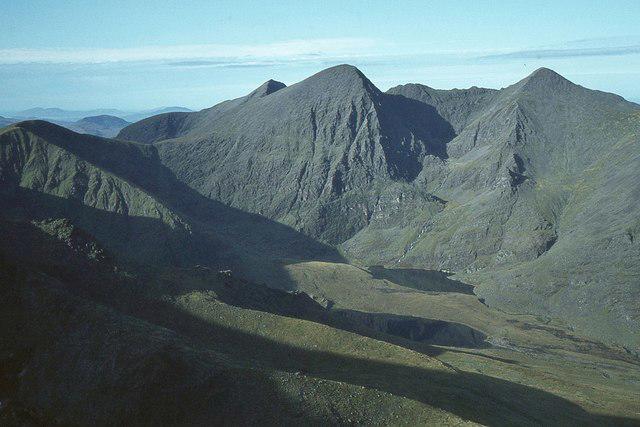 Photo could not load
V8084 : Carrauntoohil group from Cruach Mhor
Jim Barton
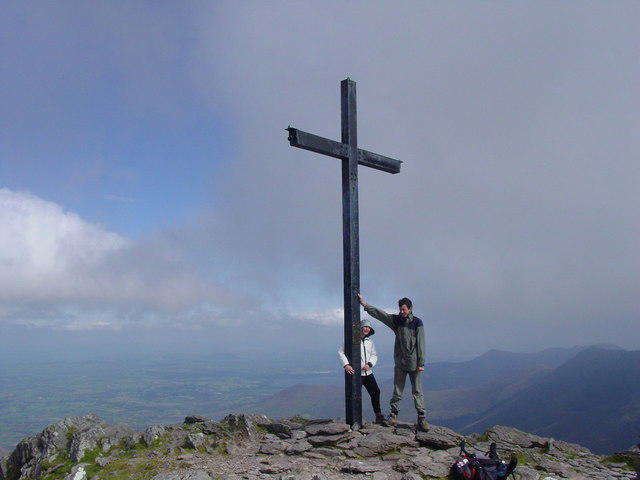 Photo could not load
V8084 : The summit of Carrauntoohil
Colin Park
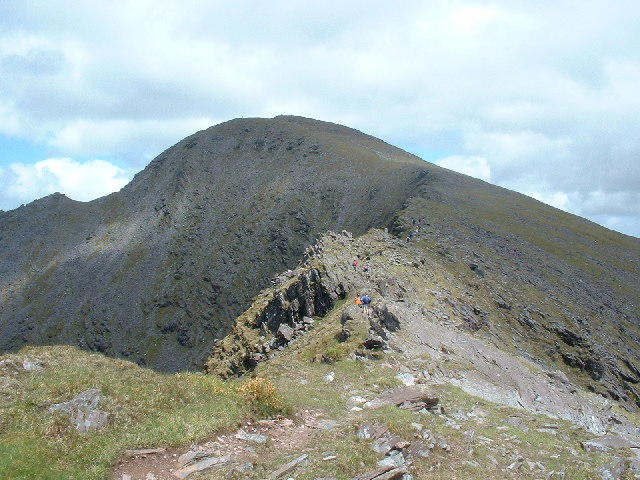 Photo could not load
V8084 : Carrauntoohil
Robert Bone
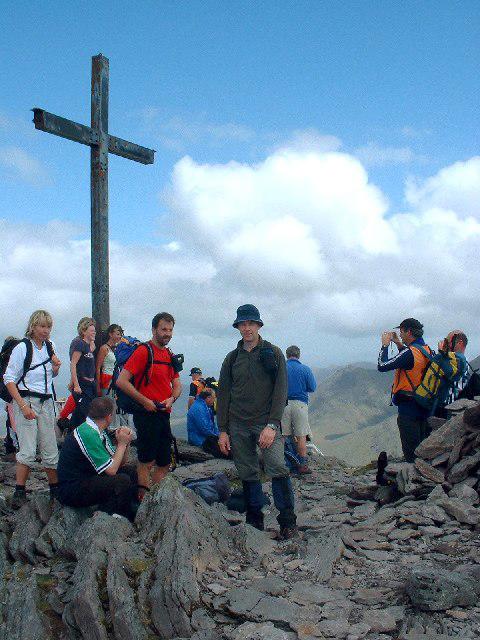 Photo could not load
V8084 : Crowds on Carrauntoohil Summit
Robert Bone
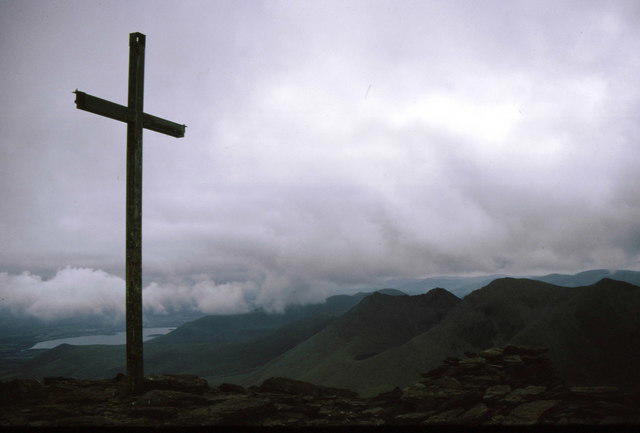 Photo could not load
V8084 : Carrauntoohil
Russel Wills
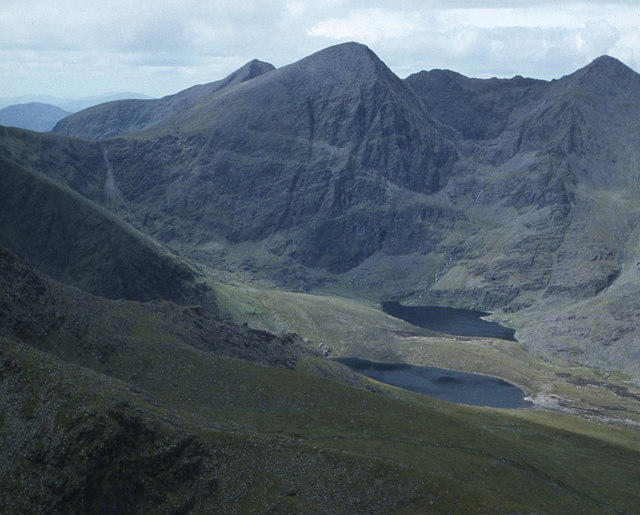 Photo could not load
V8084 : Carrauntoohil & Beenkeragh from Big Gun
Colin Park
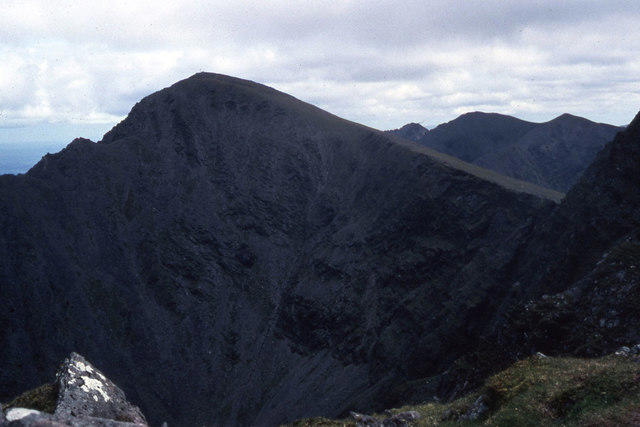 Photo could not load
V8084 : Carrantoohill from near the summit of Beenkeragh
Colin Park
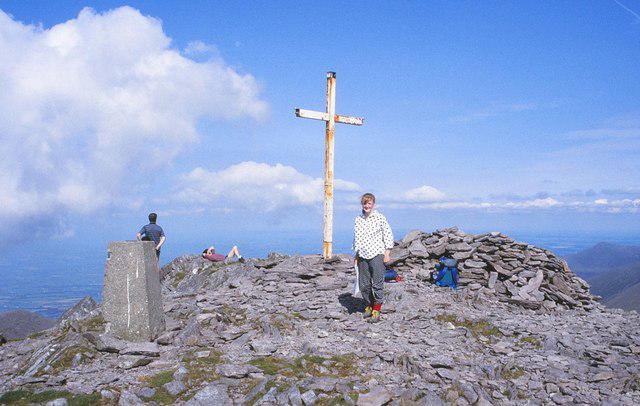 Photo could not load
V8084 : Macgillycuddy's Reeks: Corrán Tuathail (Carrauntoohil)
Nigel Cox
Hill facts and local notes
Classifications
Elevation
1,039m
3,407 ft
Prominence
1,039m
Coordinates
51.9995, -9.7427
V803844
OS Map
78
At the Summit
A large cross stands at the summit. The recorded highest point is an outcrop 4 m west of the cross at V803844 (detailed grid V 80364 84424), with an elevation of 1,038.6 m.
Terrain & Geology
The Reeks are an Old Red Sandstone mountain landscape. Glaciation shaped the steep ridges, corries and valleys around Carrauntoohil.
Views & Scenery
In clear weather, the summit looks over the surrounding Reeks, rocky ridges, glacial valleys and lakes, with the Gap of Dunloe to the east and Glencar to the west.
History & Heritage
Name Origin
The Irish name is Corrán Tuathail, usually interpreted as “Tuathal’s sickle”. Placename researcher Paul Tempan notes uncertainty over the derivation.
Historical Significance
Paul Tempan records that Isaac Weld mentioned the mountain in an 1812 account, using a spelling suggesting a possible older form of its name. The name’s early history remains uncertain.
Getting There & Facilities
Parking
Use the recognised access car parks at Cronin’s Yard or Lisleibane for Hag’s Glen routes, or Breanlee (Hydro) for Caher and the Coomloughra Horseshoe. Choose the car park for the intended complete route and keep gates, roads and emergency access clear. The Reeks are privately owned and actively farmed. Dogs are not permitted. Groups of 10 or more must register with the MacGillycuddy Reeks Mountain Access Forum and have appropriate insurance.
Nearby Facilities
Cronin’s Yard at the Hag’s Glen entrance has a tea room, toilets and showers. Check opening arrangements before relying on them and carry food and water for the full mountain day.
Safety Information
Known Hazards
- The Devil’s Ladder contains unstable scree and boulders; people above can dislodge rocks. River crossings become hazardous after heavy rain.
- Plan the summit departure carefully: steep cliffs surround the top, particularly on its northern and eastern sides. Carry a map and compass and have the skills to use them in cloud.
- The Zig-Zags on Cnoc na Toinne also have eroded, loose and slippery sections, with particular danger in wet or icy conditions. They involve extra ascent and are not a universally safe descent.
- Brother O’Shea’s Gully involves exposed scrambling. The Beenkeragh Ridge is a more serious, narrow ridge traverse for experienced scramblers; strong wind and ice make it especially hazardous.
Seasonal Hazards
Snow and ice can make the gullies, summit slopes and Zig-Zags hazardous. Strong winds are especially serious on exposed ridges. Check the mountain forecast and allow sufficient daylight for the whole return; summer conditions still require food, water and suitable equipment.
General Safety Tips
- Check weather conditions before setting out
- Carry appropriate clothing and equipment
- Let someone know your planned route
- Take a map, compass, and GPS device
- Carry emergency supplies: food, water, first aid kit, torch
Hills
Some common questions about the hills answered
Are there group walks up Carrauntoohil?
Many walkers use Walkmates to join or organise walks with others. You can check for group walks around Carrauntoohil through the maps
Are there other walkers around Carrauntoohil?
Activity varies by location and time, but Walkmates lets you see whether others have shared walks or shown interest in this area. Find other people through the walking friends search walking friends for Carrauntoohil search or of course create your own walk for Carrauntoohil
Can I organise a walk to Carrauntoohil?
Yes. If there aren’t any walks listed already, you can create a walk and make it available for others to join.
If you're signed up to Walkmates, you can create a walk to Carrauntoohil.
How do I find a walk up this hill?
There are often multiple ways to walk this hill, depending on experience and route preference. Walkmates helps you explore walks and routes that others have shared.
Can I suggest a new route up Carrauntoohil?
Yes. You can suggest or create routes to share with others. Walkmates focuses on the social side of walking, so routes are used to help people organise walks and explore areas together, rather than as detailed navigation tools or route libraries.
Other uses really appreciate knowledgeable walkers sharing their routes. Share your favourite route to Carrauntoohil here
The is an error or something incorrect about this hill. How do I let you know?
We always strive to keep the information on Walkmates as accurate as possible. If you find an error, please let us know through the contact form and we'll aim to correct it as quickly as possible
Community Discussion
Comments
Location
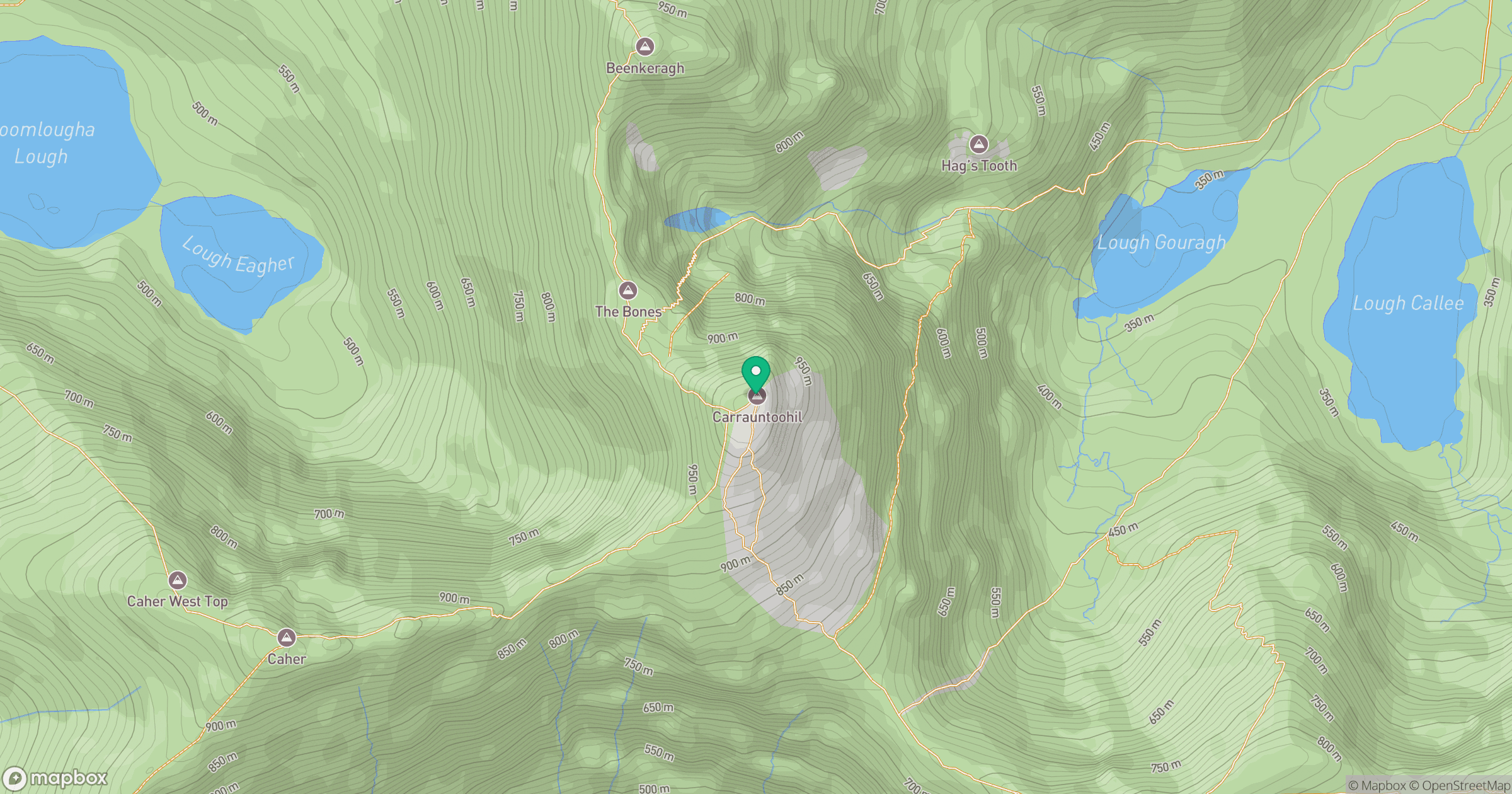
Grid reference: V803844
View on OpenStreetMapOpens a map in a new tab, centred on the hill.
No comments yet. Be the first.