

Beinn Dorain
Good walks are even better shared.
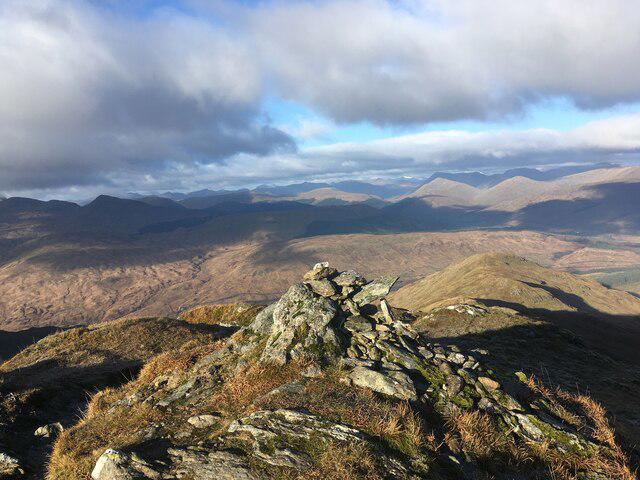
NN3237 : View north west from Beinn Dorain
Nigel Brown Photo source
Overview
Beinn Dorain is a 1,076 m Munro above Bridge of Orchy, recognisable by its steep cone when approaching from Tyndrum. The usual ascent climbs Coire an Dòthaidh to a 744 m bealach and follows the north ridge beyond Càrn Sasunnaich to the true summit. It can be climbed alone or combined with Beinn an Dòthaidh; both outings require fitness and mountain navigation skills.
Beinn Dorain
Overview
Beinn Dorain is a 1,076 m Munro above Bridge of Orchy, recognisable by its steep cone when approaching from Tyndrum. The usual ascent climbs Coire an Dòthaidh to a 744 m bealach and follows the north ridge beyond Càrn Sasunnaich to the true summit. It can be climbed alone or combined with Beinn an Dòthaidh; both outings require fitness and mountain navigation skills.
Summit and views
The true summit is a large cairn at NN 32556 37847, 1,076 m above sea level. Càrn Sasunnaich, the northern top reached first on the usual ridge approach, is lower at 1,064.7 m. Continue south through a shallow dip to reach the main summit. The summit has a broad panorama across the southern Highlands, with Loch Lyon visible to the northeast. The optional Beinn an Dòthaidh extension adds the well-known outlook over Rannoch Moor and, from its west top, Loch Tulla.
Routes
Beinn Dorain from Bridge of Orchy via Coire an Dòthaidh
Start and finish at Bridge of Orchy. Cross the A82 carefully, follow the station lane and use the railway underpass. Beyond it, take the hill path by the transmitter and climb Coire an Dòthaidh to the 744 m bealach. Turn south up the north ridge. Continue beyond the large cairn on Càrn Sasunnaich, descend the shallow dip and climb to Beinn Dorain’s true summit. Return along the ridge to the bealach and down the same corrie path, using the underpass again to reach the start. Nick Drainey’s Walking Scotland guide gives approximately 11 km, 950 m of ascent and 5–6 hours for Dorain alone.
Beinn Dorain and Beinn an Dòthaidh from Bridge of Orchy
Follow the Coire an Dòthaidh approach from Bridge of Orchy, using the railway underpass, and climb Beinn Dorain beyond Càrn Sasunnaich. Return to the 744 m bealach. Ascend northeast into Coire Reidh, then reach Beinn an Dòthaidh’s main summit; visit its west top for views over Loch Tulla. Descend back into Coire Reidh, regain the bealach and follow the original corrie path and railway underpass to Bridge of Orchy. Walkhighlands gives 14.3 km, 1,228 m of ascent and 6–8 hours for this two-Munro return. Broad, boggy slopes need careful navigation, and the northern crags must be avoided.
Terrain and safety
Rough and sometimes eroded mountain paths climb steeply through Coire an Dòthaidh. Higher ground includes rock slabs, stony ridges and grass. The Beinn an Dòthaidh extension crosses broad, wet and boggy slopes where the path can become indistinct.
- Cross the A82 with care. Use the railway underpass at Bridge of Orchy station; do not cross the railway tracks.
- Càrn Sasunnaich is a false summit on the northern approach. Confirm the true summit and the correct return to the 744 m bealach, especially in cloud.
- Rough, eroded paths, wet slabs and boggy ground can be slippery. Steep crags flank the summits; do not descend steep faces or improvise shortcuts away from the planned return.
- The broad slopes of Beinn an Dòthaidh and Coire Reidh are difficult to navigate in mist. Carry a map and compass and know how to use them.
- Strong wind, rain and cold can affect the high ground in any season. Check a mountain forecast, leave your route and return time with someone, and carry warm waterproof clothing, food, water and a headtorch.
- Follow on-site access and deer-management signs. Keep dogs under close control and keep roads, gates and emergency access clear.
Snow and ice may persist into spring. Winter conditions require suitable boots, ice axe and crampons, the skills to use them, winter navigation and avalanche awareness. Cornices can form above Beinn an Dòthaidh’s northern crags; keep well back. Allow for short daylight and slower progress. Check Heading for the Scottish Hills and local signs for deer-management advice throughout the year.
In an emergency call 999, ask for Police, then Mountain Rescue.
Access and facilities
Bridge of Orchy is the starting village at the mountain’s foot. Tyndrum, to the south on the A82, provides more shops and services.
The Forestry and Land Scotland riverside car park is reached by turning off the A82 beside Bridge of Orchy Hotel and crossing the bridge. The tariff checked on 17 October 2026 was £3 for all-day parking, with card or RingGo payment; check current signs and terms. This is separate from the small station car park. Park considerately and do not block roads, gates or emergency access.
Bridge of Orchy station is close to the start and is served by ScotRail’s West Highland services. Buses between Glasgow and Fort William also stop at Bridge of Orchy. Check current timetables, service updates and the last return before setting out; the mountain day needs a generous connection margin.
The FLS site has a riverside picnic area. Bridge of Orchy Hotel serves food and drink; check opening times. FLS lists the nearest public toilets in Tyndrum, and ScotRail lists no toilets or refreshments at the station. Carry food and drinking water for the mountain day.
Geology
The summit area is a reference section for the Beinn Dorain Semipelite Formation. The British Geological Survey describes garnet-mica and muscovite-quartz metamorphic rocks in the Lochaber Subgroup, with conspicuous dark-red garnets and quartz concentrations. These belong to the Dalradian succession.
Names and history
The mountain appears as Beinn Dòrain and Beinn Dòbhrain; the latter form is used in Duncan Ban MacIntyre’s poem. The Scottish Poetry Library relates the name to streams. A definitive English translation is uncertain. Duncan Ban MacIntyre (1724–1812), born in Glen Orchy, celebrated the mountain and its wildlife in the eighteenth-century Gaelic poem Moladh Beinn Dòbhrain (Praise of Ben Dorain). Its movements draw on classical Highland pipe music.
Nearby landscape
Càrn Sasunnaich is the lower northern top of Beinn Dorain. Coire an Dòthaidh leads to the 744 m bealach between Dorain and Beinn an Dòthaidh. The West Highland Way passes the mountain’s western foot; Loch Lyon lies to the northeast and Loch Tulla to the northwest.
Explore routes near Beinn Dorain
Walks starting near this hill. Open a route to check its map, distance and full itinerary.
Killin: Falls of Dochart, Finlarig and Moirlanich Longhouse
View route
The Cobbler from Succoth Carpark
View route
Beinn Ime from Succoth
View route
Loch Katrine: Brenachoile Point Shore Walk from Trossachs Pier
View route
Route planning notes
These notes describe possible approaches. Check a route's map and access information when planning your walk.
Beinn Dorain from Bridge of Orchy via Coire an Dòthaidh
Start and finish at Bridge of Orchy. Cross the A82 carefully, follow the station lane and use the railway underpass. Beyond it, take the hill path by the transmitter and climb Coire an Dòthaidh to the 744 m bealach. Turn south up the north ridge. Continue beyond the large cairn on Càrn Sasunnaich, descend the shallow dip and climb to Beinn Dorain’s true summit. Return along the ridge to the bealach and down the same corrie path, using the underpass again to reach the start. Nick Drainey’s Walking Scotland guide gives approximately 11 km, 950 m of ascent and 5–6 hours for Dorain alone.
Beinn Dorain and Beinn an Dòthaidh from Bridge of Orchy
Follow the Coire an Dòthaidh approach from Bridge of Orchy, using the railway underpass, and climb Beinn Dorain beyond Càrn Sasunnaich. Return to the 744 m bealach. Ascend northeast into Coire Reidh, then reach Beinn an Dòthaidh’s main summit; visit its west top for views over Loch Tulla. Descend back into Coire Reidh, regain the bealach and follow the original corrie path and railway underpass to Bridge of Orchy. Walkhighlands gives 14.3 km, 1,228 m of ascent and 6–8 hours for this two-Munro return. Broad, boggy slopes need careful navigation, and the northern crags must be avoided.
Make a day of it, together
Find someone to share the walk with, or organise a day out along a route you like.
Photo Gallery
View all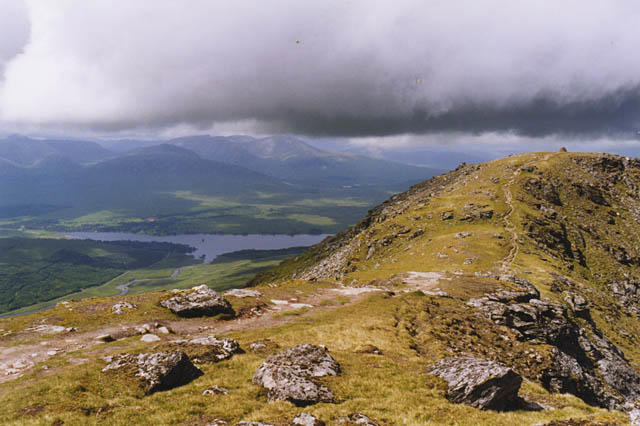 Photo could not load
NN3237 : View north west from Beinn Dorain
Nigel Brown
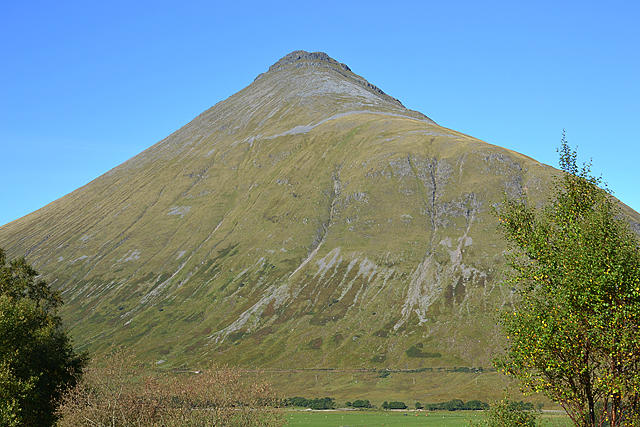 Photo could not load
NN3237 : Beinn Dorain from the A82
Nigel Brown
 Photo could not load
NN3237 : Beinn Dòrain south top
Richard Webb
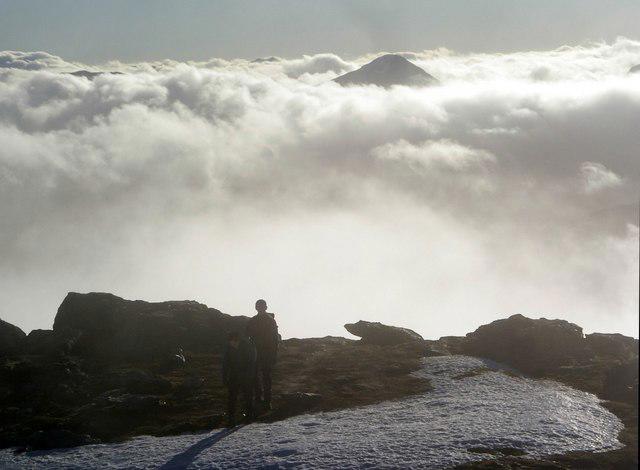 Photo could not load
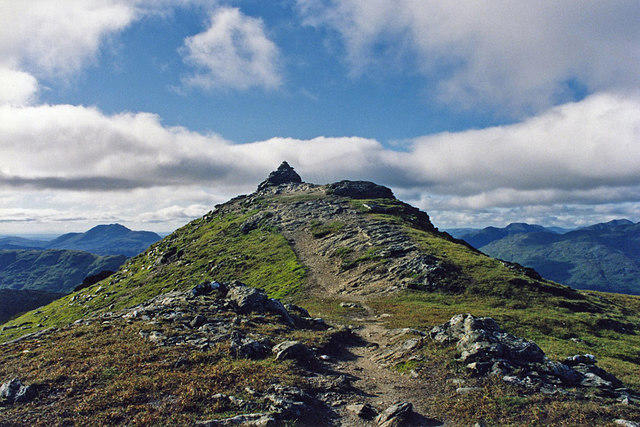
NN3237 : Summit of Beinn Dorain
E MacPhillimy
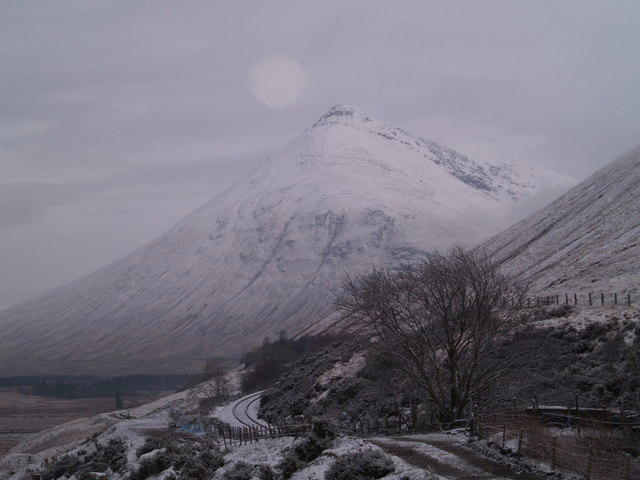 Photo could not load
NN3237 : Beinn Dorain
lyn exton
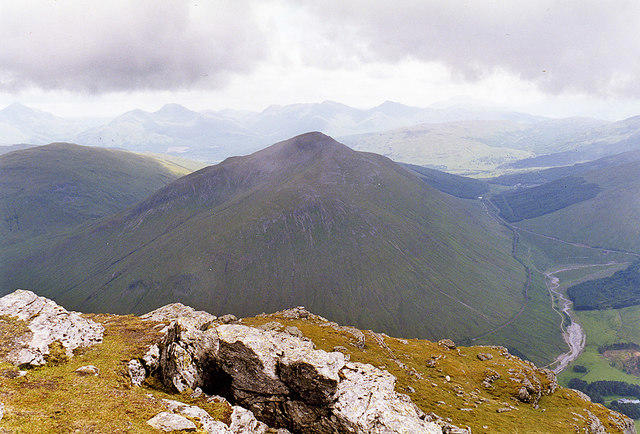 Photo could not load
NN3237 : Looking south from Beinn Dòrain
Nigel Brown
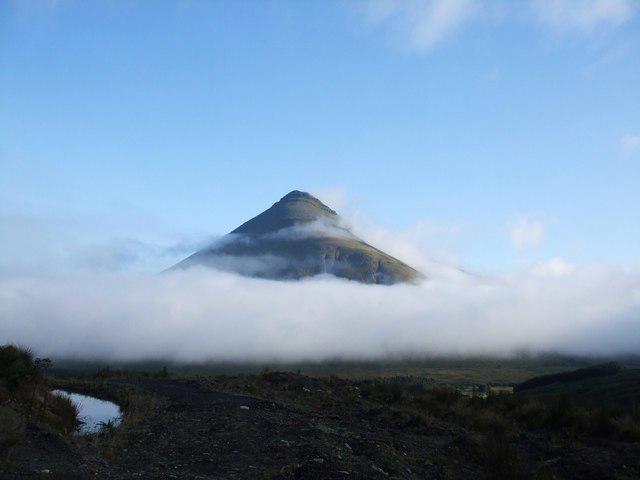 Photo could not load
NN3237 : Morning mist Beinn Dorain
ronnie leask
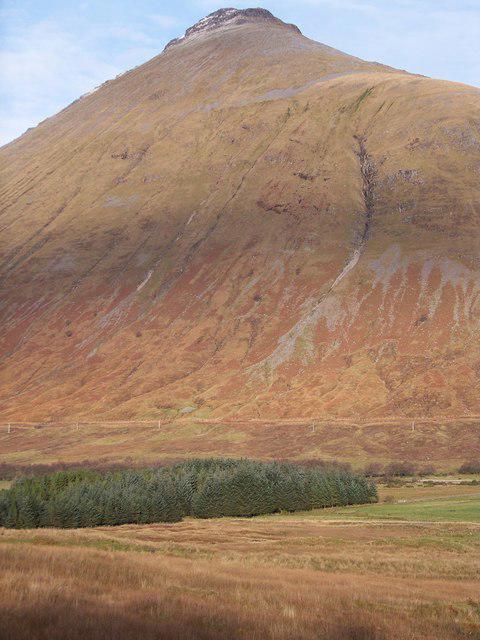 Photo could not load
NN3237 : Beinn Dorain
James T M Towill
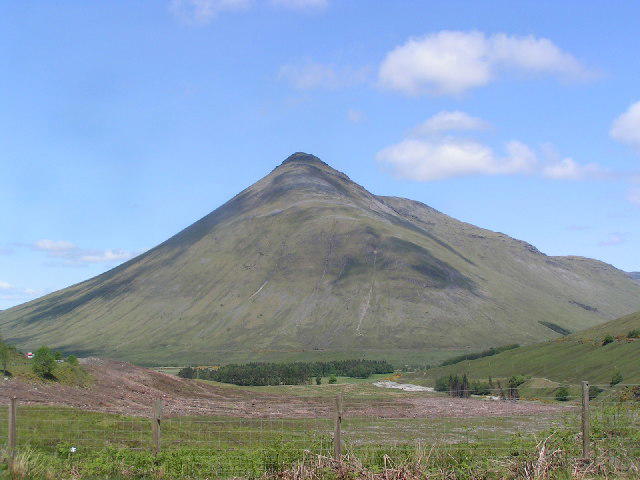 Photo could not load
NN3237 : Ben Dorain
Norrie Adamson

NN3237 : Beinn Dòrain, the south top
Richard Webb
Hill facts and local notes
Classifications
Elevation
1,076m
3,530 ft
Prominence
332m
Coordinates
56.5029, -4.7222
NN325378
OS Map
50
Explorer: 377E
At the Summit
The true summit is a large cairn at NN 32556 37847, 1,076 m above sea level. Càrn Sasunnaich, the northern top reached first on the usual ridge approach, is lower at 1,064.7 m. Continue south through a shallow dip to reach the main summit.
Terrain & Geology
The summit area is a reference section for the Beinn Dorain Semipelite Formation. The British Geological Survey describes garnet-mica and muscovite-quartz metamorphic rocks in the Lochaber Subgroup, with conspicuous dark-red garnets and quartz concentrations. These belong to the Dalradian succession.
Views & Scenery
The summit has a broad panorama across the southern Highlands, with Loch Lyon visible to the northeast. The optional Beinn an Dòthaidh extension adds the well-known outlook over Rannoch Moor and, from its west top, Loch Tulla.
History & Heritage
Name Origin
The mountain appears as Beinn Dòrain and Beinn Dòbhrain; the latter form is used in Duncan Ban MacIntyre’s poem. The Scottish Poetry Library relates the name to streams. A definitive English translation is uncertain.
Historical Significance
Duncan Ban MacIntyre (1724–1812), born in Glen Orchy, celebrated the mountain and its wildlife in the eighteenth-century Gaelic poem Moladh Beinn Dòbhrain (Praise of Ben Dorain). Its movements draw on classical Highland pipe music.
Getting There & Facilities
Parking
The Forestry and Land Scotland riverside car park is reached by turning off the A82 beside Bridge of Orchy Hotel and crossing the bridge. The tariff checked on 17 October 2026 was £3 for all-day parking, with card or RingGo payment; check current signs and terms. This is separate from the small station car park. Park considerately and do not block roads, gates or emergency access.
Public Transport
Bridge of Orchy station is close to the start and is served by ScotRail’s West Highland services. Buses between Glasgow and Fort William also stop at Bridge of Orchy. Check current timetables, service updates and the last return before setting out; the mountain day needs a generous connection margin.
Nearby Facilities
The FLS site has a riverside picnic area. Bridge of Orchy Hotel serves food and drink; check opening times. FLS lists the nearest public toilets in Tyndrum, and ScotRail lists no toilets or refreshments at the station. Carry food and drinking water for the mountain day.
Safety Information
Known Hazards
- Cross the A82 with care. Use the railway underpass at Bridge of Orchy station; do not cross the railway tracks.
- Càrn Sasunnaich is a false summit on the northern approach. Confirm the true summit and the correct return to the 744 m bealach, especially in cloud.
- Rough, eroded paths, wet slabs and boggy ground can be slippery. Steep crags flank the summits; do not descend steep faces or improvise shortcuts away from the planned return.
- The broad slopes of Beinn an Dòthaidh and Coire Reidh are difficult to navigate in mist. Carry a map and compass and know how to use them.
- Strong wind, rain and cold can affect the high ground in any season. Check a mountain forecast, leave your route and return time with someone, and carry warm waterproof clothing, food, water and a headtorch.
- Follow on-site access and deer-management signs. Keep dogs under close control and keep roads, gates and emergency access clear.
Seasonal Hazards
Snow and ice may persist into spring. Winter conditions require suitable boots, ice axe and crampons, the skills to use them, winter navigation and avalanche awareness. Cornices can form above Beinn an Dòthaidh’s northern crags; keep well back. Allow for short daylight and slower progress. Check Heading for the Scottish Hills and local signs for deer-management advice throughout the year.
General Safety Tips
- Check weather conditions before setting out
- Carry appropriate clothing and equipment
- Let someone know your planned route
- Take a map, compass, and GPS device
- Carry emergency supplies: food, water, first aid kit, torch
Hills
Some common questions about the hills answered
Are there group walks up Beinn Dorain?
Many walkers use Walkmates to join or organise walks with others. You can check for group walks around Beinn Dorain through the maps
Are there other walkers around Beinn Dorain?
Activity varies by location and time, but Walkmates lets you see whether others have shared walks or shown interest in this area. Find other people through the walking friends search walking friends for Beinn Dorain search or of course create your own walk for Beinn Dorain
Can I organise a walk to Beinn Dorain?
Yes. If there aren’t any walks listed already, you can create a walk and make it available for others to join.
If you're signed up to Walkmates, you can create a walk to Beinn Dorain.
How do I find a walk up this hill?
There are often multiple ways to walk this hill, depending on experience and route preference. Walkmates helps you explore walks and routes that others have shared.
Can I suggest a new route up Beinn Dorain?
Yes. You can suggest or create routes to share with others. Walkmates focuses on the social side of walking, so routes are used to help people organise walks and explore areas together, rather than as detailed navigation tools or route libraries.
Other uses really appreciate knowledgeable walkers sharing their routes. Share your favourite route to Beinn Dorain here
The is an error or something incorrect about this hill. How do I let you know?
We always strive to keep the information on Walkmates as accurate as possible. If you find an error, please let us know through the contact form and we'll aim to correct it as quickly as possible
Community Discussion
Comments
Location
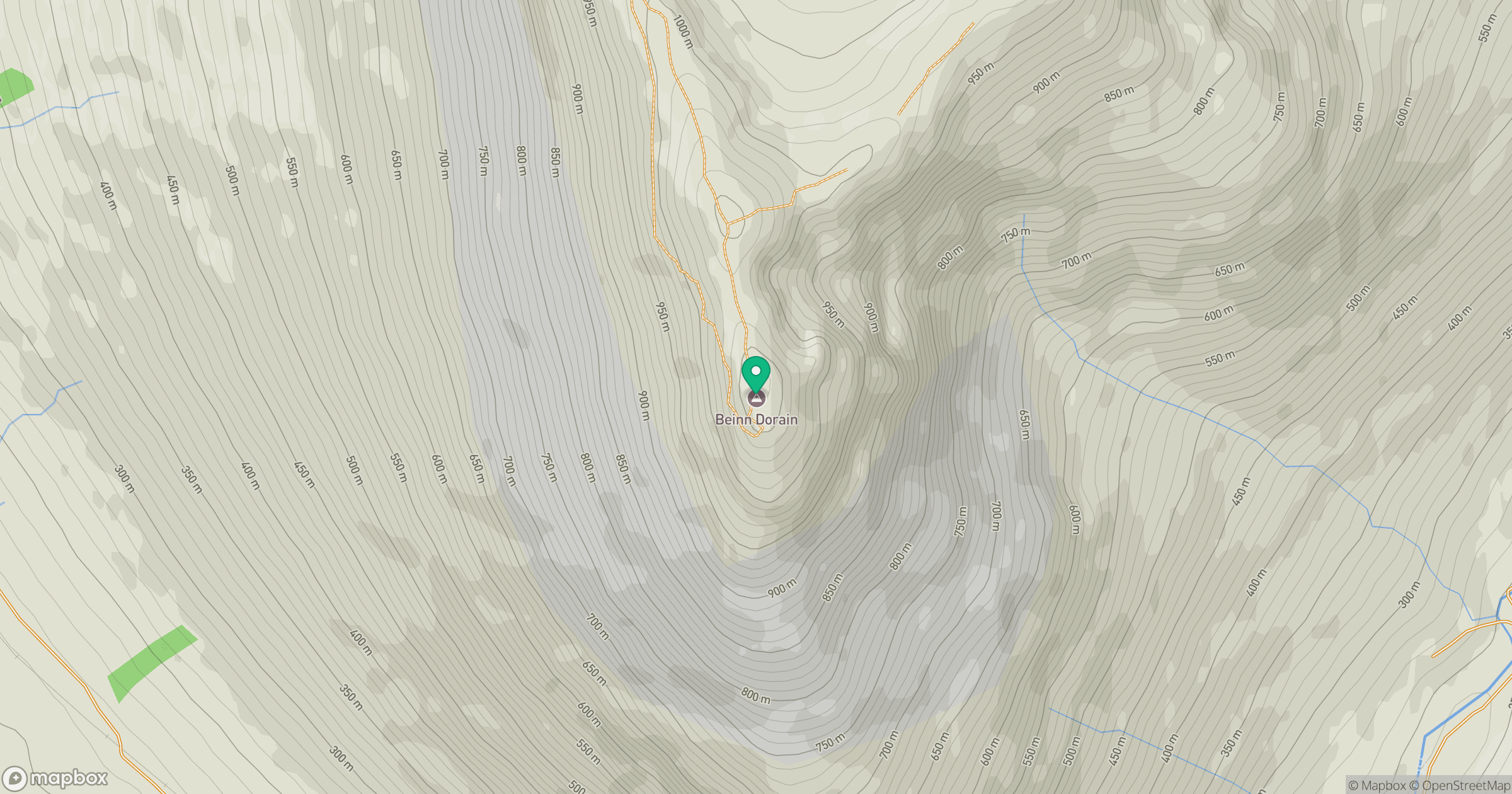
Grid reference: NN325378
View on OpenStreetMapOpens a map in a new tab, centred on the hill.

No comments yet. Be the first.