

Harrison Stickle
Good walks are even better shared.
NY2807 : Harrison Stickle summit
Ian Taylor Photo source
Overview
Harrison Stickle is the 735.3 m high point of the Langdale Pikes, rising above Great Langdale and Stickle Tarn. Its rocky summit is commonly linked with Pavey Ark, Pike of Stickle and Loft Crag. The circuit via North Rake is a demanding mountain day with steep paths, stream crossings and hands-on rocky steps.
Harrison Stickle
Overview
Harrison Stickle rises to 735.3 m above Great Langdale in the central Lake District. The catalogue summit is rock 6m SSE of cairn at NY 28173 07400, 735.3 m above sea level. The cairn is a nearby landmark, rather than the surveyed high point.
Complete summit circuit
The Langdale Pikes circuit starts and finishes at New Dungeon Ghyll car park, using the guide’s grid NY 295 064. It climbs Stickle Ghyll to Stickle Tarn and North Rake to Pavey Ark, then visits Thunacar Knott, Harrison Stickle, Pike of Stickle, Loft Crag and Thorn Crag. Return from the gap beside Loft Crag on the established zigzag path and follow the lower gates past the hotel to the same car park. The published estimate is approximately 8 km and 4½ hours for the whole circuit. There are hands-on steps on Pike of Stickle. Do not substitute the tarn-only walk’s figures or an ascent-only distance.
Terrain and safety
North Rake is steep and rocky. Jack’s Rake is a separate, exposed Grade 1 scramble across Pavey Ark’s cliff, often wet and slippery. Do not use it, Easy Gully or the Dungeon Ghyll ravine as an improvised shortcut. Keep clear of cliff edges; wet steps, loose stones and stream crossings demand care. Turn back if water is too high to cross safely. Carry navigation equipment and use a mountain forecast. Snow, ice, strong winds and low cloud greatly increase the seriousness of this terrain.
Access, parking and facilities
The National Trust lists Stickle Ghyll parking at NY 294 065, in the New Dungeon Ghyll area. Parking is paid, with members free, and toilets are in the car park. Lanty Slee’s Langdale occupies the former Sticklebarn. Stagecoach 516 serves the valley via Ambleside; check your stop, service date and last return. Keep dogs on leads around livestock, use established paths and obey local access and nesting-bird notices. Check BMC RAD before climbing or scrambling on the crags.
Geology and views
The Langdale Pikes expose rocks of the Borrowdale Volcanic Group, including volcaniclastic sandstone, breccia and tuff in the Seathwaite Fell Formation. The named Harrison Stickle Member contains breccia, lapilli-tuff and pebbly sandstone; the overlying Pavey Ark Member also includes breccia and pebbly sandstone. Glacial erosion later shaped Great Langdale and its steep-sided mountain scenery.
In clear weather there are views along Great Langdale, down to Stickle Tarn and across Bowfell, Crinkle Crags, the Scafell range, Great Gable and the Helvellyn fells.
Name and history
Stickle is a local topographic term for a sharp point or peak. Robert Ferguson’s historical dictionary of Cumberland dialect explicitly gives Harrison Stickle and Pike o’ Stickle as examples.
Harrison Stickle is one of Wainwright’s Central Fells and a familiar part of the Langdale skyline. The wider valley has a long history of Neolithic stone-axe production, fell farming and rock climbing. George Macaulay Trevelyan’s gifts of farms to the National Trust helped protect the valley landscape.
Explore routes near Harrison Stickle
Walks starting near this hill. Open a route to check its map, distance and full itinerary.
Bow Fell from Langdale
View route
Great Carrs Halifax Wreckage from Wrynose Pass
View route
Scafell Pike from Seathwaite via the Corridor Route
View route
Tarn Hows Fast Route
View route
Route planning notes
These notes describe possible approaches. Check a route's map and access information when planning your walk.
Langdale Pikes circuit via North Rake
Start and finish at the New Dungeon Ghyll car park (guide grid NY 295 064). Climb beside Stickle Ghyll to Stickle Tarn, follow the eastern shore towards Bright Beck and ascend North Rake to Pavey Ark. Continue over Thunacar Knott and Harrison Stickle, then cross Harrison Combe to Pike of Stickle. Retrace the summit scramble, continue to Loft Crag and visit Thorn Crag before returning to the gap between them. Descend the established zigzag path, cross the lower stream and follow the gates past the hotel to the same car park. Country Walking gives approximately 8 km and 4½ hours for this complete circuit. Steep rocky ground, stream crossings and hands-on steps require sure-footedness. This route does not use Jack’s Rake.
Make a day of it, together
Find someone to share the walk with, or organise a day out along a route you like.
Photo Gallery
View all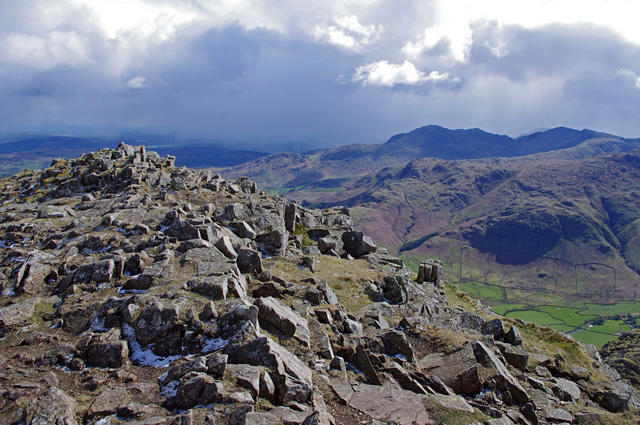 Photo could not load
NY2807 : Harrison Stickle summit
Ian Taylor
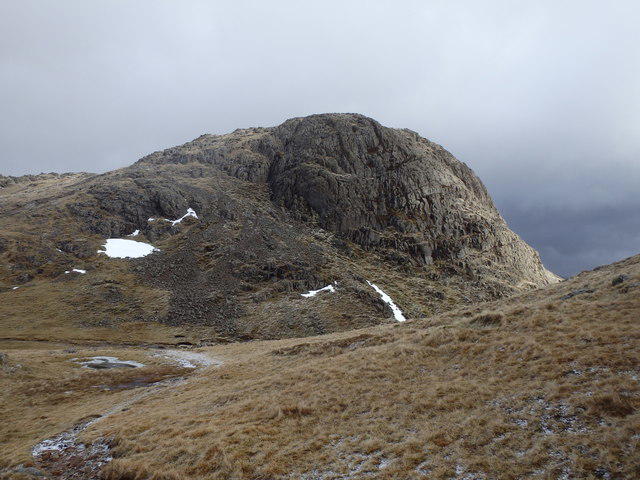 Photo could not load
NY2807 : Harrison Stickle
Michael Graham
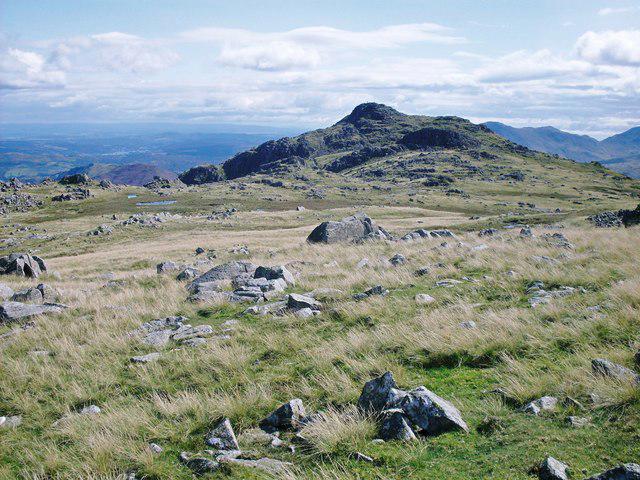 Photo could not load
NY2807 : Looking towards the back of Harrison Stickle
Peter S
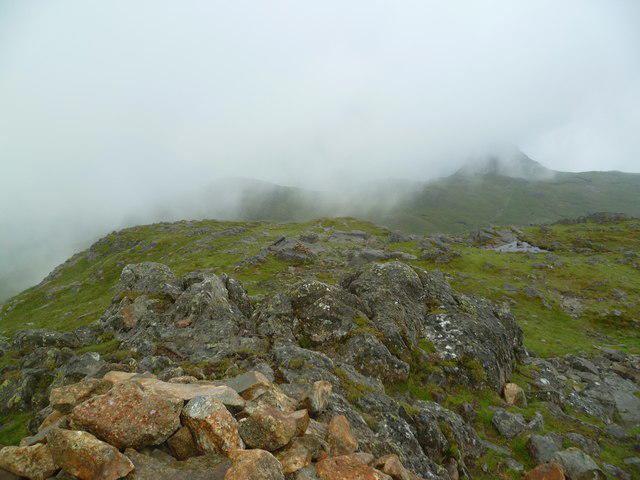 Photo could not load
NY2807 : On Harrison Stickle
Michael Graham
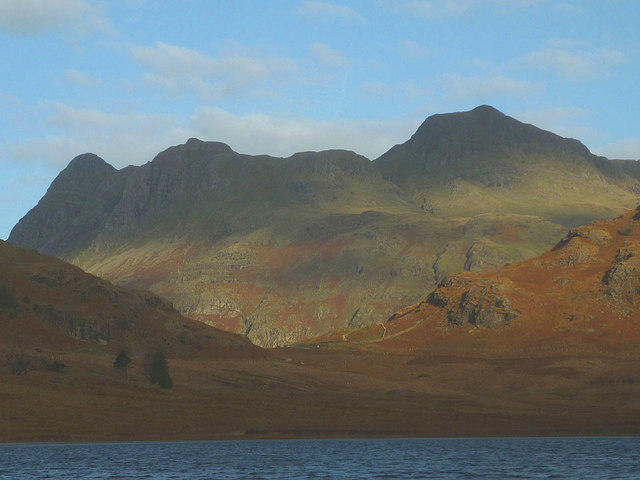 Photo could not load
NY2807 : Morning light on the Langdale Pikes
Karl and Ali
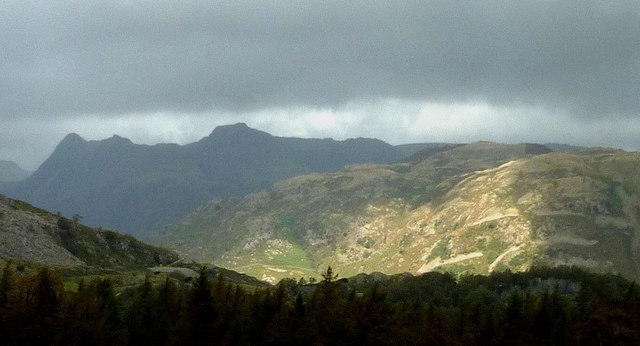 Photo could not load
NY2807 : The Langdale Pikes from Holme Fell
Karl and Ali
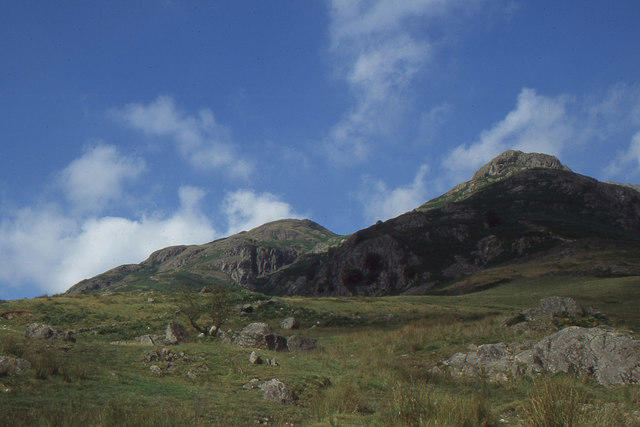 Photo could not load
NY2807 : Harrison Stickle, from the path up next to Dungeon Ghyll
Christopher Hilton
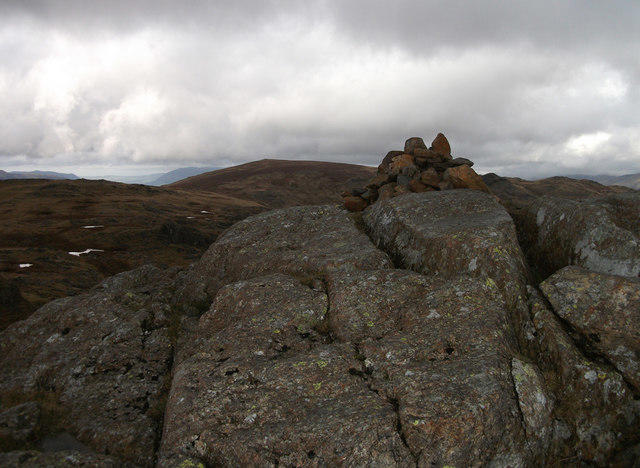 Photo could not load
NY2807 : Summit cairn, Harrison Stickle
michael ely
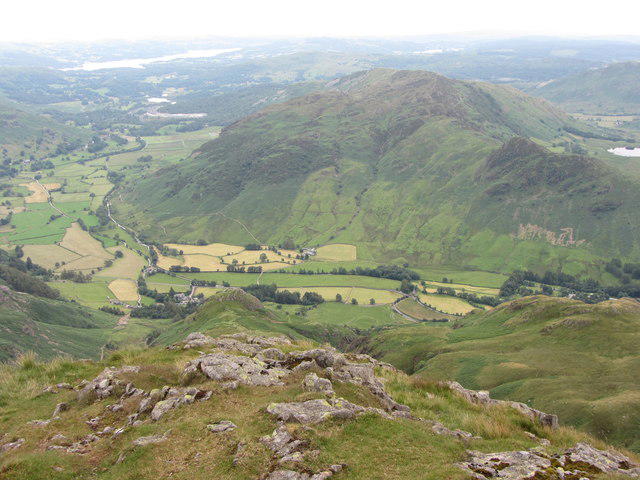 Photo could not load
NY2807 : Langdale from Harrison Stickle
Gareth James
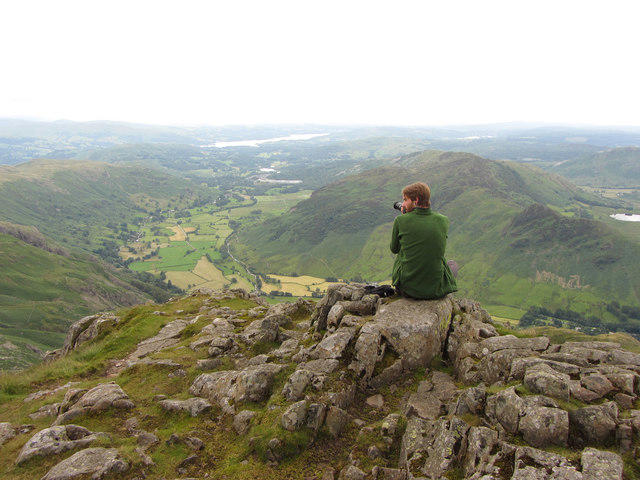
NY2807 : Photographer on Harrison Stickle
Gareth James
Hill facts and local notes
Classifications
Elevation
735m
2,412 ft
Prominence
54m
Coordinates
54.4569, -3.1095
NY281074
OS Map
89 90
Explorer: OL6N
At the Summit
The catalogue summit is rock 6m SSE of cairn at NY 28173 07400, 735.3 m above sea level. The cairn is a nearby landmark, rather than the surveyed high point.
Terrain & Geology
The Langdale Pikes expose rocks of the Borrowdale Volcanic Group, including volcaniclastic sandstone, breccia and tuff in the Seathwaite Fell Formation. The named Harrison Stickle Member contains breccia, lapilli-tuff and pebbly sandstone; the overlying Pavey Ark Member also includes breccia and pebbly sandstone. Glacial erosion later shaped Great Langdale and its steep-sided mountain scenery.
Views & Scenery
In clear weather there are views along Great Langdale, down to Stickle Tarn and across Bowfell, Crinkle Crags, the Scafell range, Great Gable and the Helvellyn fells.
History & Heritage
Name Origin
Stickle is a local topographic term for a sharp point or peak. Robert Ferguson’s historical dictionary of Cumberland dialect explicitly gives Harrison Stickle and Pike o’ Stickle as examples.
Historical Significance
Harrison Stickle is one of Wainwright’s Central Fells and a familiar part of the Langdale skyline. The wider valley has a long history of Neolithic stone-axe production, fell farming and rock climbing. George Macaulay Trevelyan’s gifts of farms to the National Trust helped protect the valley landscape.
Getting There & Facilities
Parking
National Trust Stickle Ghyll car park at New Dungeon Ghyll, NY 294 065, LA22 9JU. It is pay-and-display; National Trust members park free. Payment machines and JustPark are available (car location 80604). Keep gates, road access and emergency routes clear. The selected historic circuit uses NY 295 064 as its New Dungeon Ghyll start reference.
Public Transport
Stagecoach 516 serves Great Langdale and Dungeon Ghyll via Ambleside. Check the current timetable, the New Dungeon Ghyll stop and the last return bus for your date before setting out; service patterns change seasonally.
Nearby Facilities
There are toilets at the National Trust Stickle Ghyll car park. Food and drink are available in the New Dungeon Ghyll area, including Lanty Slee’s Langdale in the former Sticklebarn; check opening hours. Carry food and drinking water for the full mountain circuit.
Safety Information
Known Hazards
- North Rake is a steep, rough mountain approach with rocky steps. The circuit also includes hands-on scrambling on Pike of Stickle; it is not an easy or entirely hands-free walk.
- Jack’s Rake crosses Pavey Ark’s cliff face as an exposed Grade 1 scramble. Wet rock and the open drop make a slip potentially fatal. It is separate from the North Rake circuit and should not be improvised as a shortcut or descent.
- Keep away from cliff edges above Stickle Tarn and the Dungeon Ghyll ravine. Follow the established return path; do not descend gullies or waterfalls to cut the route short.
- Wet stone steps, loose rock and boulder fields need care. Stickle Ghyll and Bright Beck crossings can become difficult after rain; turn back if a crossing is unsafe.
- Cloud can hide the intricate paths and summit exits. Carry a map and compass and know how to use them; check the mountain forecast and allow enough daylight for the return.
- Keep dogs on leads around livestock. Before climbing or scrambling on the crags, consult BMC access notices and obey local nesting-bird restrictions.
Seasonal Hazards
Rain makes pitched paths and rocky steps slippery and can raise streams quickly. Low cloud and strong winds make cliff-edge navigation more serious in any season. Snow or ice turns steep paths and scrambling steps into winter mountaineering terrain; choose a lower walk unless equipped and skilled for those conditions. Plan around short winter daylight.
General Safety Tips
- Check weather conditions before setting out
- Carry appropriate clothing and equipment
- Let someone know your planned route
- Take a map, compass, and GPS device
- Carry emergency supplies: food, water, first aid kit, torch
Hills
Some common questions about the hills answered
Are there group walks up Harrison Stickle?
Many walkers use Walkmates to join or organise walks with others. You can check for group walks around Harrison Stickle through the maps
Are there other walkers around Harrison Stickle?
Activity varies by location and time, but Walkmates lets you see whether others have shared walks or shown interest in this area. Find other people through the walking friends search walking friends for Harrison Stickle search or of course create your own walk for Harrison Stickle
Can I organise a walk to Harrison Stickle?
Yes. If there aren’t any walks listed already, you can create a walk and make it available for others to join.
If you're signed up to Walkmates, you can create a walk to Harrison Stickle.
How do I find a walk up this hill?
There are often multiple ways to walk this hill, depending on experience and route preference. Walkmates helps you explore walks and routes that others have shared.
Can I suggest a new route up Harrison Stickle?
Yes. You can suggest or create routes to share with others. Walkmates focuses on the social side of walking, so routes are used to help people organise walks and explore areas together, rather than as detailed navigation tools or route libraries.
Other uses really appreciate knowledgeable walkers sharing their routes. Share your favourite route to Harrison Stickle here
The is an error or something incorrect about this hill. How do I let you know?
We always strive to keep the information on Walkmates as accurate as possible. If you find an error, please let us know through the contact form and we'll aim to correct it as quickly as possible
Community Discussion
Comments
Location
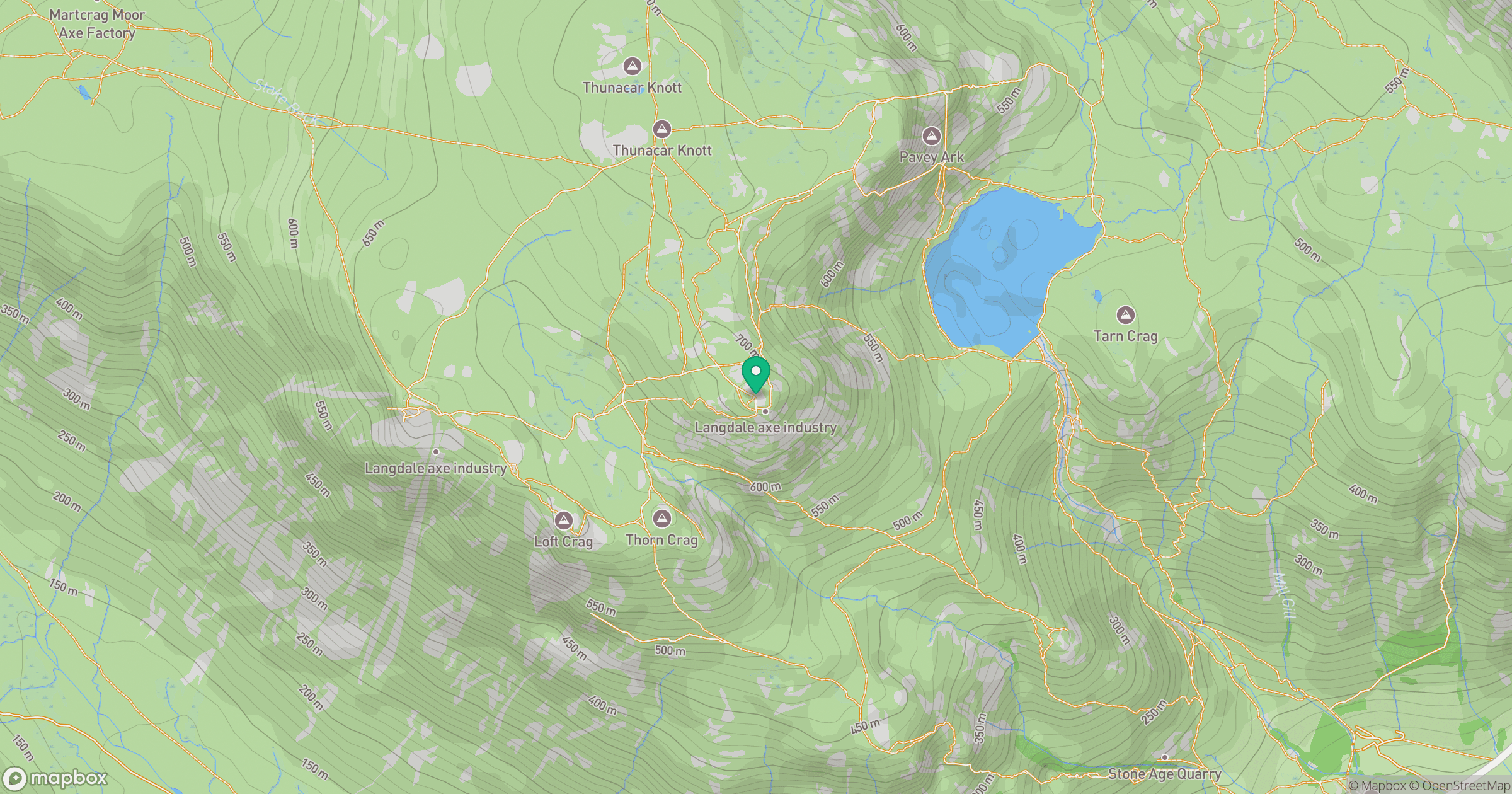
Grid reference: NY281074
View on OpenStreetMapOpens a map in a new tab, centred on the hill.
No comments yet. Be the first.