

Moelwyn Mawr
Good walks are even better shared.
SH6544 : View towards Moelwyn Bach
Richard Webb Photo source
Overview
Moelwyn Mawr is a 770 m mountain in the Moelwynion of Eryri, between Croesor and Tanygrisiau. Its grassy slopes, rocky connecting ridges and extensive slate-quarry remains offer varied mountain circuits. The highest ground is beside the summit trig point. Routes with Moelwyn Bach, Craigysgafn or Cnicht require fitness, confident navigation and care on steep ground.
Moelwyn Mawr
Overview
Moelwyn Mawr is a 770 m mountain in the Moelwynion of Eryri, between Croesor and Tanygrisiau. Its grassy slopes, rocky connecting ridges and extensive slate-quarry remains offer varied mountain circuits. The highest ground is beside the summit trig point. Routes with Moelwyn Bach, Craigysgafn or Cnicht require fitness, confident navigation and care on steep ground.
Summit and views
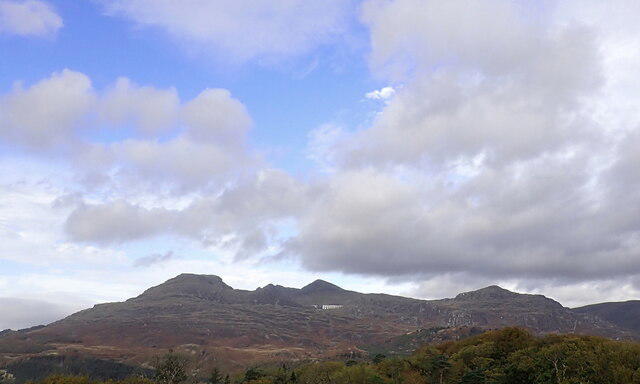
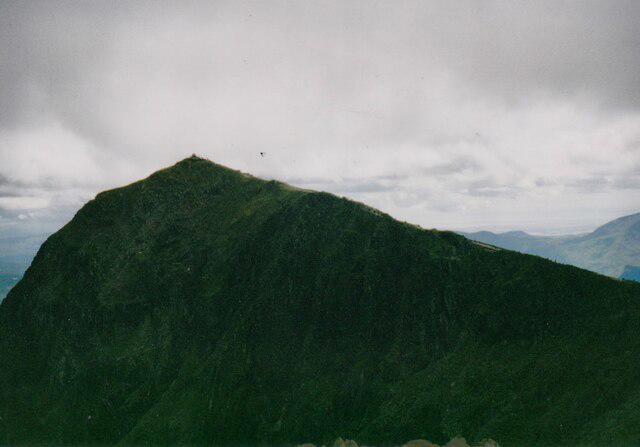
The 770 m summit is the ground beside the trig point at SH 65825 44864. The trig pillar is a useful landmark. Moelwyn Mawr North Ridge Top is a separate, lower rocky top at 649.7 m; it is not the main summit. In clear weather there are views across Cwm Croesor to Cnicht, towards Yr Wyddfa and the northern Eryri mountains, and west to the coast. The connecting ridges overlook Llyn Stwlan and its dam.
Walking routes
Croesor circuit via the west ridge, Craigysgafn and Moelwyn Bach
From Croesor village car park (SH 632 447), take the southern lane and uphill track onto Moelwyn Mawr’s west ridge. Follow the ridge to the summit, then leave east and turn south on the path through rocky ground to the col below Craigysgafn. Cross Craigysgafn with short hands-on sections and descend to Bwlch Stwlan. Take the slanting path across scree to Moelwyn Bach, avoiding its steep northern crag. Descend Bach’s west ridge to the plantation edge and lane, turning right back to the same car park. Welsh Country gives approximately 9 km and 4–5 hours for this full circuit. Steep, exposed sections need care in wind or wet conditions.
Tanygrisiau circuit via Cwmorthin, Rhosydd and both Moelwyns
Start at the small roadside car park southeast of Tanygrisiau station (SH 685 448). Follow the road past the designated railway crossing, then climb the track by Cwmorthin waterfall to Llyn Cwmorthin. Continue beside the lake and chapel ruins to Rhosydd’s surface quarry paths. Ascend the grassy spur to Moelwyn Mawr. Descend southeast and south via the Craigysgafn ridge to Bwlch Stwlan, then make the return excursion to Moelwyn Bach on its slanting scree path. Back at the col, take the reservoir-side path and cross the boggy basin below Stwlan dam, including a stream crossing, to reach the dam access road. Follow it downhill and retrace the initial road to the car park. This version includes the Bach excursion; allow time for both summits. Keep away from open workings and do not cross the dam or enter restricted plant areas.
Croesor horseshoe over Moelwyn Bach, Moelwyn Mawr and Cnicht
From Croesor car park, follow the southern lane to the plantation, then cross the moor and climb Moelwyn Bach’s western ridge. Descend on the slanting scree path to Bwlch Stwlan, avoiding the crag directly towards Moelwyn Mawr. Scramble over Craigysgafn and climb Moelwyn Mawr. Return briefly along the ascent path, then take the grassy spur towards Rhosydd Quarry, using surface paths between the workings. Continue across the boggy plateau towards Llyn yr Adar and join Cnicht’s northeast ridge. Climb Cnicht, then descend its southwest ridge and follow the lower track through the woodland to the original Croesor car park. Mud and Routes gives 15.38 km and about 6 hours for this full circuit. Rough route-finding and several steep rocky sections make this a demanding day.
Croesor west-ridge circuit returning by the southern quarry path
Start and finish at Croesor village car park (SH 6314 4468). Follow the southern lane, uphill track and stile to Moelwyn Mawr’s west ridge and climb to the summit. Take the southeast-then-south summit exit towards the col below Craigysgafn. Before climbing Craigysgafn, turn west down the southern quarry path to the ruined slate mill. Follow the old level around the hillside to the pulley-tower remains, rejoining the ascent path and lane to Croesor. This circuit omits both Craigysgafn’s summit and Moelwyn Bach. Explore Wild Wales gives approximately 8 km and 3 hours for this route. The upper ridge has steep northern drops, and quarry ruins and openings must be avoided.
Terrain and safety
Grassy mountain ridges, rocky paths and short scrambling sections, loose scree, boggy moorland, slate-quarry tracks, steep slopes and surfaced dam access road on the Tanygrisiau return.
- Steep crags border the summit and ridges. Craigysgafn has short scrambling sections; Moelwyn Bach’s northern crag cannot be descended directly towards Moelwyn Mawr. Use the slanting scree path to Bwlch Stwlan.
- Croesor, Rhosydd and other old workings contain open pits, shafts, unstable buildings and loose slate. Stay on surface walking paths, well back from openings. Do not enter mine tunnels or use the underground Croesor–Rhosydd through-trip as a walking route.
- Bog, wet grass, loose scree and slippery rock slow progress. The Tanygrisiau reservoir-basin return includes pathless wet ground and a stream crossing that may be unsafe after rain.
- Cloud can hide summit exits and the faint paths between Rhosydd and Cnicht. Carry a map and compass and know how to use them; a downloaded phone map alone is not enough.
- Llyn Stwlan and Tanygrisiau Reservoir are working pumped-storage waters. Keep out of the water and away from plant, intakes and restricted dam areas; follow signs and any temporary access restrictions.
- The Ffestiniog Railway is operational. Cross only at designated crossings, obey signals and signs, and never walk along the track as a shortcut.
- Exposed ridges are serious in strong wind, ice or snow. Check the mountain forecast, carry warm waterproof layers and a headtorch, and leave enough daylight for the entire return.
Rain makes slate, grass and scree slippery and can deepen bog or raise the stream below Stwlan dam. Wind and low cloud make ridge crossings and summit exits harder. Snow and ice require winter mountain skills and suitable equipment; short winter days need a conservative plan.
Access and facilities
Use the designated village car park in Croesor, around SH 632 447, for western routes. The Tanygrisiau quarry circuit described here starts at the small roadside car park southeast of the railway station, SH 685 448. The station also has a rough gravel parking area. These are distinct starts; check signs, charges and permitted use when you arrive. Keep lanes, gates and access for residents and emergency vehicles clear.
G25 buses link Blaenau Ffestiniog station with Tanygrisiau; check Traveline Cymru for current days and return journeys. Tanygrisiau is a Ffestiniog Railway request stop only on Mountain Spirit and The Quarryman services in the 2026 timetable. Confirm the operator’s calendar, stopping arrangements and last return before relying on it. Arrange travel to and from Croesor separately.
Tanygrisiau station has a small shelter but no other facilities, according to the railway operator. The Slate Trail lists the Lakeside Café at Tanygrisiau and a café in Croesor; check opening times rather than depending on them after a mountain walk. Carry food, drinking water, warm layers and waterproofs for the full outing. Keep dogs on leads around livestock and follow local access signs.
Geology
The Moelwyn landscape contains sedimentary rocks, volcanic rocks and igneous intrusions. The British Geological Survey describes contrasting resistant volcanic and softer sedimentary rocks shaping the glacially eroded skyline between Moelwyn Mawr and Yr Arddu. Ice carved the surrounding cwms and valleys. Boulder ridges extending into Cwm Croesor have been interpreted as a fossil rock glacier, although their origin is debated.
Name and history
Moelwyn Mawr is commonly rendered as “great white hill”: moel means hill or mountain, gwyn means white, and mawr means large. The reason for the colour reference is uncertain. Slate quarrying shaped the settlements and paths around the mountain. Croesor developed as a quarry village in the 19th century, and surviving inclines, barracks and slate tips mark the industry. The Croesor Tramway carried slate towards Porthmadog. Llyn Stwlan and the lower Tanygrisiau Reservoir later became part of the Ffestiniog pumped-storage scheme, commissioned in 1963.
Nearby landscape
Llyn Stwlan and its dam lie below the eastern slopes. Cwm Croesor is to the north and west; Rhosydd Quarry, Llyn Cwmorthin and old slate workings lie along eastern and northern approaches. Craigysgafn and Bwlch Stwlan link the two Moelwyn summits.
Explore routes near Moelwyn Mawr
Walks starting near this hill. Open a route to check its map, distance and full itinerary.
Beddgelert Forest: Derwen Circuit and Llyn Llywelyn
View route
Beddgelert Forest: Llyn Llywelyn Woodland Circuit
View route
Snowdon Pyg Track returning by Miner's Track
View route
Northern Rhinogydd guided mountain walk
View route
Route planning notes
These notes describe possible approaches. Check a route's map and access information when planning your walk.
Croesor circuit via the west ridge, Craigysgafn and Moelwyn Bach
From Croesor village car park (SH 632 447), take the southern lane and uphill track onto Moelwyn Mawr’s west ridge. Follow the ridge to the summit, then leave east and turn south on the path through rocky ground to the col below Craigysgafn. Cross Craigysgafn with short hands-on sections and descend to Bwlch Stwlan. Take the slanting path across scree to Moelwyn Bach, avoiding its steep northern crag. Descend Bach’s west ridge to the plantation edge and lane, turning right back to the same car park. Welsh Country gives approximately 9 km and 4–5 hours for this full circuit. Steep, exposed sections need care in wind or wet conditions.
Tanygrisiau circuit via Cwmorthin, Rhosydd and both Moelwyns
Start at the small roadside car park southeast of Tanygrisiau station (SH 685 448). Follow the road past the designated railway crossing, then climb the track by Cwmorthin waterfall to Llyn Cwmorthin. Continue beside the lake and chapel ruins to Rhosydd’s surface quarry paths. Ascend the grassy spur to Moelwyn Mawr. Descend southeast and south via the Craigysgafn ridge to Bwlch Stwlan, then make the return excursion to Moelwyn Bach on its slanting scree path. Back at the col, take the reservoir-side path and cross the boggy basin below Stwlan dam, including a stream crossing, to reach the dam access road. Follow it downhill and retrace the initial road to the car park. This version includes the Bach excursion; allow time for both summits. Keep away from open workings and do not cross the dam or enter restricted plant areas.
Croesor horseshoe over Moelwyn Bach, Moelwyn Mawr and Cnicht
From Croesor car park, follow the southern lane to the plantation, then cross the moor and climb Moelwyn Bach’s western ridge. Descend on the slanting scree path to Bwlch Stwlan, avoiding the crag directly towards Moelwyn Mawr. Scramble over Craigysgafn and climb Moelwyn Mawr. Return briefly along the ascent path, then take the grassy spur towards Rhosydd Quarry, using surface paths between the workings. Continue across the boggy plateau towards Llyn yr Adar and join Cnicht’s northeast ridge. Climb Cnicht, then descend its southwest ridge and follow the lower track through the woodland to the original Croesor car park. Mud and Routes gives 15.38 km and about 6 hours for this full circuit. Rough route-finding and several steep rocky sections make this a demanding day.
Croesor west-ridge circuit returning by the southern quarry path
Start and finish at Croesor village car park (SH 6314 4468). Follow the southern lane, uphill track and stile to Moelwyn Mawr’s west ridge and climb to the summit. Take the southeast-then-south summit exit towards the col below Craigysgafn. Before climbing Craigysgafn, turn west down the southern quarry path to the ruined slate mill. Follow the old level around the hillside to the pulley-tower remains, rejoining the ascent path and lane to Croesor. This circuit omits both Craigysgafn’s summit and Moelwyn Bach. Explore Wild Wales gives approximately 8 km and 3 hours for this route. The upper ridge has steep northern drops, and quarry ruins and openings must be avoided.
Make a day of it, together
Find someone to share the walk with, or organise a day out along a route you like.
Photo Gallery
View all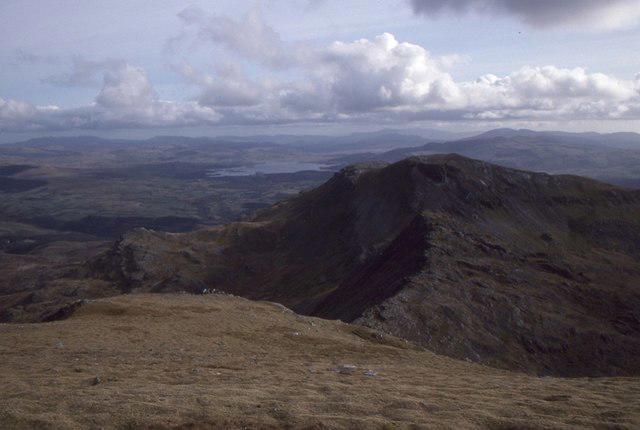 Photo could not load
SH6544 : View towards Moelwyn Bach
Richard Webb
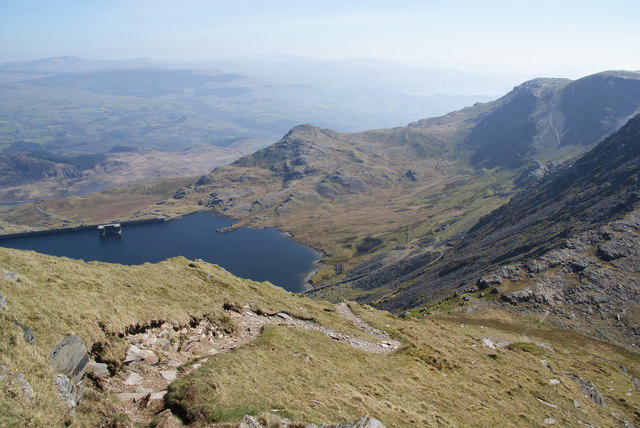 Photo could not load
SH6544 : Path off Moelwyn Mawr
Bill Boaden
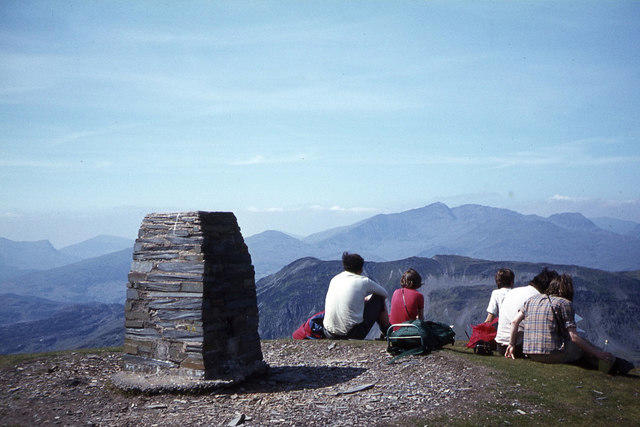 Photo could not load
SH6544 : A fine day on Moelwyn Mawr
Colin Park
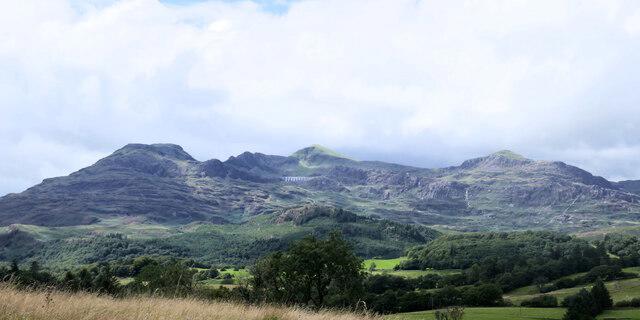 Photo could not load
SH6544 : Y Moelwynion
Phil Brandon Hunter
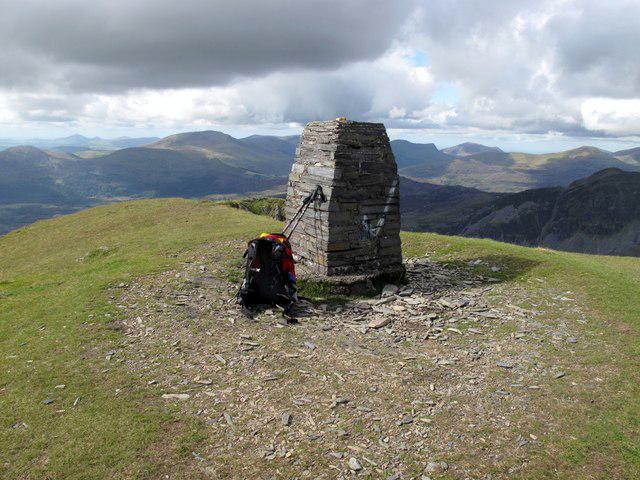 Photo could not load
SH6544 : Moelwyn Mawr
Rude Health
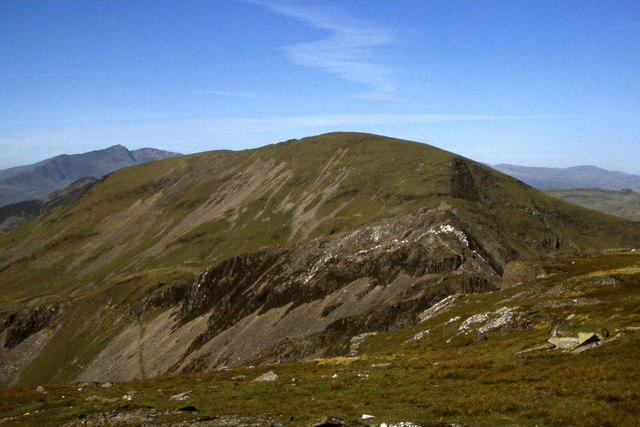 Photo could not load
SH6544 : Moelwyn Mawr as seen from Moelwyn Bach
Colin Park
 Photo could not load
SH6544 : Yr Moelwyniau, Eryri
Phil Brandon Hunter
 Photo could not load
SH6544 : Yr Moelwynau, Eryri
Phil Brandon Hunter
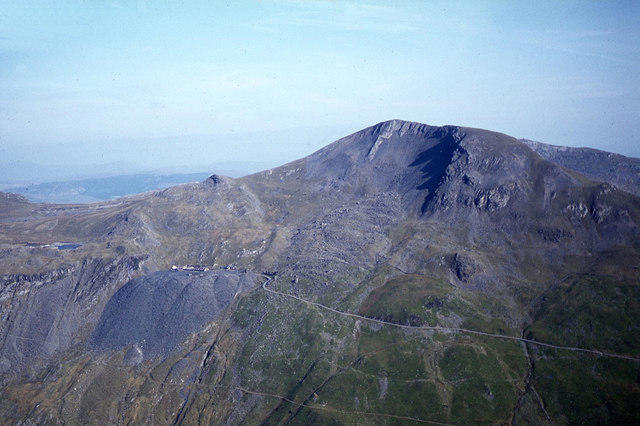 Photo could not load
SH6544 : Moelwyn Mawr as seen from Cnicht
Colin Park
SH6544 : The Moelwyns
Phil Brandon Hunter
Hill facts and local notes
Classifications
Elevation
770m
2,526 ft
Prominence
385m
Coordinates
52.9843, -4.0001
SH658448
OS Map
124
Explorer: OL18W
At the Summit
The 770 m summit is the ground beside the trig point at SH 65825 44864. The trig pillar is a useful landmark. Moelwyn Mawr North Ridge Top is a separate, lower rocky top at 649.7 m; it is not the main summit.
Terrain & Geology
The Moelwyn landscape contains sedimentary rocks, volcanic rocks and igneous intrusions. The British Geological Survey describes contrasting resistant volcanic and softer sedimentary rocks shaping the glacially eroded skyline between Moelwyn Mawr and Yr Arddu. Ice carved the surrounding cwms and valleys. Boulder ridges extending into Cwm Croesor have been interpreted as a fossil rock glacier, although their origin is debated.
Views & Scenery
In clear weather there are views across Cwm Croesor to Cnicht, towards Yr Wyddfa and the northern Eryri mountains, and west to the coast. The connecting ridges overlook Llyn Stwlan and its dam.
History & Heritage
Name Origin
Moelwyn Mawr is commonly rendered as “great white hill”: moel means hill or mountain, gwyn means white, and mawr means large. The reason for the colour reference is uncertain.
Historical Significance
Slate quarrying shaped the settlements and paths around the mountain. Croesor developed as a quarry village in the 19th century, and surviving inclines, barracks and slate tips mark the industry. The Croesor Tramway carried slate towards Porthmadog. Llyn Stwlan and the lower Tanygrisiau Reservoir later became part of the Ffestiniog pumped-storage scheme, commissioned in 1963.
Getting There & Facilities
Parking
Use the designated village car park in Croesor, around SH 632 447, for western routes. The Tanygrisiau quarry circuit described here starts at the small roadside car park southeast of the railway station, SH 685 448. The station also has a rough gravel parking area. These are distinct starts; check signs, charges and permitted use when you arrive. Keep lanes, gates and access for residents and emergency vehicles clear.
Public Transport
G25 buses link Blaenau Ffestiniog station with Tanygrisiau; check Traveline Cymru for current days and return journeys. Tanygrisiau is a Ffestiniog Railway request stop only on Mountain Spirit and The Quarryman services in the 2026 timetable. Confirm the operator’s calendar, stopping arrangements and last return before relying on it. Arrange travel to and from Croesor separately.
Nearby Facilities
Tanygrisiau station has a small shelter but no other facilities, according to the railway operator. The Slate Trail lists the Lakeside Café at Tanygrisiau and a café in Croesor; check opening times rather than depending on them after a mountain walk. Carry food, drinking water, warm layers and waterproofs for the full outing.
Safety Information
Known Hazards
- Steep crags border the summit and ridges. Craigysgafn has short scrambling sections; Moelwyn Bach’s northern crag cannot be descended directly towards Moelwyn Mawr. Use the slanting scree path to Bwlch Stwlan.
- Croesor, Rhosydd and other old workings contain open pits, shafts, unstable buildings and loose slate. Stay on surface walking paths, well back from openings. Do not enter mine tunnels or use the underground Croesor–Rhosydd through-trip as a walking route.
- Bog, wet grass, loose scree and slippery rock slow progress. The Tanygrisiau reservoir-basin return includes pathless wet ground and a stream crossing that may be unsafe after rain.
- Cloud can hide summit exits and the faint paths between Rhosydd and Cnicht. Carry a map and compass and know how to use them; a downloaded phone map alone is not enough.
- Llyn Stwlan and Tanygrisiau Reservoir are working pumped-storage waters. Keep out of the water and away from plant, intakes and restricted dam areas; follow signs and any temporary access restrictions.
- The Ffestiniog Railway is operational. Cross only at designated crossings, obey signals and signs, and never walk along the track as a shortcut.
- Exposed ridges are serious in strong wind, ice or snow. Check the mountain forecast, carry warm waterproof layers and a headtorch, and leave enough daylight for the entire return.
Seasonal Hazards
Rain makes slate, grass and scree slippery and can deepen bog or raise the stream below Stwlan dam. Wind and low cloud make ridge crossings and summit exits harder. Snow and ice require winter mountain skills and suitable equipment; short winter days need a conservative plan.
General Safety Tips
- Check weather conditions before setting out
- Carry appropriate clothing and equipment
- Let someone know your planned route
- Take a map, compass, and GPS device
- Carry emergency supplies: food, water, first aid kit, torch
Hills
Some common questions about the hills answered
Are there group walks up Moelwyn Mawr?
Many walkers use Walkmates to join or organise walks with others. You can check for group walks around Moelwyn Mawr through the maps
Are there other walkers around Moelwyn Mawr?
Activity varies by location and time, but Walkmates lets you see whether others have shared walks or shown interest in this area. Find other people through the walking friends search walking friends for Moelwyn Mawr search or of course create your own walk for Moelwyn Mawr
Can I organise a walk to Moelwyn Mawr?
Yes. If there aren’t any walks listed already, you can create a walk and make it available for others to join.
If you're signed up to Walkmates, you can create a walk to Moelwyn Mawr.
How do I find a walk up this hill?
There are often multiple ways to walk this hill, depending on experience and route preference. Walkmates helps you explore walks and routes that others have shared.
Can I suggest a new route up Moelwyn Mawr?
Yes. You can suggest or create routes to share with others. Walkmates focuses on the social side of walking, so routes are used to help people organise walks and explore areas together, rather than as detailed navigation tools or route libraries.
Other uses really appreciate knowledgeable walkers sharing their routes. Share your favourite route to Moelwyn Mawr here
The is an error or something incorrect about this hill. How do I let you know?
We always strive to keep the information on Walkmates as accurate as possible. If you find an error, please let us know through the contact form and we'll aim to correct it as quickly as possible
Community Discussion
Comments
Location
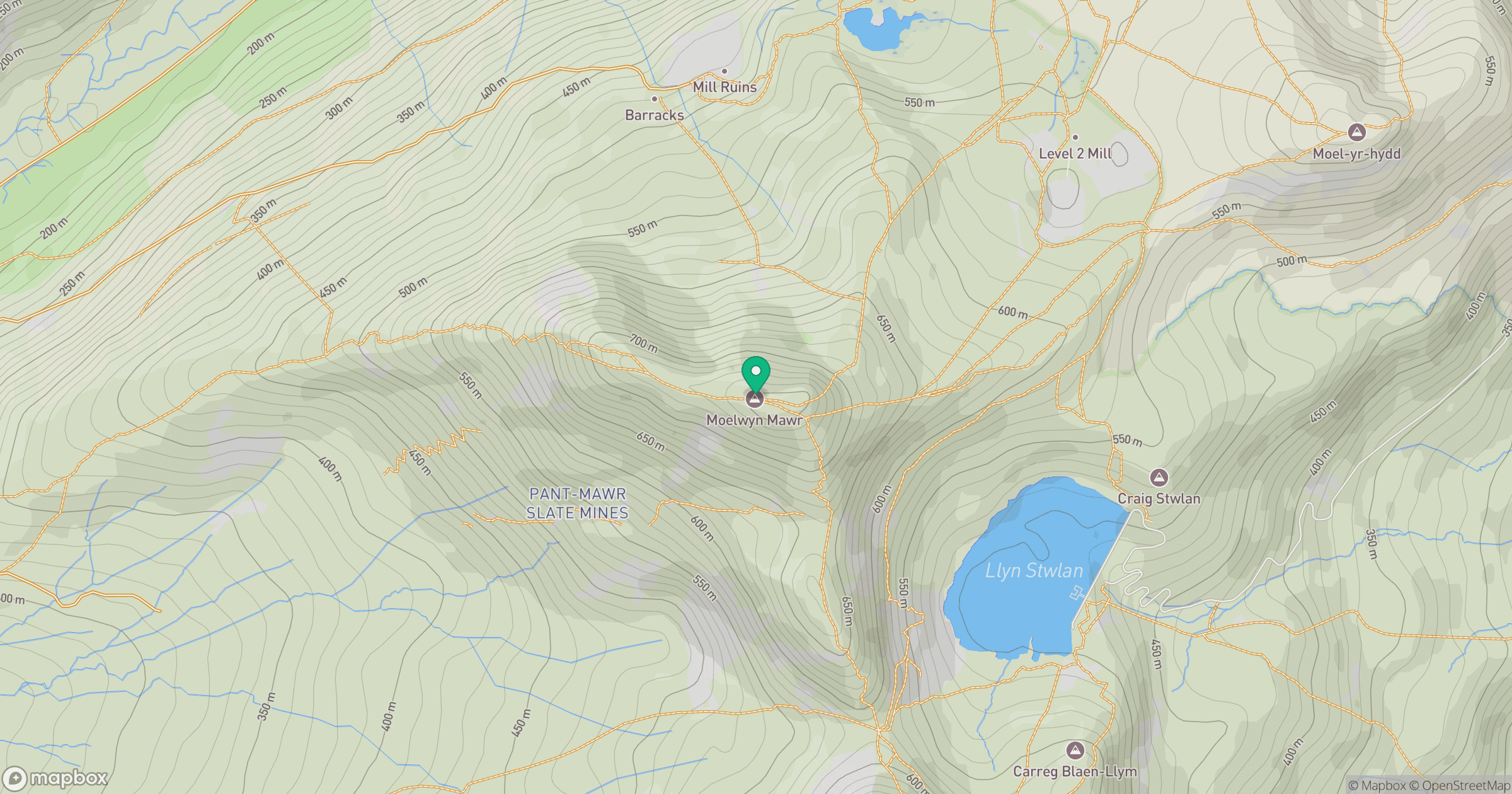
Grid reference: SH658448
View on OpenStreetMapOpens a map in a new tab, centred on the hill.
No comments yet. Be the first.